The eastern hemlocks that shade the Chattooga basin and the high coves around Long Creek and Mountain Rest are under siege from an insect smaller than a poppy seed. Hemlock woolly adelgid has killed vast numbers of Upstate hemlocks, and the dead trees it leaves behind become serious hazards. Here's how to recognize the problem on your property.
The tell is the wool
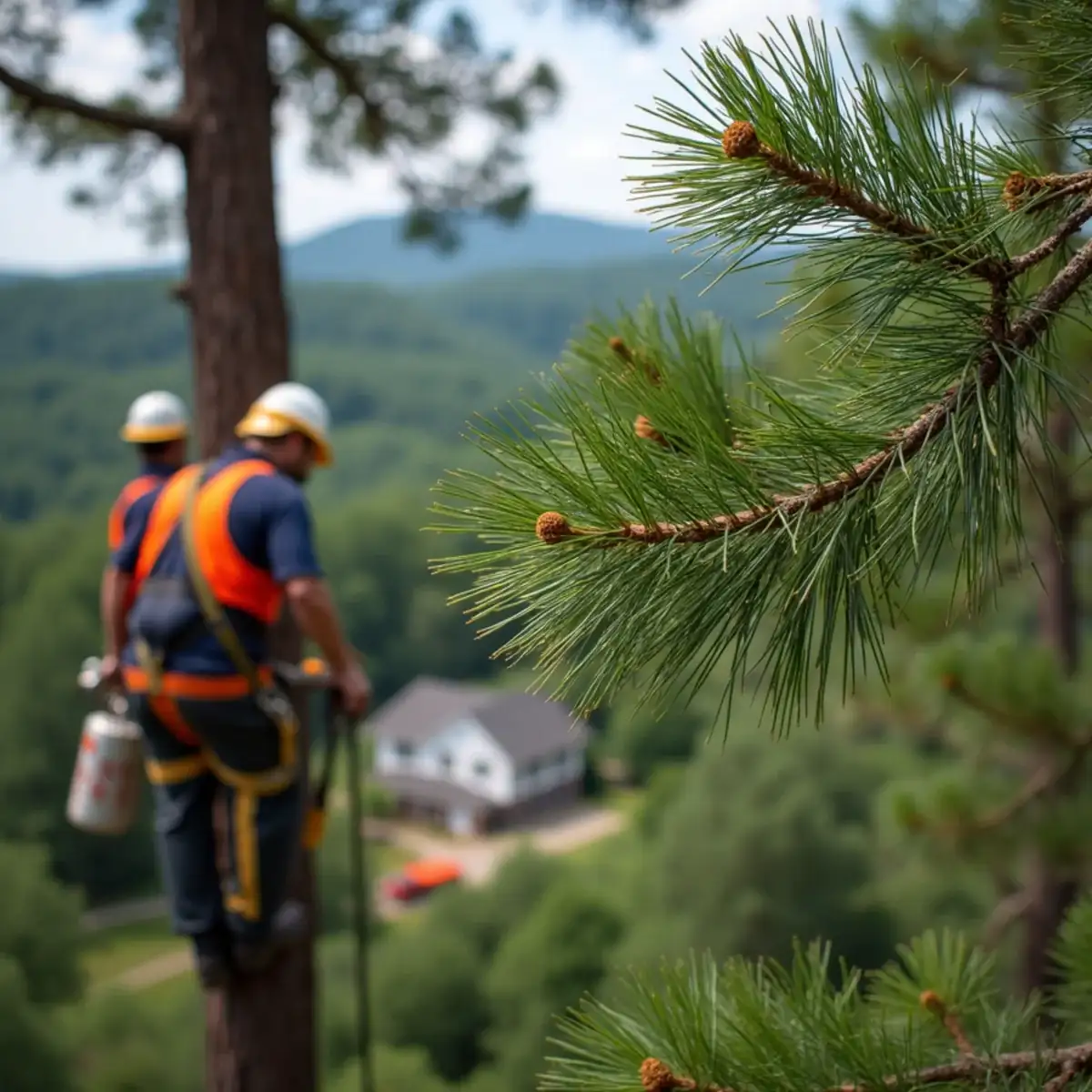
The adelgid itself is tiny and dark, but it covers itself in a distinctive white, woolly wax — small cottony tufts on the undersides of the needles, right where they meet the twig. If your hemlock's needle undersides look like they've been dusted with tiny cotton balls, that's the adelgid. Infested trees thin, gray, and lose needles from the interior out.
- White woolly tufts on needle undersides
- Needles graying and dropping from the inside out
- Thinning, sparse canopy over one to several years
- Fine dieback progressing through the crown
- Nearby hemlocks showing the same decline
Treat early, or plan for removal
Healthy, high-value hemlocks caught early can sometimes be protected with insecticidal treatment applied by a licensed applicator — this is plant-health-care territory, and worth pursuing for a prized specimen. But a hemlock already dead or in steep decline won't recover, and dead hemlocks over cabins and trails become dangerous quickly. A hazardous tree assessment determines which path a given tree is on.
Removing dead hemlocks safely
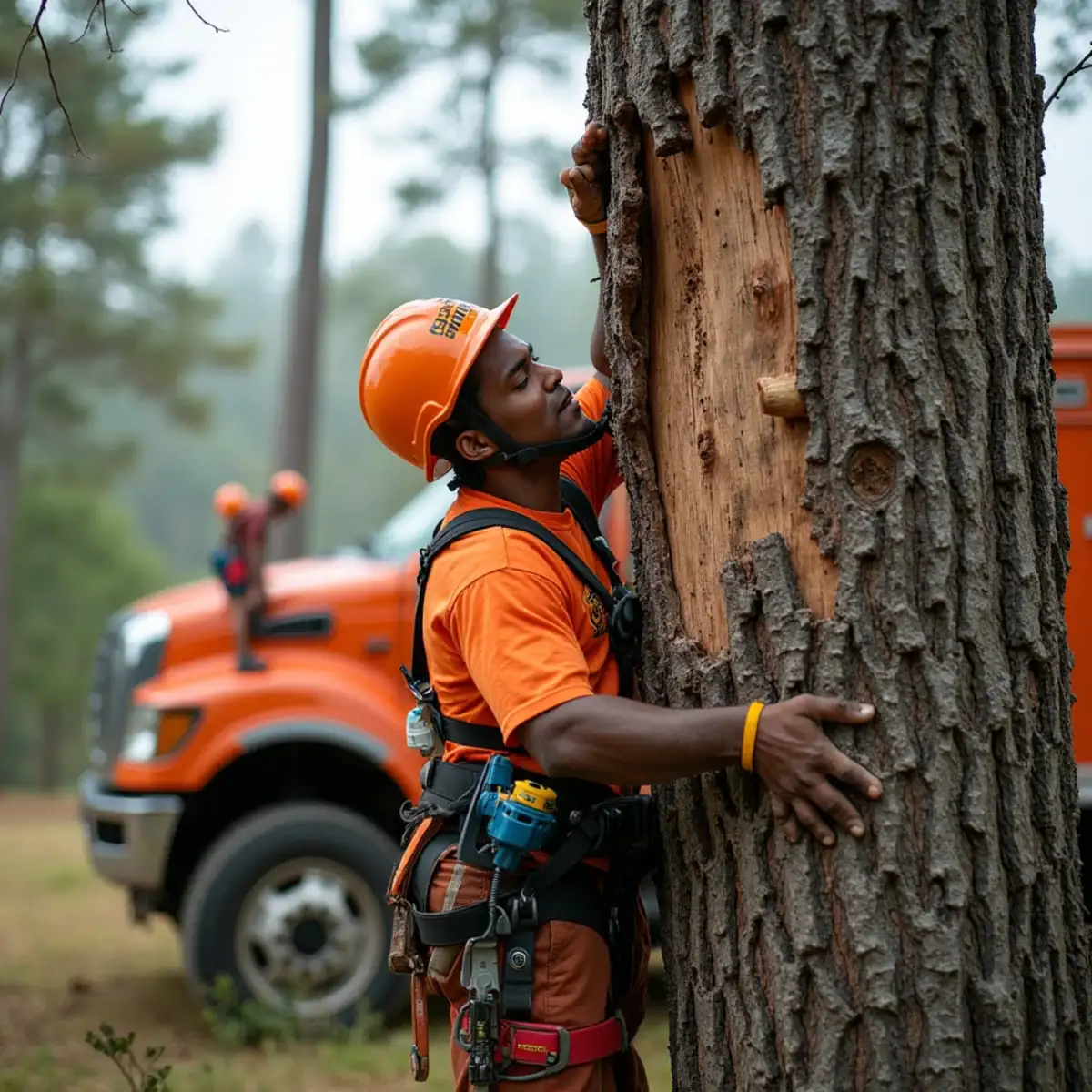
Dead hemlocks share the same problem as beetle-killed pines: brittle wood and unpredictable failure that make climbing them risky. We handle them like we do other diseased and dead-tree removals, often rigging or craning rather than climbing compromised wood. In the steep coves where these trees grow, that ties into our steep-slope rigging work.
Treat or remove? How to decide
With hemlock woolly adelgid, the fork in the road is whether a given tree is worth treating or already past saving — and the honest answer depends on the tree, not a sales pitch. Here's the framework we use on a property:
- Healthy, high-value specimens caught early — good candidates for insecticidal treatment by a licensed applicator, often on a multi-year schedule
- A prized shade or privacy hemlock near the house — usually worth protecting if the crown is still mostly full
- Trees in steep decline with thin, gray, needle-dropping crowns — treatment rarely brings these back
- Dead hemlocks over cabins, drives, or trails — no longer a health question but a hazard-removal one
- Remote forest hemlocks hitting nothing — often fine to simply monitor
What treating a hemlock actually involves
For a hemlock worth saving, treatment is a real, proven option — but it helps to know what it entails before you decide. Chemical control of hemlock woolly adelgid is applied by a licensed applicator, not sprayed off a shelf, and it works as a management program rather than a one-time cure:
- The common approach is a systemic insecticide, applied as a soil drench or trunk injection, that the tree takes up and carries into the needles where the adelgid feeds
- A single treatment can protect a healthy tree for a few years, after which it's reassessed and, if needed, repeated
- It works best on trees still carrying a mostly full, green crown — a tree already in steep decline usually won't recover the treatment cost
- Because it's a repeating commitment, it makes the most sense for high-value specimens near the home, not a whole back-forest stand
- Treatment is plant-health-care work; our role is to tell you honestly which trees are worth it and to safely remove the ones that are already lost
Why dead hemlocks turn dangerous fast
Hemlock is not a forgiving tree once it dies. The wood goes brittle and the bark starts shedding within a season or two, and because these trees grow tall and straight in the cool coves, a dead one drops large, heavy tops with little warning. In the steep terrain around Long Creek, Mountain Rest, and the Chattooga corridor, that combination — brittle wood, height, and a slope below — makes a standing dead hemlock one of the more hazardous trees we remove. It's also why we rarely climb them: on compromised wood over a grade, rope-and-crane rigging from sound anchor points is far safer than putting a climber's weight on limbs that can snap without a sound.
Need help from a real Upstate tree crew?
Free estimates, 24/7 emergency response, fully insured. Call Rig Line Tree Service today.
Frequently asked
That's almost certainly hemlock woolly adelgid — a tiny invasive insect that coats the underside of the needles, where they meet the twig, in white woolly wax. It's the clearest early sign, and it's worth acting on before the crown starts thinning.
Often yes, if it's caught early and still has a mostly full crown. Healthy, high-value hemlocks can be protected with insecticidal treatment applied by a licensed professional, usually on a repeating schedule. A tree already in steep decline is unlikely to recover.
It varies, but untreated infestations commonly kill a hemlock over several years, working from the inside of the crown outward as the tree loses needles and can't recover. Stressed trees in poor sites can go faster. Early detection is what widens your options.
Over a cabin, driveway, or trail, yes. Dead hemlock wood turns brittle quickly and drops heavy tops without warning, and in the steep coves where these trees grow that's a serious hazard. Those are worth removing promptly.
Our tree-service focus is safe removal of hazardous and dead trees. For chemical treatment of savable hemlocks we'll point you toward a licensed applicator, and we can assess which of your trees are worth treating versus removing so you're not spending money on a lost cause.
It's a mountain-country problem, concentrated in the cool, moist high ground where hemlocks grow — the coves and river corridors around Long Creek, Mountain Rest, Salem, and the Chattooga and Jocassee areas. If you own cabin or forest land up there, your hemlocks are worth watching closely.