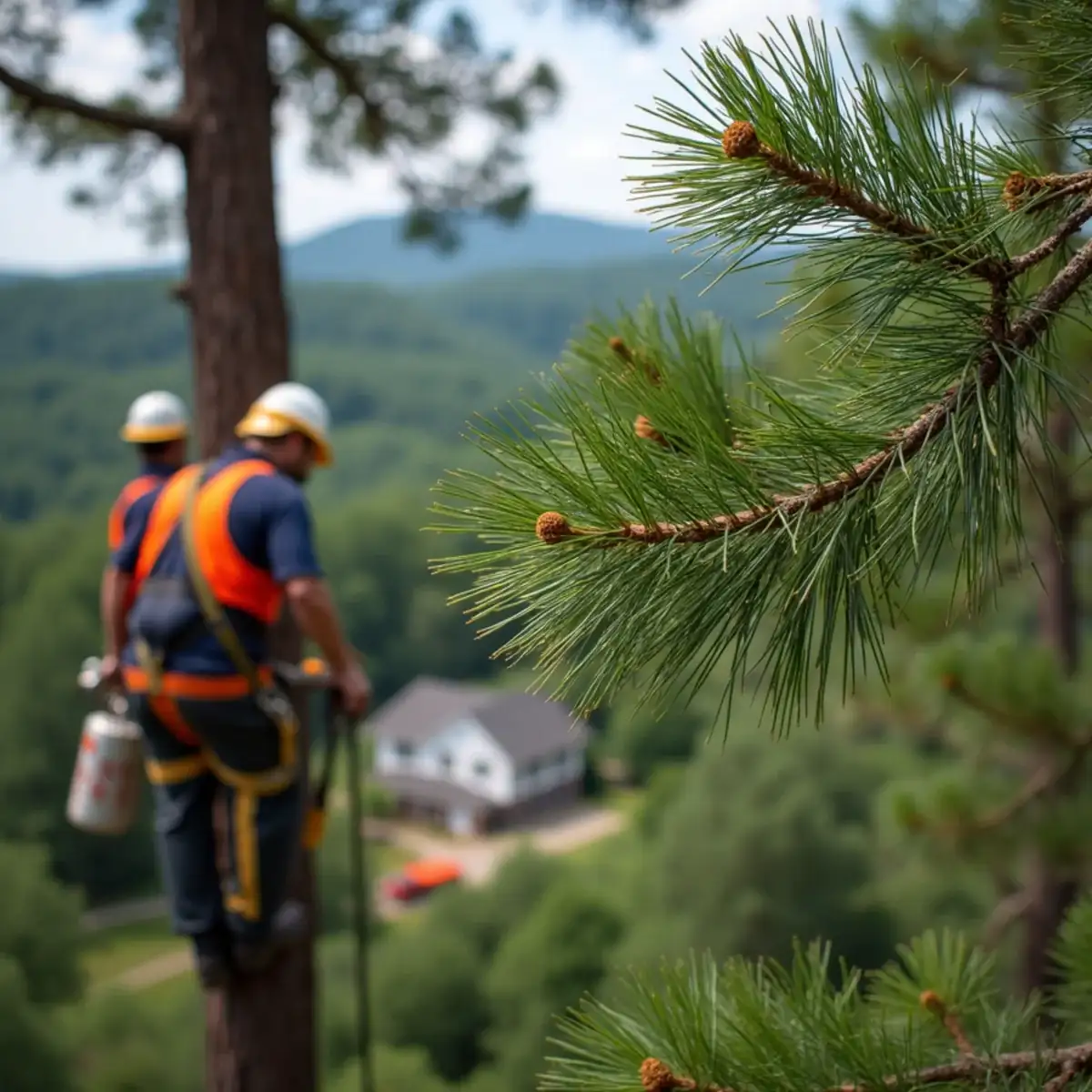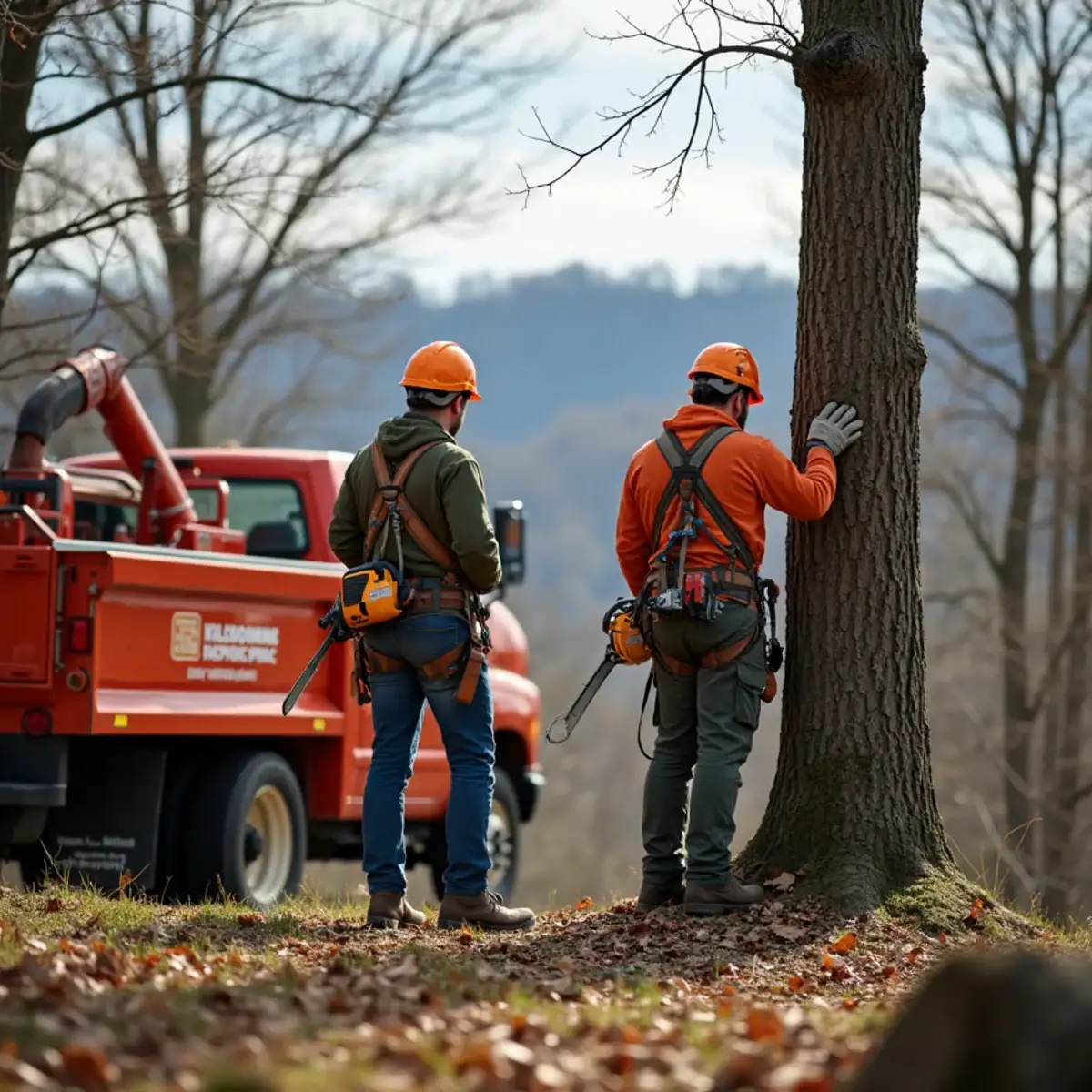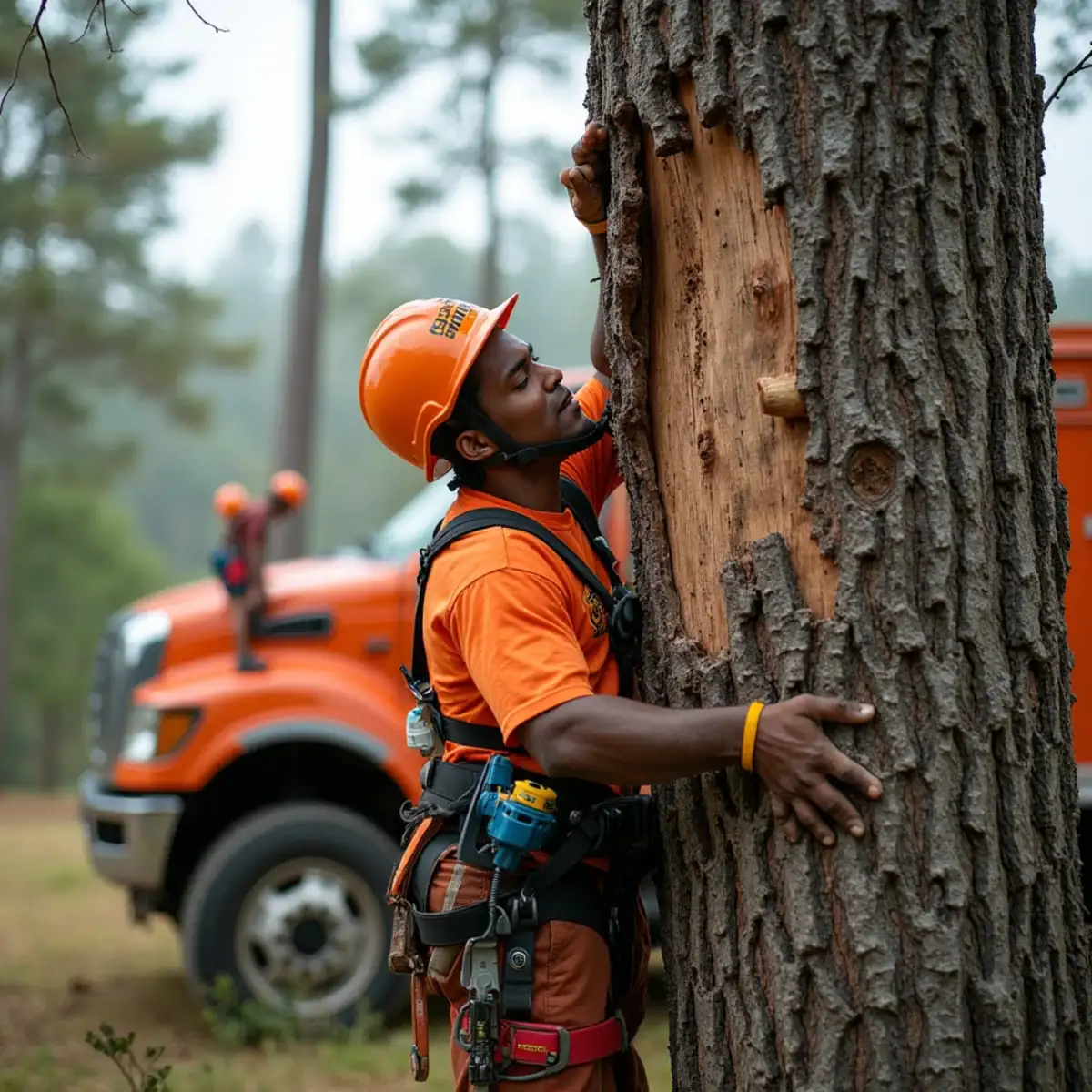
The southern pine beetle is small — about the size of a grain of rice — but it kills pines faster than almost anything else in the Upstate. In Oconee and Pickens counties, where loblolly and shortleaf pine dominate so many properties, catching an infestation early can be the difference between removing one tree and losing a whole stand.
The signs, from the ground up
You often smell or see the trouble before you understand it. Watch the trunk and the crown together — the beetles work the bark while the needles tell the story of how far it's gone.
- Popcorn-sized white or tan pitch tubes on the bark
- Fine reddish sawdust (frass) in bark crevices and at the base
- S-shaped winding galleries under loose bark
- Crown fading from green to yellow to red-brown, top down
- Multiple nearby pines browning in a spreading pocket
Why speed matters
Southern pine beetle spreads tree to tree. By the time a crown is fully brown, the tree is dead and the beetles have likely already moved into its neighbors. That's why a pine beetle and diseased-tree removal plan focuses on getting infested trees out quickly — removal isn't just about the one dead pine, it's about protecting the healthy ones around it.
Dead pines are dangerous to remove
Beetle-killed pines dry out and turn brittle fast. Tops snap unpredictably and bark sloughs off climbing lines, which makes these trees hazardous to take down. We often remove standing dead pines with rigging or crane rather than climbing compromised wood. If you're unsure whether a tree is salvageable, a hazardous tree assessment will settle it.
How the beetle spreads: the 'spot' explained
Southern pine beetle doesn't pick off random trees — it works in expanding pockets that foresters call spots. A few beetles attack a stressed pine and release an aggregation pheromone that summons thousands more; together they overwhelm the tree's pitch defenses within days. The next generation then flies to the pines at the leading edge of the spot and repeats the process. In the warm months across Oconee and Pickens counties that cycle can turn over every few weeks, which is why a spot left alone grows outward like a slow ripple — and why the trees you most need to remove aren't always the brown ones, but the still-green pines right at the advancing edge.
Pine beetle vs. the other things killing your pines
Not every dying pine has southern pine beetle, and the difference changes what you do. A quick field guide to what we look for:
- Southern pine beetle — many small pitch tubes, S-shaped galleries, a spreading pocket of trees; acts fast and aggressively
- Ips engraver beetles — usually hit drought-stressed or storm-damaged pines and tops; galleries are Y- or H-shaped, and they're more opportunistic than a true spot
- Turpentine beetles — large pitch tubes low on the trunk, often a secondary attacker on an already-weak tree
- Simple drought or root stress — thinning, off-color crown with no pitch tubes or frass at all, sometimes recoverable
Can you keep your pines from being next?
You can't spray your way out of a southern pine beetle outbreak, but you can make your pines a less attractive target. The beetle preferentially attacks stressed, crowded trees, so prevention is really about reducing stress and density before an outbreak reaches you:
- Thin overcrowded pine stands — dense, competing pines are the beetle's favorite habitat, and thinning is the single most effective preventive step
- Water high-value pines through drought — a well-hydrated tree can pitch out an early attack that a stressed one can't
- Avoid wounding trunks and roots with mowers, equipment, or construction, which stresses trees and can attract beetles
- Remove and promptly dispose of freshly infested trees so the emerging brood can't fly to your healthy pines
- Don't stack fresh, bark-on pine logs near living pines during beetle season — it can concentrate activity
- Walk your pines monthly in warm months so you catch a two-tree spot instead of an acre
What to do if you see the signs
If you spot pitch tubes and a fading crown on pines around Seneca or the wider Upstate, don't wait for them all to brown out. Call us for an assessment. We'll confirm what's happening, identify which trees are already lost, and prioritize removals to slow the spread across your property. Acting on a two-tree spot in June is a manageable job; acting on an acre of dead snags in September is a much bigger one.
Need help from a real Upstate tree crew?
Free estimates, 24/7 emergency response, fully insured. Call Rig Line Tree Service today.
Frequently asked
Once southern pine beetle is established in a tree and the crown is fading, the tree cannot be saved and should be removed to protect neighboring pines. Prevention and early detection are the only real defenses.
Fast. It works in expanding spots, and in warm Upstate weather a new generation can move to neighboring pines every few weeks. A two-tree pocket in early summer can become an acre of dead snags by fall if it's left alone.
Often yes — the still-green pines at the leading edge of a spot are usually the next to be attacked, and removing them is how you break the spot's momentum. We assess which trees are worth taking to protect the rest of the stand.
Not reliably once a tree is under mass attack. Preventive treatments exist for high-value individual pines, but for an active spot the proven control is prompt removal of infested and edge trees. We'll give you an honest read on what's realistic for your property.
Activity ramps up as temperatures rise, so late spring through summer and into early fall is the danger window, with several overlapping generations possible in a warm year. Spots can smolder through mild winters too, so a fading pine in any season is worth checking rather than assuming it's dormant.