Every few winters, a warm, wet system meets cold air draining off the Blue Ridge and coats the foothills in glaze ice. Within hours, the sound of cracking limbs is everywhere. Ice storms do more damage to Upstate trees than almost any other event — here's why, and what you can do before and after.
The physics of glaze
Ice is heavy. A coating just a half-inch thick can add hundreds of pounds to a mature tree's canopy, and it loads the ends of limbs — exactly where leverage is greatest. Pines are especially vulnerable: their long, horizontal limbs and dense needle clusters catch and hold ice, and their wood is more brittle than many hardwoods. The result is the classic ice-storm sound of pine tops and limbs snapping under load.
Why some trees fail and others don't
Trees with existing defects fail first — cracked unions, deadwood, over-extended limbs, and dense unthinned canopies. A canopy that's been properly thinned sheds wind and carries ice better because there's simply less surface to load. This is one of the strongest arguments for preventive tree trimming and pruning before winter, especially on pines near the house.
- Ice loads limb ends where leverage is highest
- Pines catch and hold ice on long, needle-dense limbs
- Pre-existing cracks and deadwood fail first
- Thinned canopies carry ice and wind far better
- Broken limbs often hang up as 'widow makers'
After the storm: watch for hangers
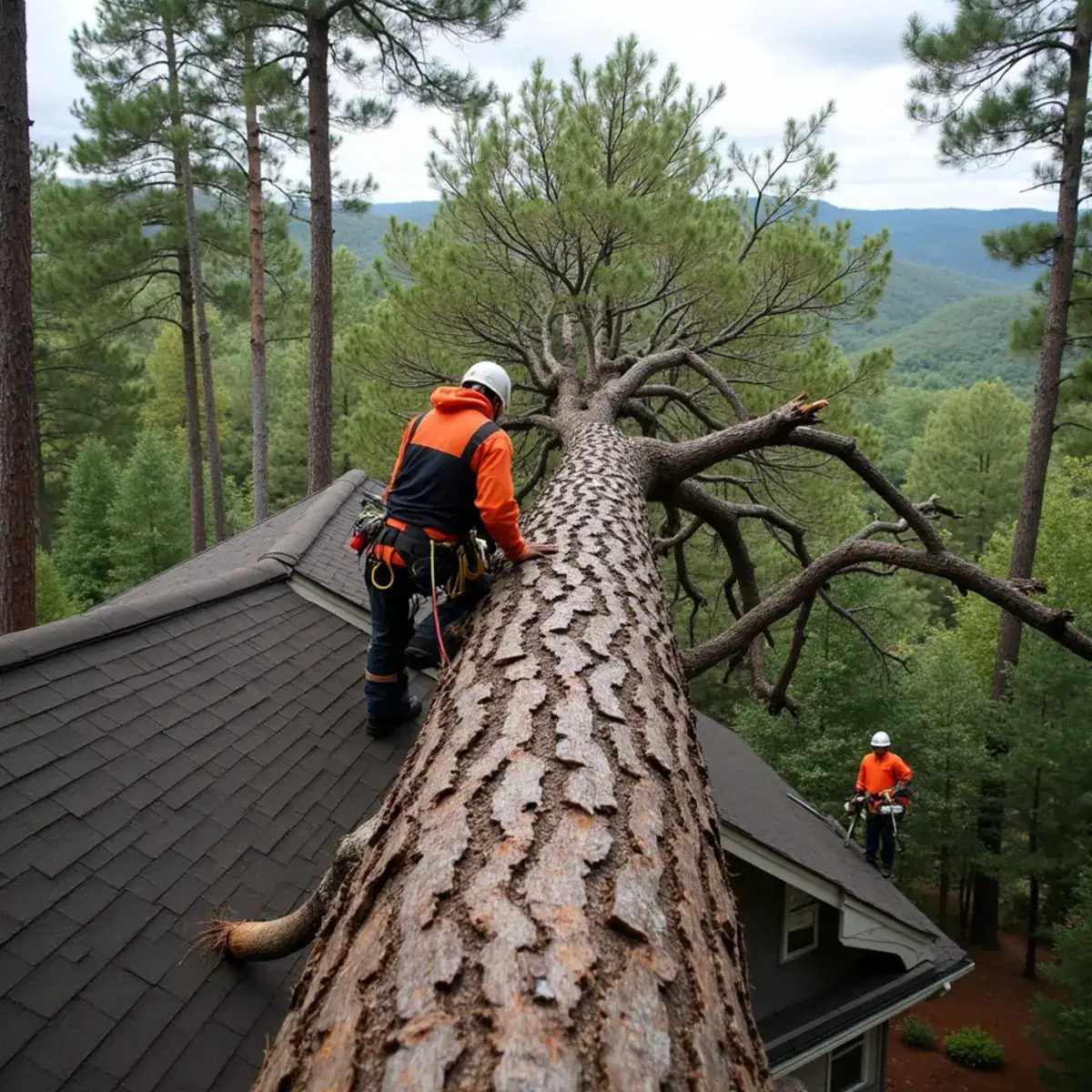
The danger doesn't end when the ice melts. Ice storms leave broken limbs hung up in canopies that can drop days later. If you see a cracked limb caught overhead, stay out from under it and call for hazardous hanging limb removal — and for anything on a structure, our 24/7 emergency service.
Why the Blue Ridge foothills get glaze ice
The Upstate sits in a geographic sweet spot for the worst kind of winter tree damage. When cold air drains down and pools against the base of the Blue Ridge escarpment while a warmer, moisture-laden system rides over the top, rain falls through that shallow cold layer and freezes on contact with everything it touches. That's glaze — clear, dense, and far heavier than snow. Elevations right along the foothills around Westminster, Walhalla, and Mountain Rest can sit in the freezing zone for hours while towns just downhill get plain rain, which is why the same storm can strip a mountain-edge property and barely touch one a few miles away. It's not bad luck; it's terrain.
Which trees fail first — and what to do about it
Ice doesn't hit every tree equally. Knowing the order of vulnerability tells you where to spend a preventive dollar before winter:
- Bradford pears and other weak-forked ornamentals — often the first to split apart entirely
- Pines with long, needle-heavy horizontal limbs — the classic ice-storm top and limb failures
- Trees with existing cracks, cavities, or dead wood — pre-broken and waiting for a load
- Dense, unthinned canopies — more surface to catch ice and more weight overall
- Over-extended limbs reaching over roofs and drives — the highest-leverage, highest-consequence failures
What to do while the ice is still on the trees
During an active ice storm, the safest tree strategy is almost entirely about staying away from them. Loaded limbs are brittle and unpredictable, and most ice-storm injuries happen when people go outside to 'deal with it.' While the glaze is on:
- Stay out from under loaded canopies entirely — a limb can release with no warning and no sound
- Never try to knock ice off with a broom or rake; you'll snap the frozen wood and can bring it down on yourself
- Keep clear of any tree touching a power line and report downed lines to the utility — assume everything is energized
- Park vehicles away from big overhanging pines and hardwoods if you can do it safely
- Wait for the melt before assessing damage; what looks stable under ice often shifts as it thaws
- Save the emergency number now, so a tree on the house is one call and not a frantic search
Prepare before the next one
The best time to reduce ice-storm risk is a calm fall day, not during the storm. Homeowners around Westminster and the foothills can cut their risk sharply by having vulnerable pines thinned and deadwood removed before winter sets in.
Need help from a real Upstate tree crew?
Free estimates, 24/7 emergency response, fully insured. Call Rig Line Tree Service today.
Frequently asked
Pines hold long, horizontal, needle-dense limbs that catch and hold a lot of ice, and their wood is more brittle than many hardwoods. Ice also loads the limb tips, where leverage is greatest — so a half-inch glaze can add hundreds of pounds right where the branch is weakest.
No. Beating ice-loaded limbs with a broom or rake usually snaps the frozen, brittle wood and can bring a limb down on you. Stay out from under loaded canopies, keep clear of any limbs near power lines, and let the ice melt off on its own.
It meaningfully reduces it. Thinning a dense canopy lets ice and wind pass through with less to grab, reducing a tree's total load, and removing deadwood and over-extended limbs takes out the pieces most likely to fail. It's cheap insurance compared with a limb through the roof.
Treat a hung-up or cracked limb as an active hazard, especially over a driveway, walkway, or roof. It can drop days after the ice melts, without warning. Stay out from under it and call for hazardous limb removal rather than waiting to see if it falls on its own.
Focus on the ones that can do damage: pines and large-limbed trees overhanging your roof, driveway, or power drop, plus any tree with existing cracks or deadwood. Thinning and deadwood removal on those before the first ice cuts your risk far more than working on trees in the open.