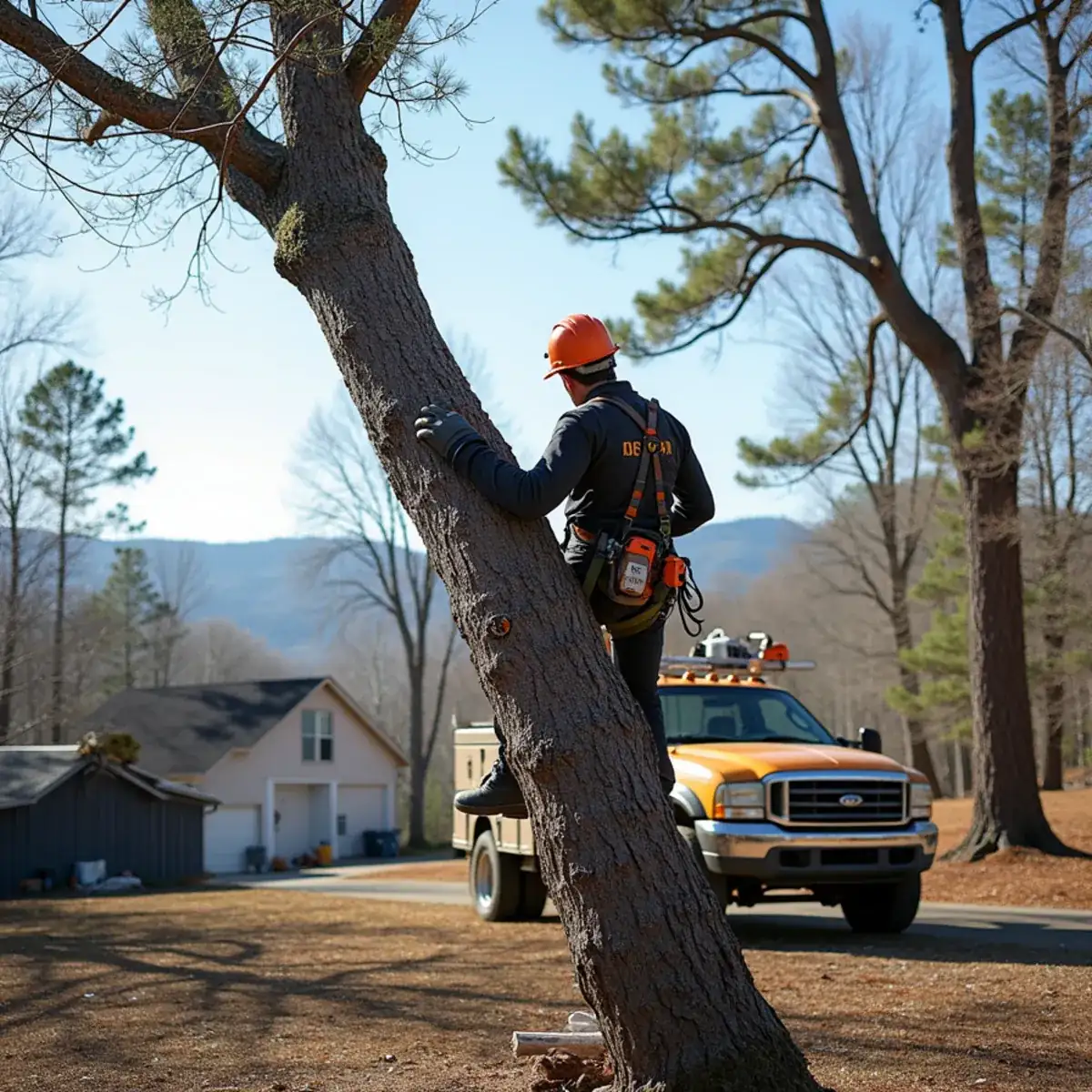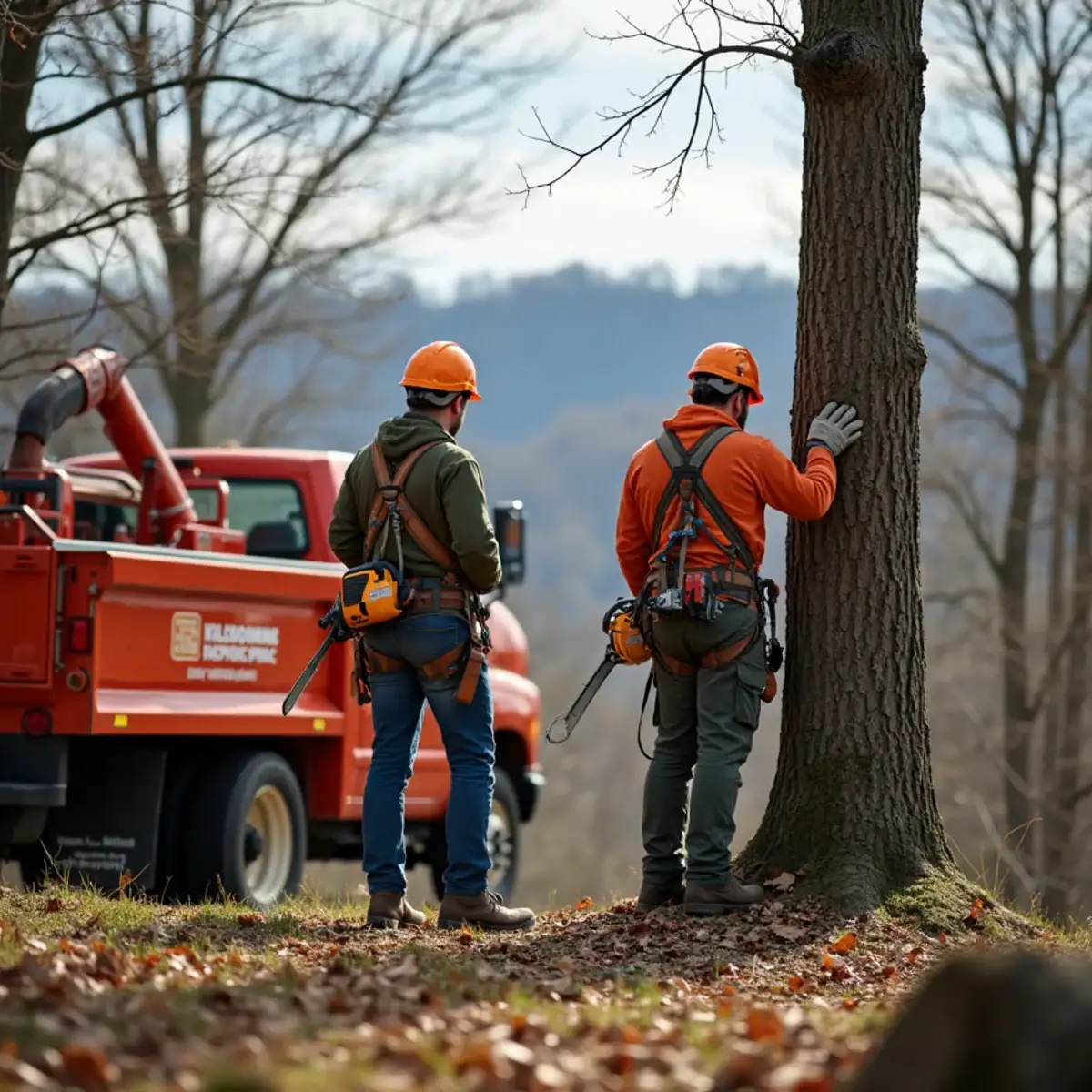
The trees that come down in January are almost always ones that showed warning signs in October. A little attention on a calm fall day is the cheapest storm insurance there is. Here's a room-by-room — or rather, tree-by-tree — checklist for Upstate mountain and lake homeowners before winter.
Walk your property and look up
Start with the trees closest to your house, driveway, and power drop, since those are the ones that matter most if they fail. Look up into each canopy and around each base for the classic warning signs.
- Dead limbs, especially large ones over the house or drive
- Cracked or split limb unions and V-shaped forks
- A new or worsening lean, or soil lifting at the base
- Mushrooms or conks at the root flare (a decay sign)
- Broken limbs already hung up in the canopy
- Pines with fading crowns or bark pitch tubes
Prioritize the pines near the house
Upstate pines are the trees most likely to fail under ice and wind, and the ones most often near enough to do damage. Having vulnerable pines thinned and their deadwood removed through tree trimming and pruning before winter dramatically cuts the odds of a limb — or a whole tree — coming through the roof.
Get a professional set of eyes on the doubtful ones
Some trees are obviously fine and some are obviously done. It's the in-between ones — a lean you're not sure about, a crack you can't reach — that a hazardous tree assessment resolves. Better to know in the fall than to find out in a storm.
A room-by-room priority order
You can't inspect and prune every tree on a wooded lot before winter, so spend your attention where a failure would cost the most. Work outward from the house in this order:
- Trees and limbs directly over the roof, especially pines and large-limbed hardwoods — highest consequence, check first
- Trees over the driveway and main walkways — a blocked drive or a struck car is the next tier
- Anything leaning toward or overhanging a bedroom, nursery, or the room you sit in most
- Trees near the power drop to the house — flag utility involvement rather than touching it yourself
- Lakeside and slope-edge trees whose roots may already be undermined
- Open-yard trees hitting nothing — lowest priority; monitor rather than rush
Winter is a working season for trees, not a dead one
There's a persistent idea that tree work stops in winter, and for the Upstate it's backwards. The dormant months are the best time of year for most structural pruning and reduction: with the leaves down, the crew can read the tree's architecture clearly and make precise cuts that seal as spring growth begins, and the tree isn't spending stored energy on foliage that's about to be removed. It's also easier to spot the defects that matter — cracks, cavities, deadwood, and weak unions stand out against a bare canopy. So the fall checklist isn't only about spotting problems; it's the ideal window to actually fix them before the ice arrives.
A ten-minute tree check you can do yourself
You don't need to be an arborist to catch most of what matters. On a calm afternoon, walk each of the trees closest to your house and driveway and run through this quick check — top to bottom:
- Crown: look for large dead limbs, broken tops, or a limb hung up in the canopy — the highest-consequence problems are usually up high
- Trunk: check for vertical cracks, seams, bark peeling away, or cavities and holes
- Unions: eye the main forks for tight V-shapes with dark, ingrown bark, which pull apart under load
- Base and flare: look for mushrooms or hard woody conks, which signal internal root or butt rot
- Lean and soil: note any new lean, and check for cracked or heaved soil on one side of the base
- Step back for the whole picture: a thinning or off-color crown compared with the same species nearby is a quiet warning sign
Have a plan for when it does happen
Even a well-prepared property can lose a tree in a bad storm. Save our number now so you're not searching during an emergency — homeowners around Westminster and the lakes keep 24/7 emergency service on speed dial. Preparation plus a phone number is the whole plan.
Need help from a real Upstate tree crew?
Free estimates, 24/7 emergency response, fully insured. Call Rig Line Tree Service today.
Frequently asked
A calm day in fall, once most leaves are down, is ideal — the structure is easy to read and there's still time to schedule any pruning before the first ice. If you only do it once a year, do it then, plus a quick look after any major storm.
Large dead limbs over the house or drive, cracked or V-shaped forks, a new or worsening lean with soil lifting at the base, mushrooms or conks at the root flare, and limbs already hung up in the canopy. Any of these near a target is worth a professional look.
Winter is actually the best time for most structural pruning. With leaves down, the crew reads the canopy clearly and makes clean cuts that seal as spring begins, and the tree isn't wasting energy on foliage that's coming off. Only a few species and situations call for a different window.
Work outward from the house: limbs over the roof first, then over the driveway and walkways, then anything leaning over rooms you use, then trees near the power drop. Open-yard trees that would hit nothing are lowest priority — monitor rather than rush them.
For the in-between trees — a lean you're unsure about, a crack you can't reach, a crown that's thinning — yes. Many hazards hide behind a healthy-looking canopy, and finding one in the fall is far cheaper and safer than discovering it during an ice storm.