Lakefront living on Keowee and Hartwell is wonderful right up until a storm drops a pine across your dock. Then the question becomes: will insurance pay for the removal? The honest answer is "it depends" — but the pattern is fairly predictable, and knowing it helps you document the claim correctly from the start.
The general rule: coverage follows the structure
Most South Carolina homeowners' policies cover tree removal when a tree damages a covered structure. A dock or boat house may or may not be a covered structure under your specific policy — some cover them as "other structures," some exclude them or cap them low, and some require a separate endorsement. This is the single most important thing to confirm on your own policy before a storm, not after.
Where lake claims get complicated
A tree that falls into the water without hitting a structure is frequently not covered at all — insurers treat that like a tree falling harmlessly in the yard. And removal that requires specialized waterfront and shoreline work, barging debris out, or crane access can exceed simple policy limits. Documenting the structural damage clearly is what keeps these claims from stalling.
- Tree on a covered dock/boat house — often covered (check limits)
- Tree in the water hitting nothing — usually not covered
- Emergency measures to prevent further damage — often covered
- Debris removal from the lake — frequently excluded
- Deductibles and 'other structures' caps vary widely
How to document a dock claim
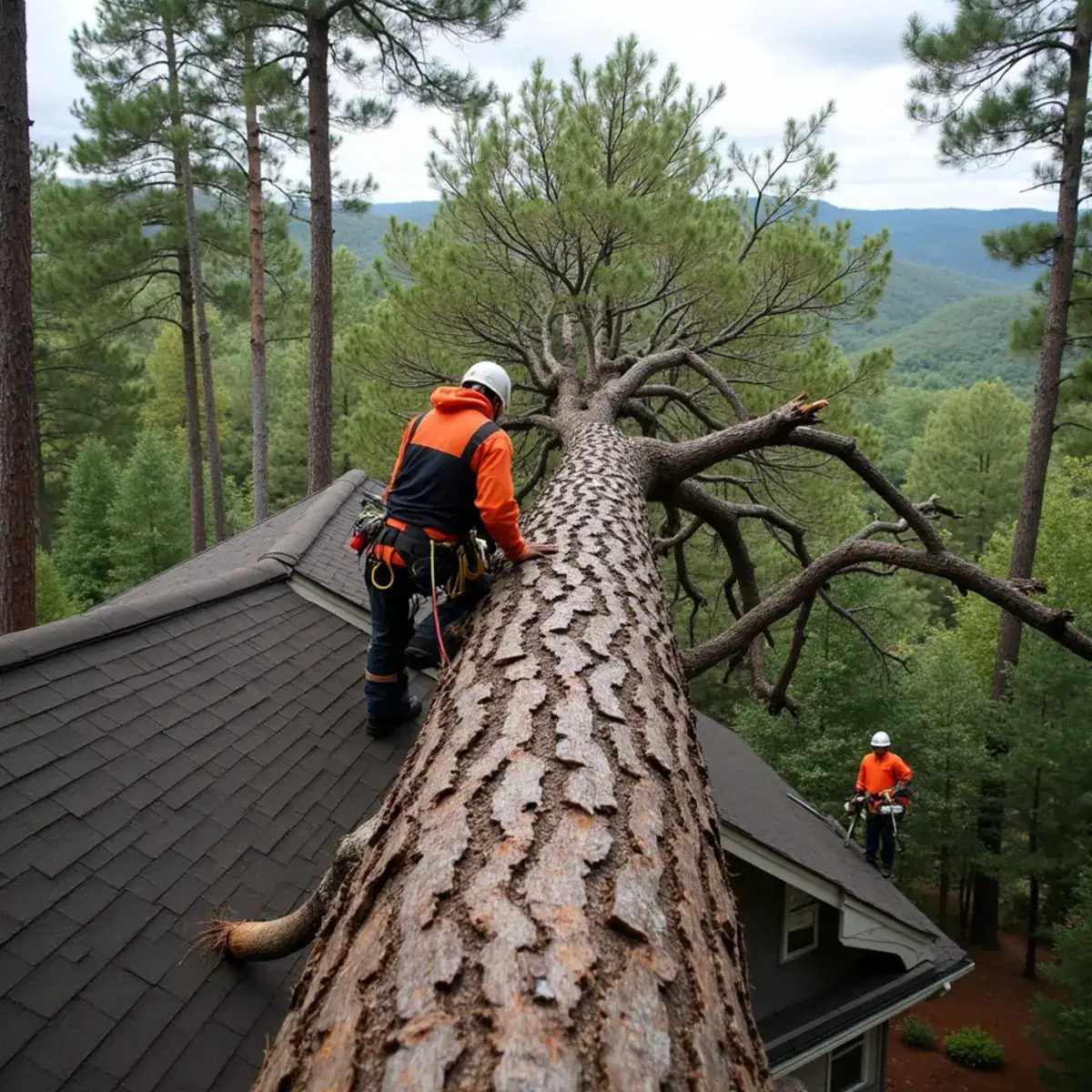
Photograph the tree on the structure, the structural damage itself, and the surrounding scene before anything is moved. Our crews do this as a matter of course through our insurance claim tree removal service — dated photos, an itemized written scope, and direct coordination with your adjuster — which is exactly what turns a contested dock claim into an approved one.
Check these before storm season, not after
The worst time to learn how your policy treats a dock is standing on the bank with a pine across it. A ten-minute review with your agent now can save a denied claim later. Ask specifically about:
- Whether your dock or boat house is a scheduled 'other structure' and its exact coverage limit
- Whether that limit is a percentage of your dwelling coverage or a separate dollar figure
- Whether tree removal from the structure is included, and any per-tree cap
- Your deductible, and whether wind/hail carries a separate (often higher) one
- Whether debris removal from the water is excluded — it very commonly is
Why lakefront removals cost more to begin with
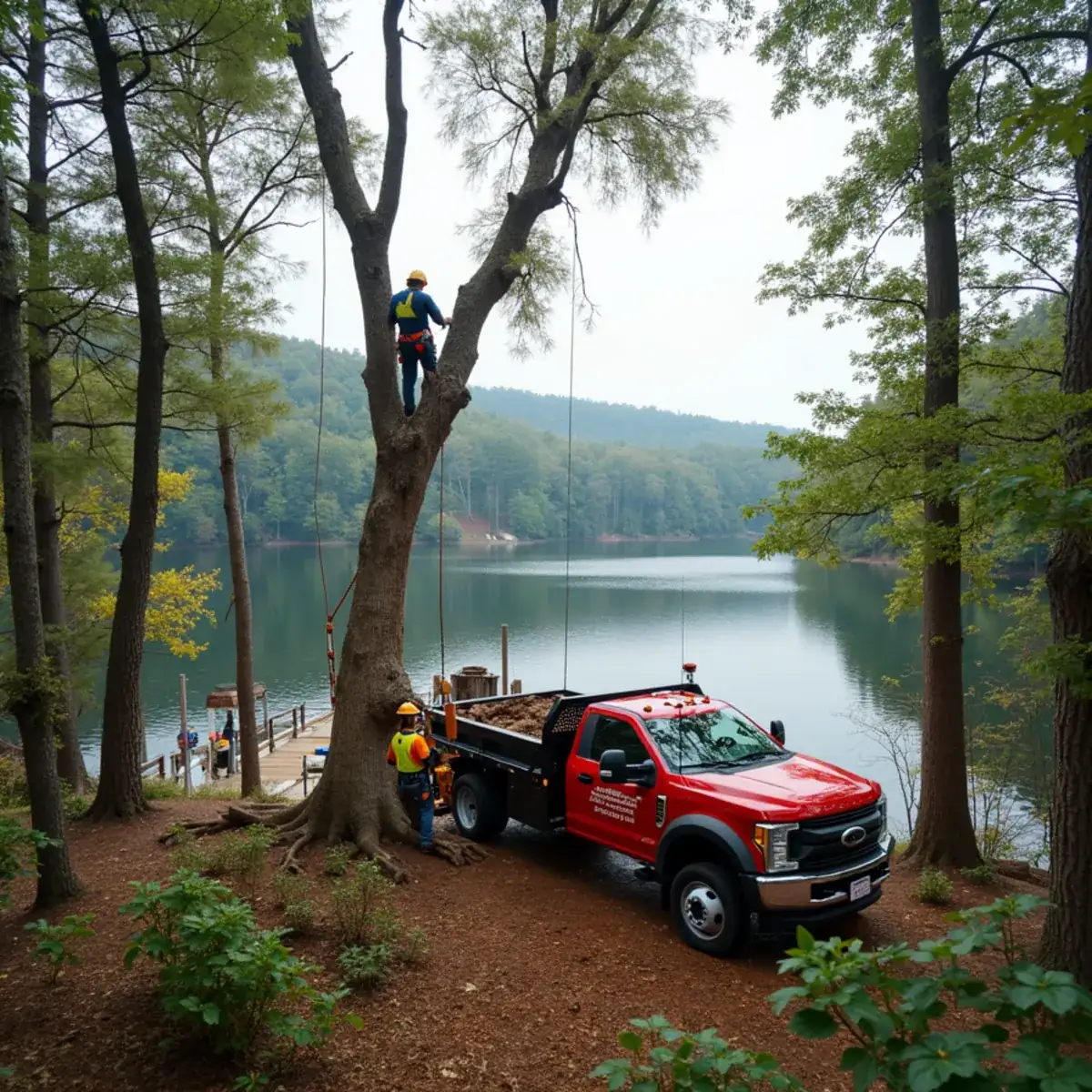
Even when a claim is approved, a tree on a dock is a harder, pricier removal than the same tree in a yard — and understanding why helps the conversation with your adjuster. The bank is steep, a truck usually can't reach the water's edge, and the wood has to be rigged up and away rather than dropped, sometimes with a crane reaching over the house or a barge to carry debris off a no-access shoreline. Those methods exist because the alternative — dragging a tree back across your dock — destroys what's left of it. A written scope that explains the access and rigging is what justifies the cost to a carrier who's only looking at a photo.
Filing a dock-damage claim, step by step
If a tree has damaged a covered dock or boat house, a little order to the process keeps the claim moving and protects you from paying for coverage you actually have:
- Make it safe first — remove the immediate hazard and stop further damage; most policies require this, and it doesn't waive your claim
- Document before anything moves — dated wide and close photos of the tree on the structure, the structural damage, and the scene
- Open the claim promptly and get your claim number and adjuster contact
- Get a written, itemized scope from your tree service that separates emergency mitigation, removal, and any structure-related work
- Confirm your dock's coverage limit and deductible with your agent so you know what's actually reimbursable
- Keep every invoice, photo, and message in one place, and let your tree service coordinate directly with the adjuster
Talk to us and your adjuster early
If a tree is down on your dock around Seneca or the Keowee shoreline, call us to secure it and stop further damage, and notify your insurer in parallel. We'll handle the documentation side so your claim has what it needs. Your policy and adjuster always have the final say, but good documentation gives you the best possible footing.
Need help from a real Upstate tree crew?
Free estimates, 24/7 emergency response, fully insured. Call Rig Line Tree Service today.
Frequently asked
Not always. Docks and boat houses are often treated as 'other structures' with their own limits, or excluded entirely. Check your specific policy — ideally before a storm.
Usually not, unless the tree damaged a covered structure. Debris removal from the water itself is frequently excluded.
Possibly, if your dock is a covered 'other structure' on your policy. The claim follows the damaged structure, not your house specifically. Confirm your dock's coverage and limit with your agent, and document the damage thoroughly either way.
Access and method. Steep banks, no truck access, and rigging wood up and away from the water — sometimes with a crane or barge — make it slower, more technical work. A written scope explaining that is what justifies the cost to your insurer.
Yes. We provide the dated photos, itemized written scope, and invoice adjusters expect, and we're glad to coordinate directly with yours. Good documentation is what turns a contested lakefront claim into an approved one, so we treat it as part of the job.