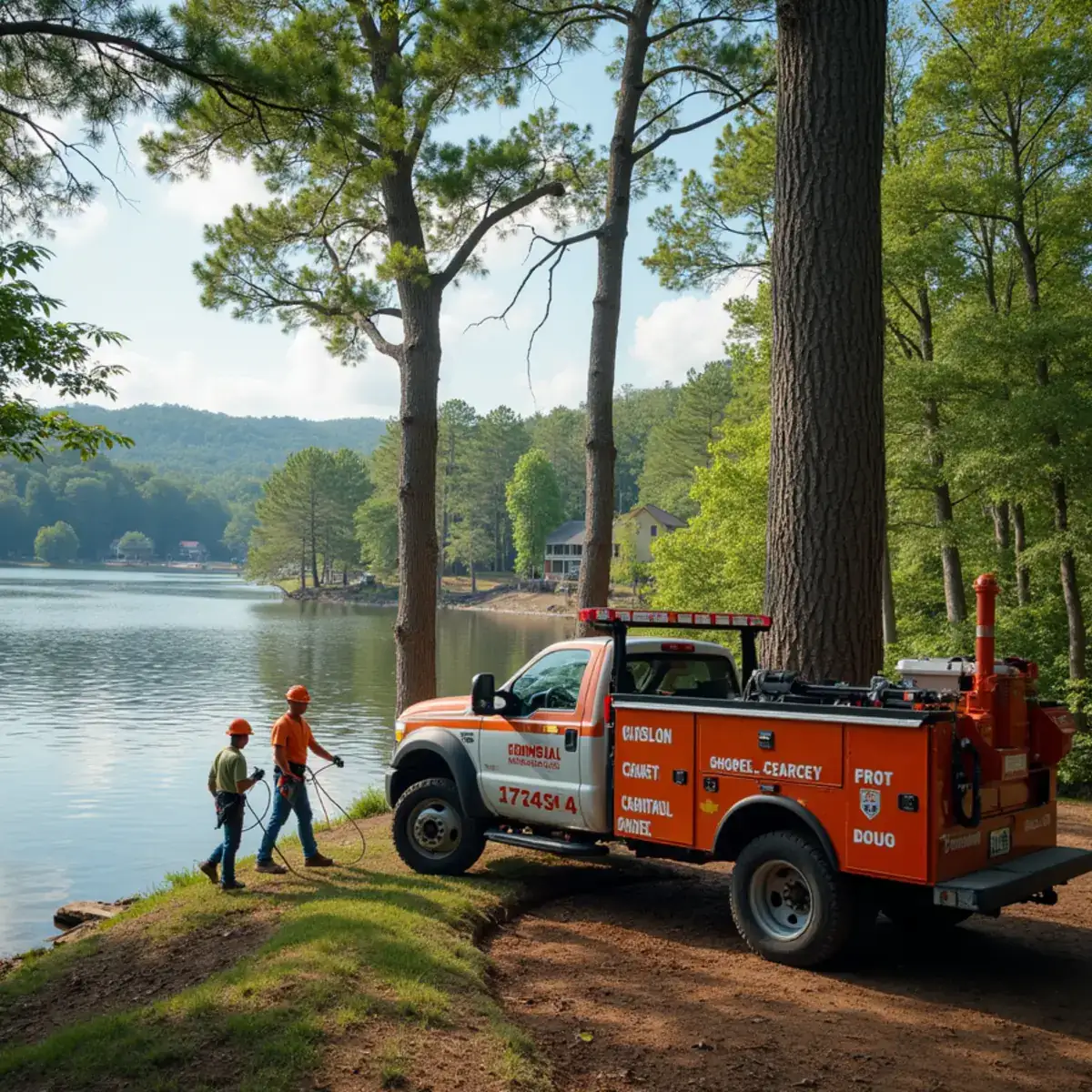
Lake Hartwell isn't like your back forty. The shoreline is federal land managed by the U.S. Army Corps of Engineers, and what you can and can't do with the trees on it is governed by the lake's Shoreline Management Plan. Cutting the wrong tree can bring a violation, so it pays to understand the basics before you pick up a saw — or hire someone who will.
The land at the water's edge usually isn't yours to clear
On Corps-managed lakes, private property typically stops above the shoreline, and the strip down to the water sits within a managed public zone. That zone is where vegetation rules apply. Even when a tree is 'in your view,' if it's in the Corps buffer, removing it may require authorization — and unauthorized cutting is taken seriously.
What's generally permitted vs. what needs a permit
Rules change and are enforced case by case, so treat this as orientation, not gospel. In broad terms, removing genuinely dead, diseased, or hazardous trees is often allowable, while clearing healthy trees or 'topping for a view' generally is not without a permit. The only reliable source is the Corps office for Hartwell itself.
- Dead/hazardous tree removal — often allowable, sometimes with notice
- Clearing healthy shoreline trees — typically restricted or prohibited
- View 'trimming' in the buffer — usually needs authorization
- Planting and mulching — governed by the vegetation plan
- Always confirm with the Corps' Hartwell Project office first
How we help you stay compliant
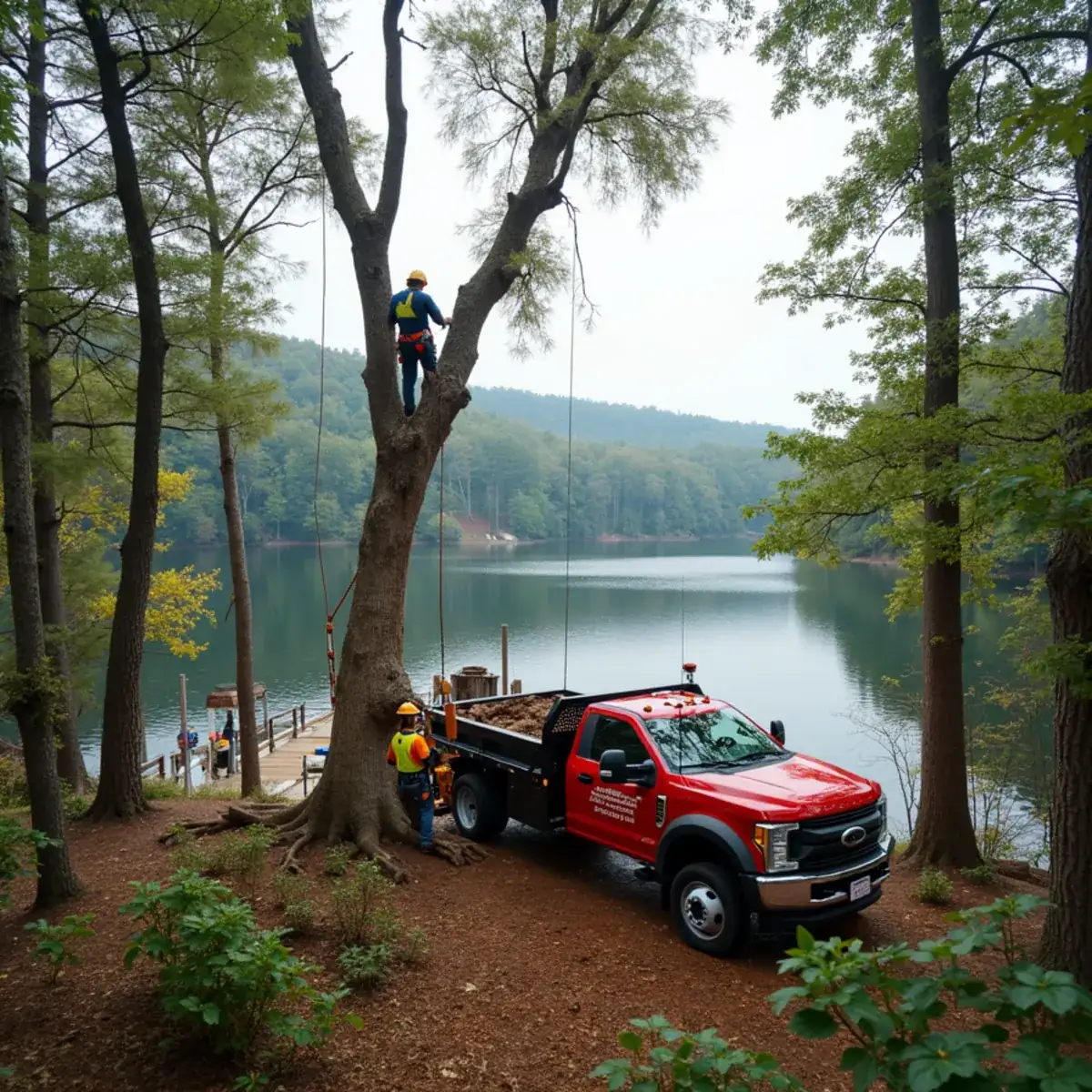
Our waterfront and shoreline tree care crews work these buffers regularly and keep the work inside the lines. When a shoreline tree is a genuine hazard, we can assess it and — where the rules and a permit allow — remove it with rigging that carries wood up and away from the water rather than into it.
Hartwell vs. Keowee: two different rulebooks
If you own on more than one Upstate lake, don't assume the rules travel with you. Lake Hartwell is a federal reservoir built and managed by the U.S. Army Corps of Engineers, so its shoreline sits under Corps regulations and its Shoreline Management Plan. Lake Keowee, just up the road, is a Duke Energy reservoir governed instead by Duke's own Shoreline Management Plan. The two agencies define buffer widths, permitting, and allowable vegetation work differently, and a project that's fine on one lake can be a violation on the other. The one thing they share is the underlying philosophy: healthy shoreline trees generally stay, hazards can usually go with the right authorization, and 'I wanted a better view' is not, on its own, a green light.
What to do before you cut on Hartwell
A little process up front keeps a shoreline project from becoming an enforcement headache. The sensible order:
- Confirm where your private property ends and the Corps-managed shoreline begins — it's often higher up the bank than owners expect
- Contact the Corps' Hartwell Project office about your specific lot and what you're planning
- Get any required authorization in writing before a saw touches the tree
- Have genuinely hazardous or dead trees documented, since those are the most likely to be permittable
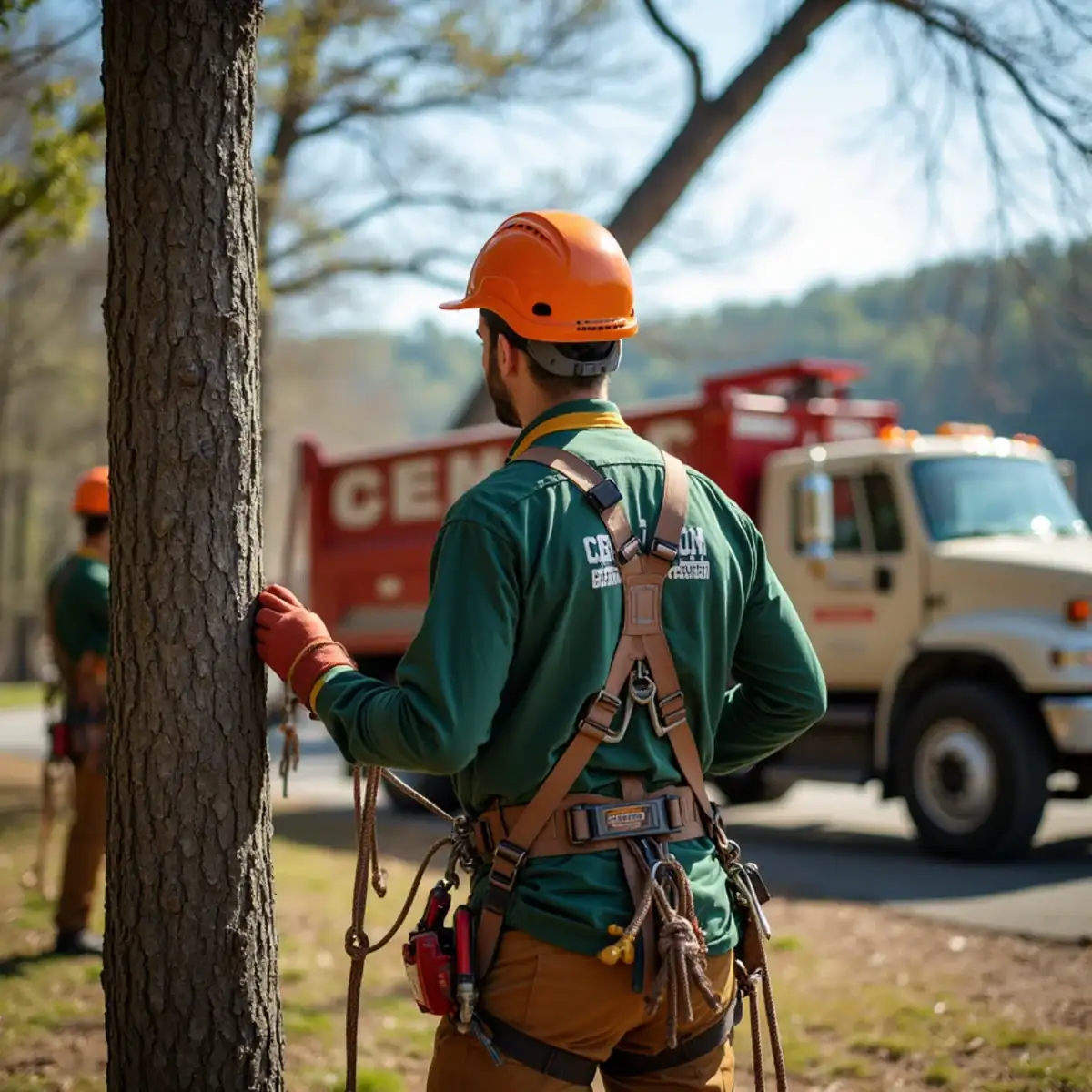
- Use a crew that knows the buffer and will keep the work — and the debris — inside the lines
Shoreline work that's usually fine — and how to prove it
Not everything on a Corps shoreline needs a lengthy approval, and knowing the low-friction cases saves you from either over-asking or accidentally overstepping. In general terms — always verified with the Hartwell office for your parcel — these tend to be the more straightforward situations:
- Removing a clearly dead, diseased, or storm-damaged hazard tree that threatens people or a structure
- Cleaning up limbs and debris a storm has already brought down
- Approved native plantings and mulching that support the vegetation plan rather than clear it
- Routine maintenance of previously permitted access paths or structures
For Fair Play and the Hartwell shoreline
Owners around Fair Play and the Hartwell peninsulas should verify their specific situation with the Corps before any shoreline work. We're glad to look at the tree, tell you honestly whether it reads as a permittable hazard, and help you do it right.
Need help from a real Upstate tree crew?
Free estimates, 24/7 emergency response, fully insured. Call Rig Line Tree Service today.
Frequently asked
Generally not without authorization if the tree is healthy and in the Corps buffer. Removing dead or hazardous trees is more often allowable. Confirm with the Corps' Hartwell office before any cutting.
On Hartwell, the land between your private property line and the water is typically federal, managed by the Army Corps of Engineers — even though it fronts your yard. That's why vegetation work there is regulated, and why the buffer often starts higher up the bank than owners assume.
No. Hartwell is a Corps of Engineers reservoir; Keowee is a Duke Energy reservoir with its own Shoreline Management Plan. Buffer widths, permitting, and allowable work differ, so confirm the rules for the specific lake your lot is on before any shoreline project.
Unauthorized cutting in a Corps shoreline buffer can bring penalties and restoration or replanting requirements, and it's taken seriously. It's far cheaper to confirm what's allowed first — which is exactly what we help owners do before any work begins.
Dead and hazardous trees are the most likely to be permittable, but 'dead' isn't a blanket exemption on Corps land — it's best to have it documented and to check with the Hartwell Project office rather than assume. We can assess the tree and help you handle the notification or authorization.