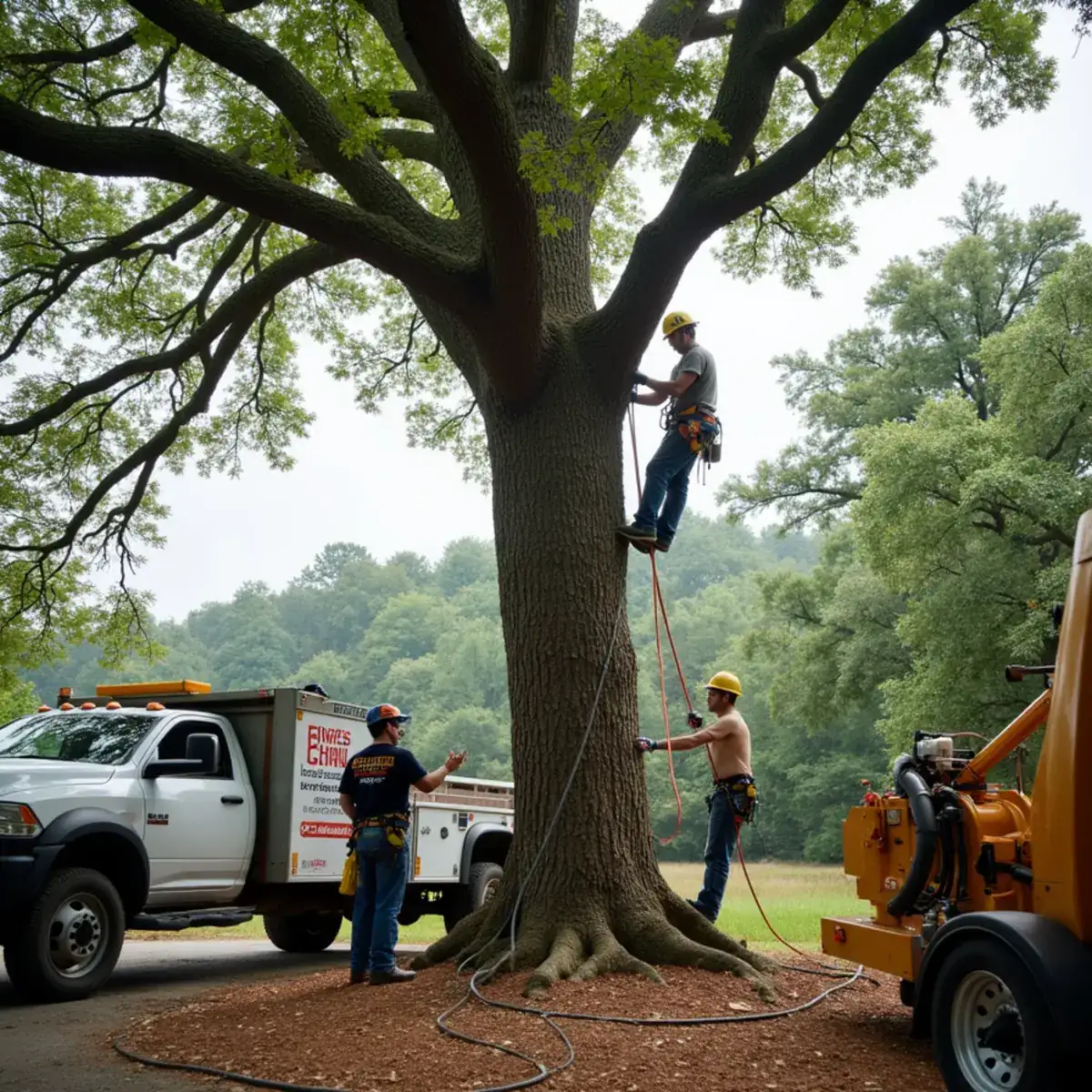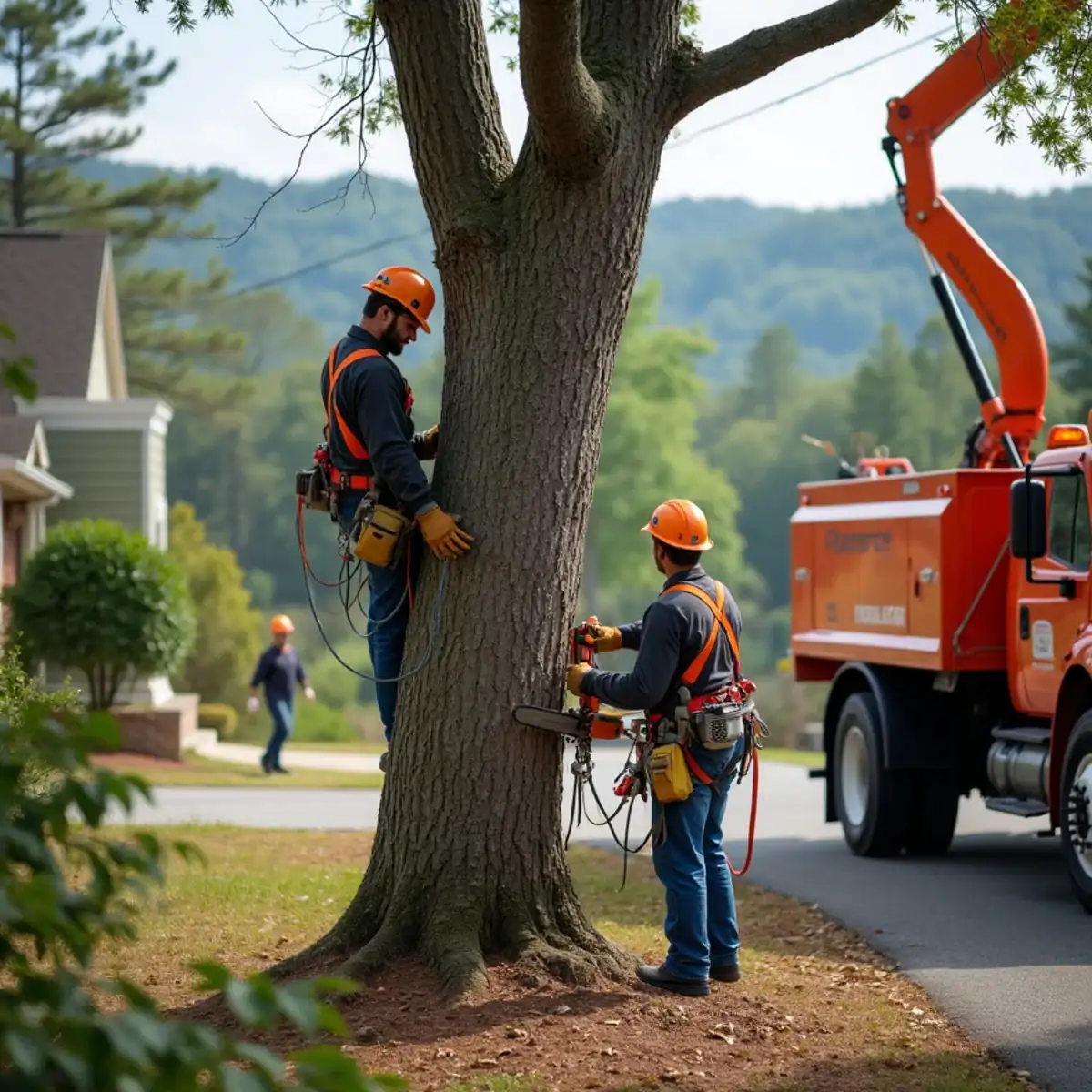
A tree that's gotten too big for its spot is a common problem, and there's a right and a wrong way to solve it. The wrong way — topping — is still everywhere, because it's fast and cheap. The right way — crown reduction — costs a bit more thought and protects the tree for decades. The difference is worth understanding before you hire anyone.
What topping actually does
Topping means cutting major limbs back to stubs, with no regard for where the tree's growth points are. The tree responds to the shock by throwing out a mess of weak, fast-growing shoots called water sprouts. Those sprouts are poorly attached and prone to breaking, the big stub wounds rot because they can't seal, and within a few years you have a taller, weaker, uglier, more hazardous tree than you started with.
What crown reduction does instead
Crown reduction shortens limbs by cutting back to a healthy lateral branch that can take over as the new leader. The tree keeps its natural form, the cuts seal properly, and the canopy is genuinely smaller and lighter — not just butchered. It's real size control that respects how the tree grows, and it's the standard our tree trimming and pruning crews work to.
- Topping → weak water sprouts, rot, bigger future hazards
- Reduction → natural form kept, cuts seal, lasting size control
- Reduction relieves storm-loading leverage on long limbs
- Reduction preserves the tree's health and value
Why it matters most for prized hardwoods
The Upstate's heritage white oaks, water oaks, and pecans are irreplaceable on a human timescale — you can't grow a new 100-year-old oak. Topping one to "manage" it is like solving a leaky faucet with a sledgehammer. For truly valuable trees, reduction paired with a hazardous tree assessment and cabling where needed keeps them safe and standing.
How different Upstate trees handle reduction
Not every tree responds to reduction the same way, and a good arborist adjusts the plan to the species in front of them. A few patterns we see across common Upstate trees:
- Oaks — respond well to conservative reduction done in the dormant season; best pruned in winter to avoid the oak-wilt and borer window
- Pines — don't re-sprout from old wood the way hardwoods do, so reduction is limited; often the honest answer for an over-tall pine near a house is removal, not reduction
- Maples and sweetgums — tolerate reduction but bleed heavily if cut in early spring, so timing matters
- Crape myrtles — the poster child for needless topping ('crape murder'); they only need light structural pruning, never stubbing back
- Bradford pears — weak-forked by nature; reduction can buy time, but many are better removed before they split
- Heritage hardwoods — the best candidates for careful reduction paired with cabling, preserving a tree that can't be replaced
Ask before they cut
If a company proposes "topping" your trees, ask them to reduce the crown properly instead — or find a company that will. Homeowners protecting mature trees around Clemson and Seneca deserve pruning that helps the tree, not one that dooms it.
How to tell reduction from topping on the ground
You don't need to be an arborist to spot the difference before or after the work. Reduction and topping leave very different signatures:
- Cut location — reduction shortens a limb back to a healthy side branch; topping leaves a bare stub between branches
- The look afterward — reduction keeps the tree's natural outline, just smaller; topping leaves a hat-rack of blunt stubs
- Wound size — reduction makes smaller cuts the tree can seal; topping makes large stub wounds that rot
- What grows back — reduction keeps orderly growth; topping erupts in dense clusters of weak water sprouts
- The quote — a suspiciously cheap 'trim to height' is often topping in disguise; ask exactly where the cuts will be made
The real cost of topping, years later
Topping's damage is a slow-motion bill. Within a season or two the tree throws up a thicket of water sprouts that are only weakly attached to the outside of the old stubs — so they tear out in exactly the storms you were trying to protect against. Meanwhile the big stub wounds can't seal, so decay works down into the branches and trunk, hollowing the structure invisibly. Five or ten years on, you're often looking at a taller, denser, weaker, uglier tree than you started with, and the eventual bill isn't another prune — it's removal of a tree that's now a hazard. Reduction done once, correctly, avoids that entire arc.
Need help from a real Upstate tree crew?
Free estimates, 24/7 emergency response, fully insured. Call Rig Line Tree Service today.
Frequently asked
It's cheaper today and far more expensive later — in weak regrowth, decay, storm damage, and eventual removal. Proper crown reduction is the better value over the life of the tree.
It's shortening a tree's height or spread by cutting limbs back to healthy lateral branches that can take over as the new leader. The tree keeps its natural form, the cuts seal properly, and the canopy is genuinely smaller and lighter — real size control instead of the butchery of topping.
Often it can be improved through restoration pruning, which selects the strongest of the water sprouts over several years to rebuild a more natural, better-attached structure. It won't undo the internal decay, but it can make a topped tree safer and better-looking. We assess whether restoration or removal is the smarter path.
As a rule we avoid removing more than about a quarter of a mature tree's live canopy in a single year — take too much and you stress the tree and trigger the same weak regrowth topping causes. For a big reduction we may stage it across seasons to keep the tree healthy.
For most Upstate hardwoods, the dormant window from late fall through late winter is ideal — the structure is easy to read and cuts seal cleanly as spring growth begins. Safety-driven reduction of hazardous limbs, though, can and should happen whenever the risk is present.