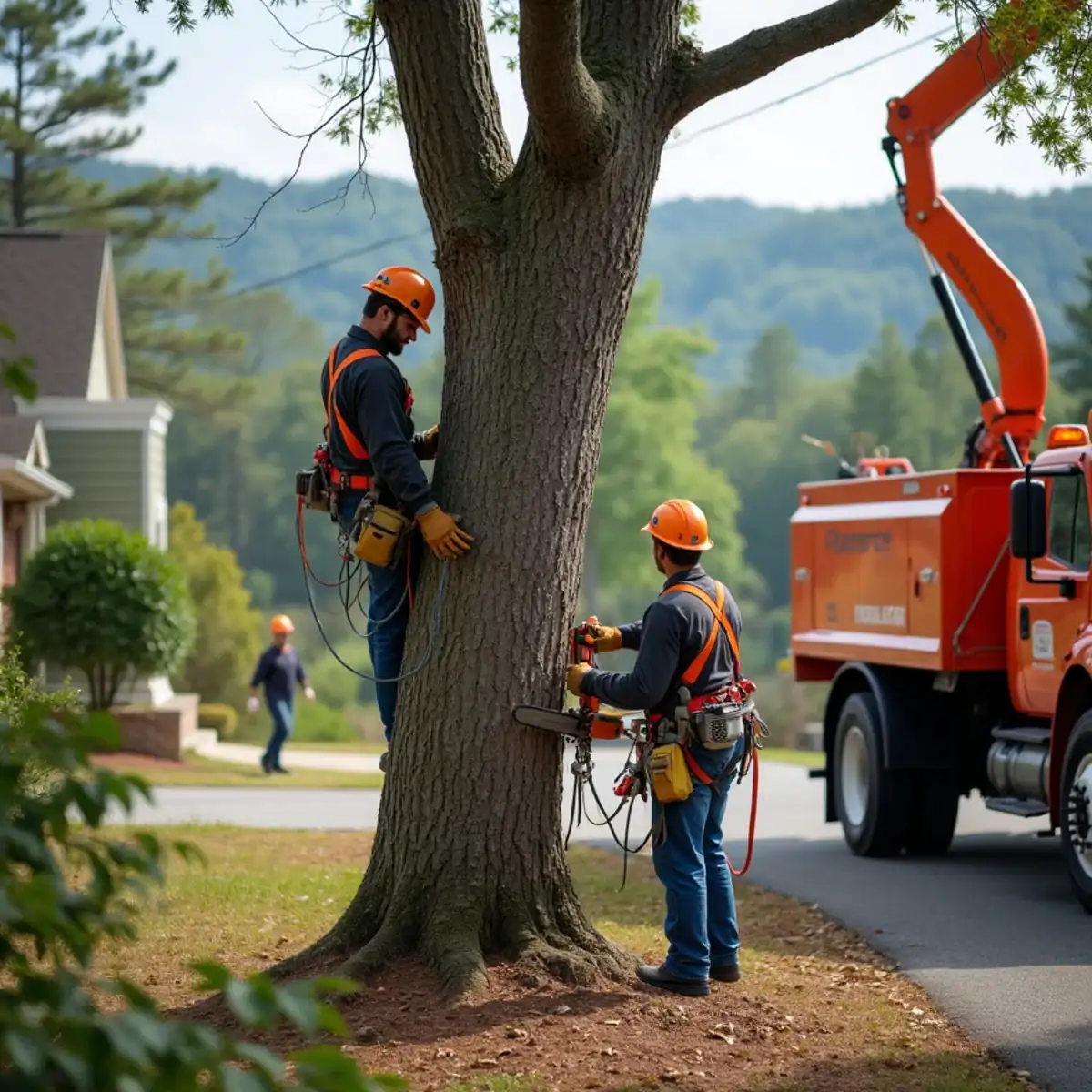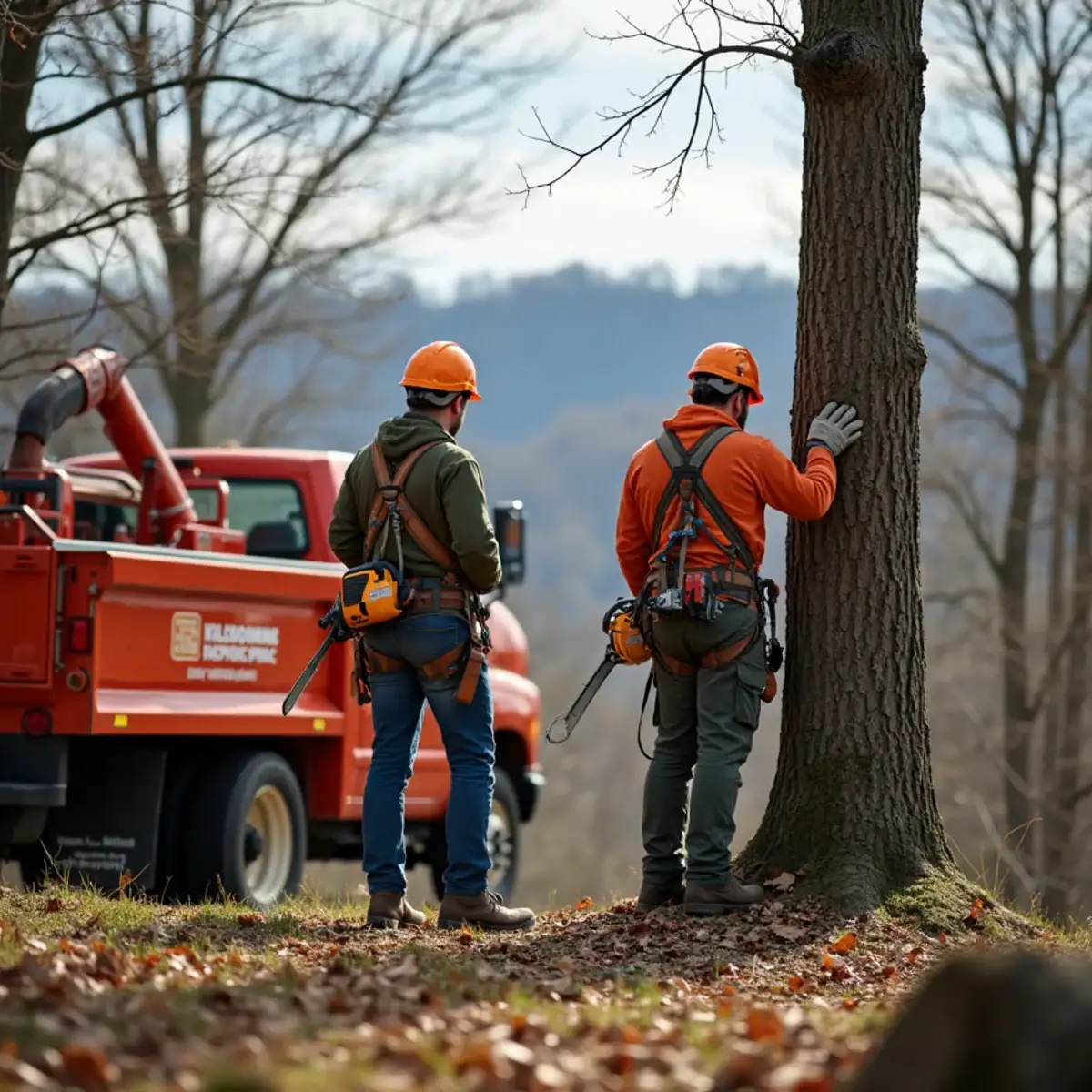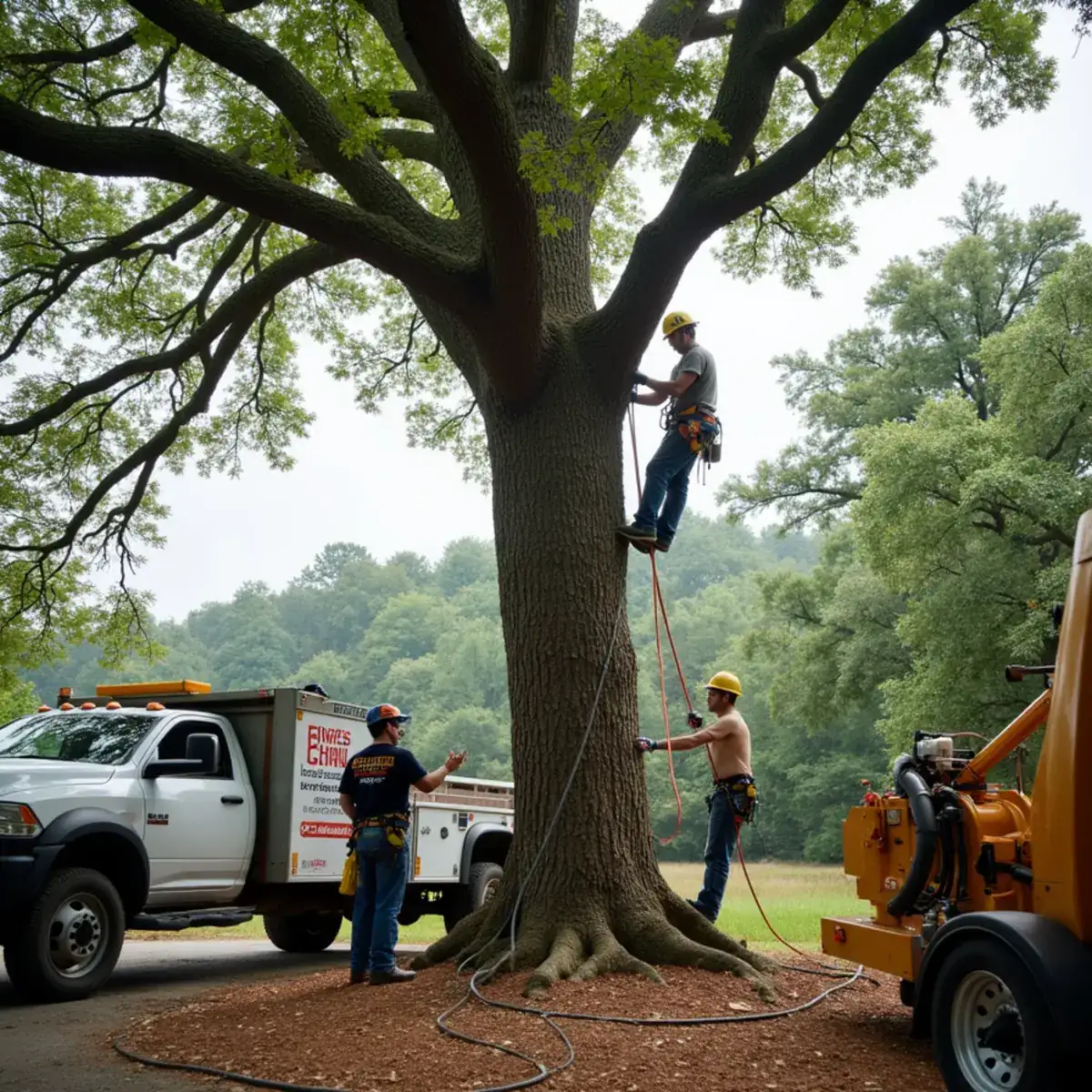
Some trees are worth saving even when they have a flaw. A heritage white oak that's shaded a Clemson yard for a hundred years can't be replaced in a lifetime — so when it develops a weak union or a heavy horizontal limb, removal shouldn't be the first answer. Cabling and bracing are how arborists keep valuable, structurally imperfect trees standing safely.
What cabling and bracing do
Cabling installs flexible steel or synthetic cables high in the canopy to limit how far weak limbs or codominant stems can move in the wind, sharing the load between them. Bracing uses threaded rods to reinforce a split or weak union directly. Together they reduce the chance that a specific defect fails catastrophically — buying a valued tree years or decades of safe life.
- Cables limit movement between weak or codominant stems
- Braces reinforce split or cracked unions directly
- The system shares wind and ice loads across the canopy
- Best paired with crown reduction to lighten the limbs
- Requires periodic inspection over its service life
It's not a cure — it's management
Cabling doesn't fix a defect; it manages the risk it creates. That's why it starts with a hazardous tree assessment to confirm the tree is worth preserving and a good candidate, and it's usually paired with proper crown reduction to take weight off the weak parts. A tree that's too far gone is better removed than propped up.
Installed and inspected properly, or not at all
A support system done wrong is worse than none — it can hide a worsening problem or fail under load. Ours are installed to arboricultural standards and meant to be inspected periodically, because a cable is only doing its job if it's still sound. This is careful, long-term work, not a one-and-done.
Which trees are worth supporting
Cabling and bracing aren't for every tree — they're for trees whose value justifies managing a defect rather than removing it. Good candidates share a few traits:
- A large, mature specimen — a heritage oak, pecan, or shade tree that can't be replaced in a lifetime
- A defect that's a movement or attachment problem, not advanced internal decay — a weak fork, codominant stems, an over-extended limb
- Enough sound wood at the attachment point to actually anchor the hardware
- A target below worth protecting — a home, patio, or drive that raises the stakes of a failure
- An owner willing to keep up periodic inspections, since a support system is a commitment, not a one-time fix
Cabling is a partnership with pruning
A support system rarely works alone. The most durable approach pairs cabling or bracing with a modest crown reduction that takes weight and wind-load off the very limbs the hardware is protecting. Think of it as reducing the demand while you increase the support: the cable limits how far a weak union can flex, and the reduction means there's less leverage trying to open it in the first place. Skip the pruning and you're asking a single cable to hold back a full, heavy, wind-catching limb indefinitely — a lot to ask. Done together, the two buy a prized tree years, often decades, of safe life it wouldn't have had otherwise.
What installation day looks like — and after
If you've decided to support a tree, it helps to know what actually happens and what you're committing to. Cabling is a quiet, one-day job for a crew, but the value comes from doing it to standard and keeping up with it:
- A climber ascends and identifies the anchor points high in the canopy — typically about two-thirds of the way up the limbs being supported
- Cables are installed between those points to arboricultural (ANSI) standards, limiting movement while still letting the tree flex naturally
- For a split or weak union, threaded bracing rods may be added through the union for direct reinforcement
- The work is usually paired with a light crown reduction to take load off the very limbs being protected
- The system is not set-and-forget: it should be inspected periodically to confirm the hardware is sound and the tree hasn't outgrown it
- Kept up properly, a support system can add years or decades of safe life to a tree that would otherwise have to come down
For the heritage oaks of Clemson and Seneca
The mature oaks around Clemson and Seneca are part of what makes those places beautiful. Before you remove a big, imperfect, irreplaceable tree, ask whether cabling and reduction could preserve it. Often, they can.
Need help from a real Upstate tree crew?
Free estimates, 24/7 emergency response, fully insured. Call Rig Line Tree Service today.
Frequently asked
Cabling installs flexible cables high in the canopy to limit how far weak or codominant limbs can move in wind, sharing the load between them. Bracing uses threaded rods to reinforce a split or weak union directly. Many trees benefit from both together.
It manages the risk of a specific defect rather than curing it — but for the right tree, that can mean years or decades of safe life instead of removal. It works best paired with crown reduction to take load off the supported limbs, and it needs periodic inspection to stay effective.
Properly installed hardware can last many years, but it isn't set-and-forget. Cables and braces should be inspected periodically to confirm they're still sound and the tree hasn't grown past them. We build that follow-up into the plan rather than walking away after install.
Often the upfront cost is comparable, but the value is different: cabling preserves a mature, irreplaceable tree instead of leaving you a stump and a gap. For a heritage specimen worth keeping, it's usually the better long-term investment — provided the tree is a sound candidate.
No. Cabling needs enough sound wood to anchor the hardware and a defect that's about movement or attachment rather than advanced decay. A tree that's already hollow or structurally failing is usually better removed. We assess candidacy honestly before recommending it.