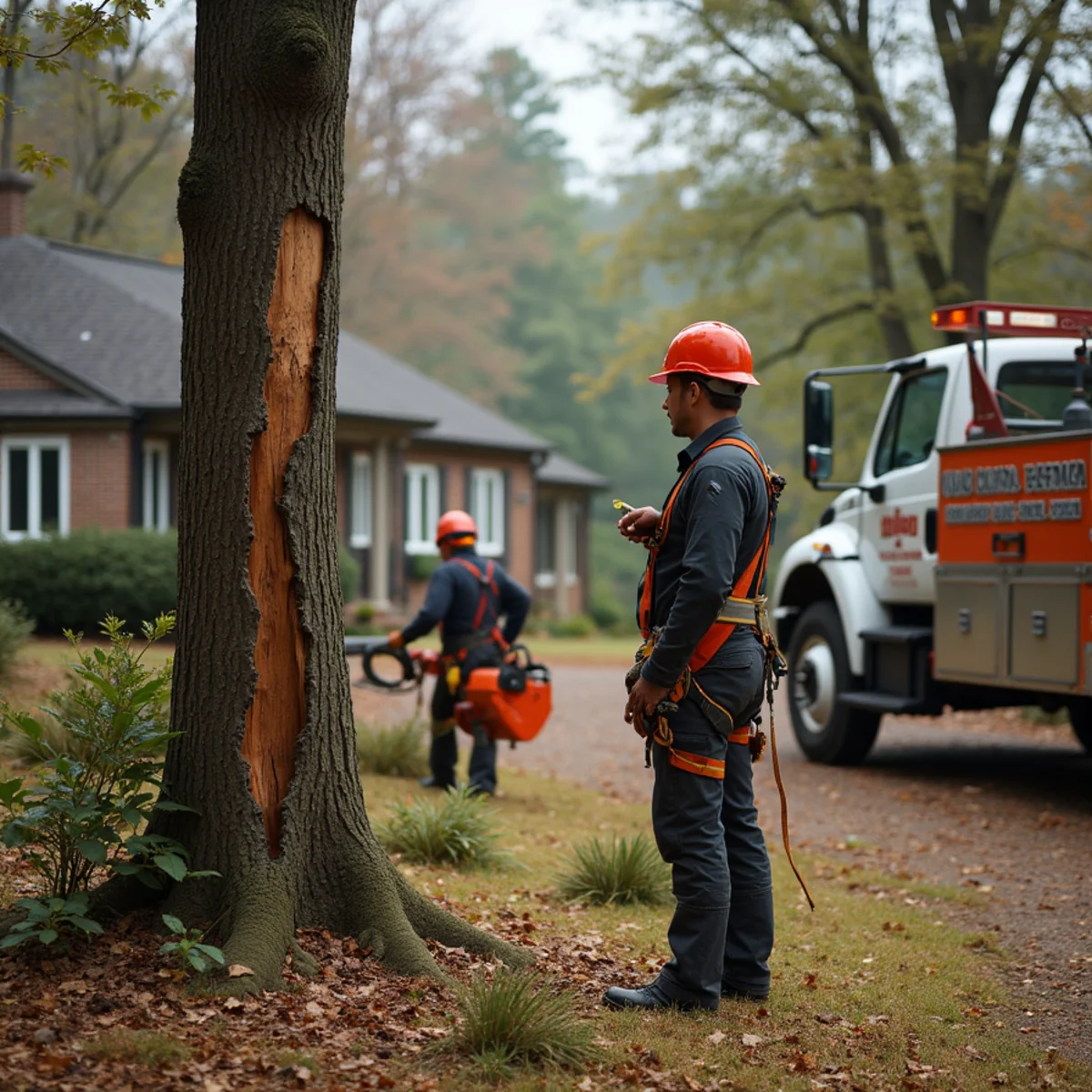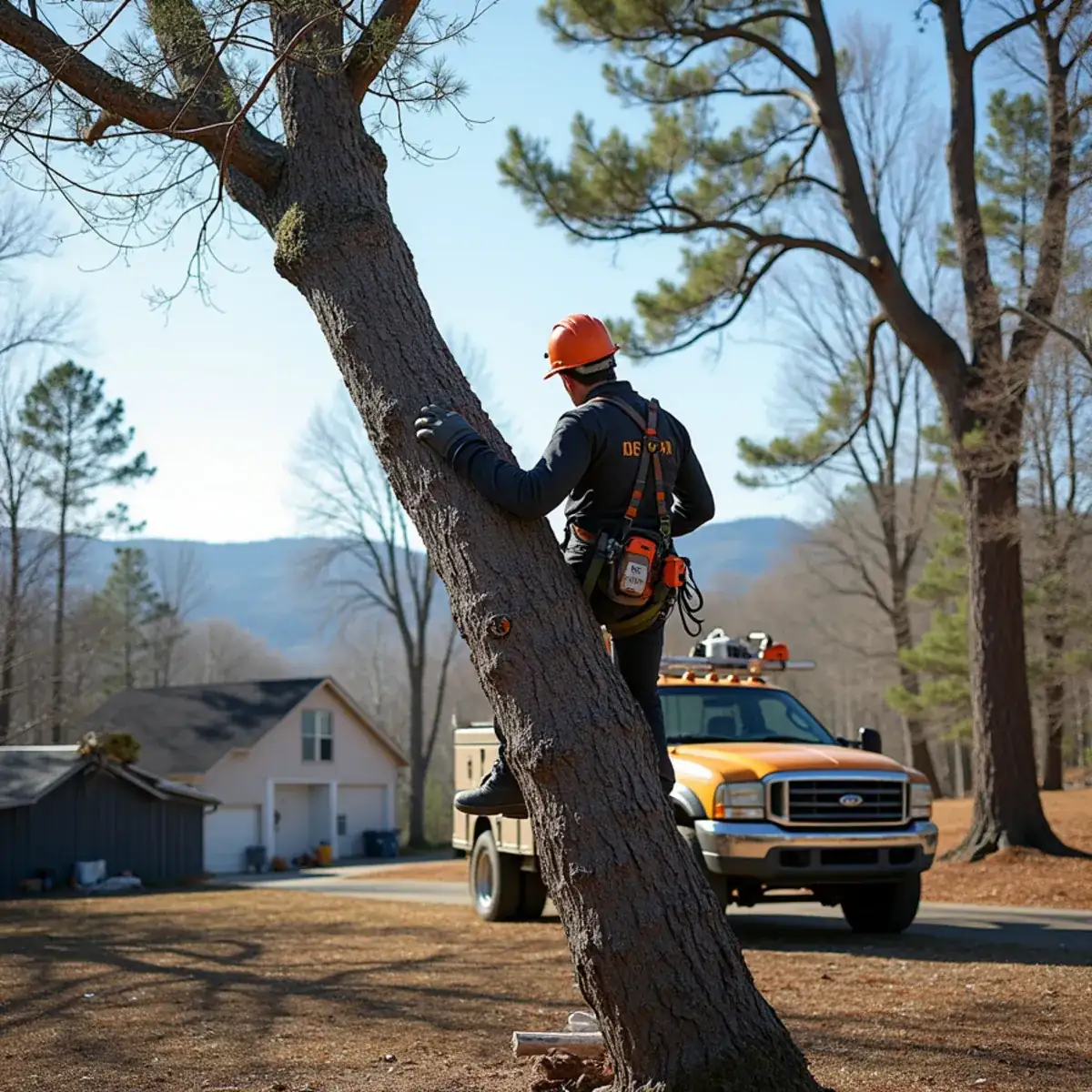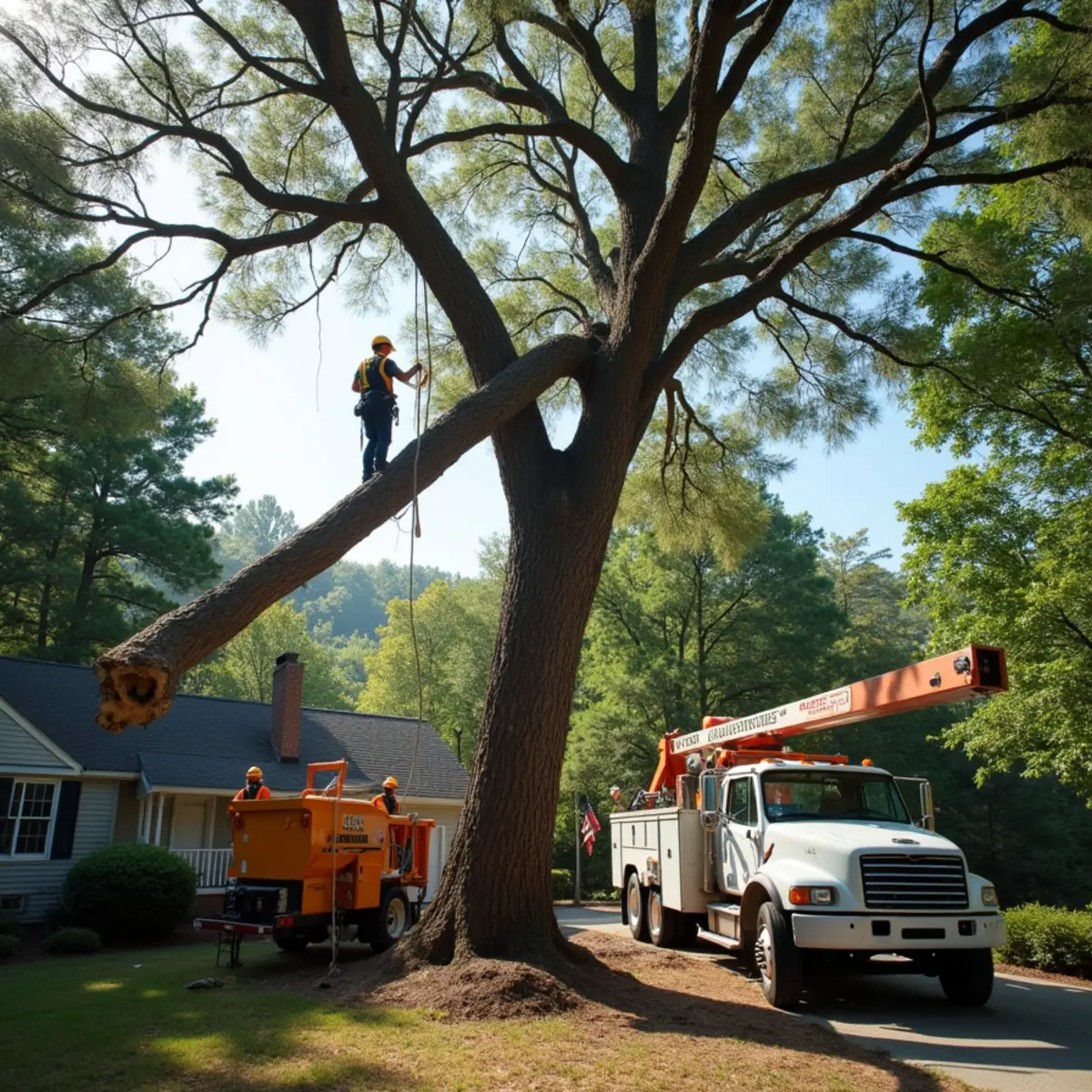
After every Upstate storm we get the same calls: a big limb cracked off but it's still up there, tangled in the branches below, swaying a little in the wind. It looks almost stable. It isn't. A hung-up broken limb has a name in the tree trade — a 'widowmaker' — and the name is not an exaggeration. Here's why one of these is more dangerous than the whole tree coming down, and what to do about it.
What makes a hanging limb so dangerous
A limb that falls all the way to the ground is over — the energy is spent. A limb that breaks but stays caught in the canopy is a loaded weapon that hasn't gone off yet. It's a heavy object suspended ten, twenty, or forty feet up, held by nothing more reliable than friction and a few smaller branches. It can release on its own with no warning — a gust, a bird, a temperature swing that shifts the wood — and when it comes, it comes straight down, fast, with no sound until it lands. That's exactly why they're called widowmakers: people are killed every year by limbs that chose their moment.
Where they hide
The obvious ones are right over the driveway. The dangerous ones are the ones you stop noticing. Walk your property after any storm and look up — not out — for:
- A broken limb lodged in lower branches instead of lying on the ground
- A large limb cracked at the trunk but still hinged on, hanging down
- A dead branch that snapped at the base and dropped into the crown below it
- Split or torn wood up high, pale against the weathered bark around it
- Anything hung up over a walk, patio, play area, driveway, or the path to your door
Why you can't just knock it down
The instinct is to grab a pole saw, a rope, or a ladder and bring it down from below. Every one of those puts you directly underneath a falling object you can't control. A rope throw can release the limb onto the person pulling it. A pole saw cut can drop it the instant it's touched — toward you, because gravity only goes one way. A ladder puts you up in the fall zone with both hands busy. Getting a hung-up limb down safely means controlling where it goes, which usually means a climber setting a line above it and lowering it, or reaching it from a bucket — the kind of work our hanging limb removal crews do, not a homeowner with a pole saw.
What to do right now
- Keep people and pets out from under it and out of the area it could reach — rope it off if you can do that without going under it
- Move cars, grills, and anything else out of the fall zone from the side, never from beneath
- Don't try to knock it down, cut it, or pull it with a rope
- If it's touching or near a power line, treat it as live — stay back and call the utility
- Call a tree service to bring it down under control — this is a same-day job, not a someday one
After the storm, before the next one
Hanging limbs are usually a symptom of deadwood and weak branch attachments that were in the tree before the storm ever hit. The homes that get the fewest widowmakers are the ones whose trees are pruned of deadwood on a sensible rhythm — which is the quiet case for regular tree trimming. If you're finding hung-up limbs after every storm, the tree is telling you it's overdue for a look. We clear the immediate hazard, and while we're up there we flag what else is likely to come down next time. Homeowners across Westminster, Seneca, and the lake communities call us for exactly that.
Need help from a real Upstate tree crew?
Free estimates, 24/7 emergency response, fully insured. Call Rig Line Tree Service today.
Frequently asked
Yes — arguably more dangerous than a limb already on the ground, because it can release without warning and falls straight down with real force. They're called widowmakers for a reason. Keep people out from under it and have it brought down under control rather than waiting for it to choose its moment.
We strongly advise against it. Both put you directly beneath a heavy object you can't control, and it can release the instant it's touched — toward you. Getting it down safely means controlling the fall from above or from a bucket, which is climber's work.
We treat hung-up limbs over any target as a priority and can often get out the same day, and around the clock if it's over a doorway, driveway, or anywhere people pass. The sooner it's down under control, the sooner the risk is gone.
It usually means the tree carries deadwood and weak branch unions that break first in wind and ice. Clearing that deadwood on a regular pruning schedule is the single best way to cut down on widowmakers — the tree is telling you it's overdue for maintenance.