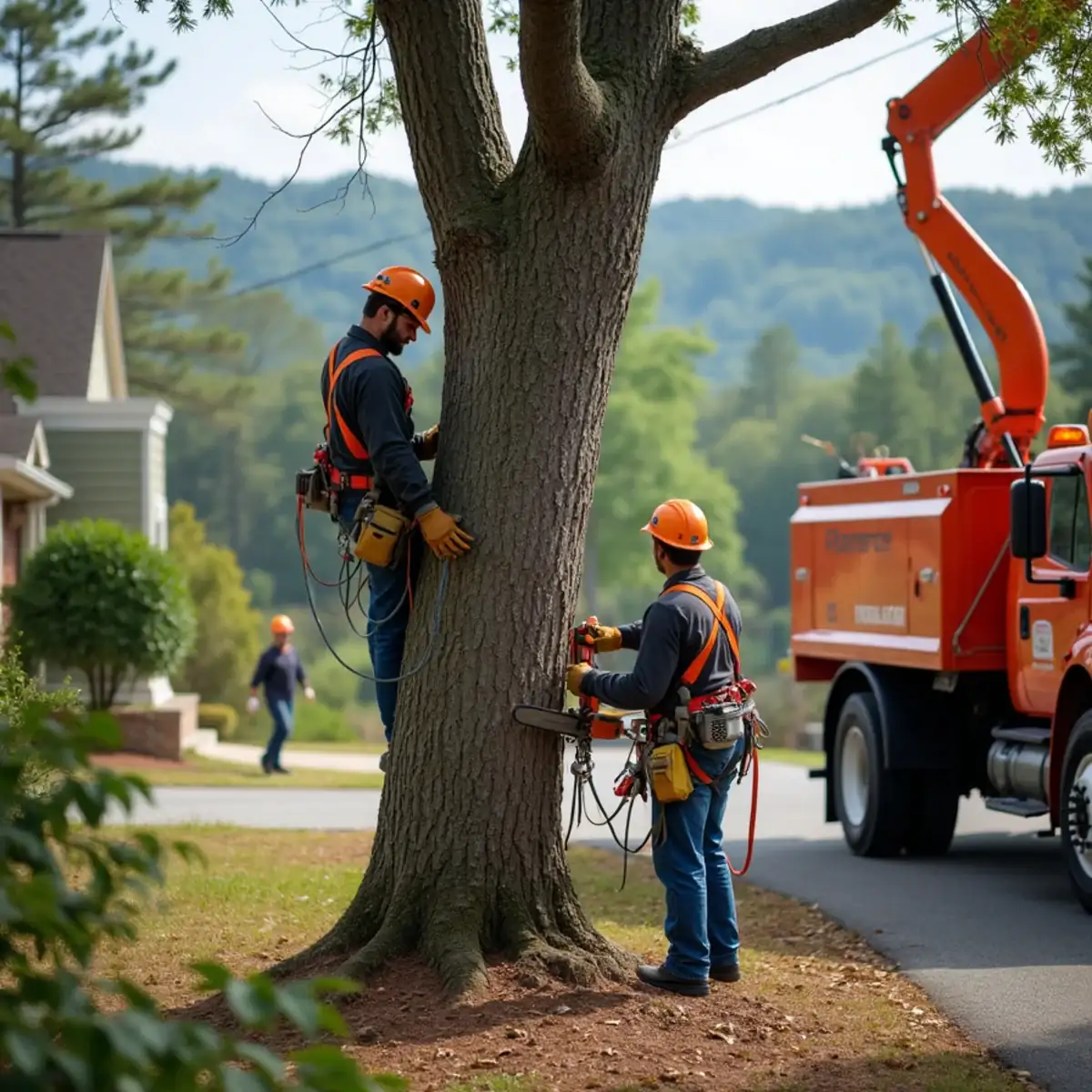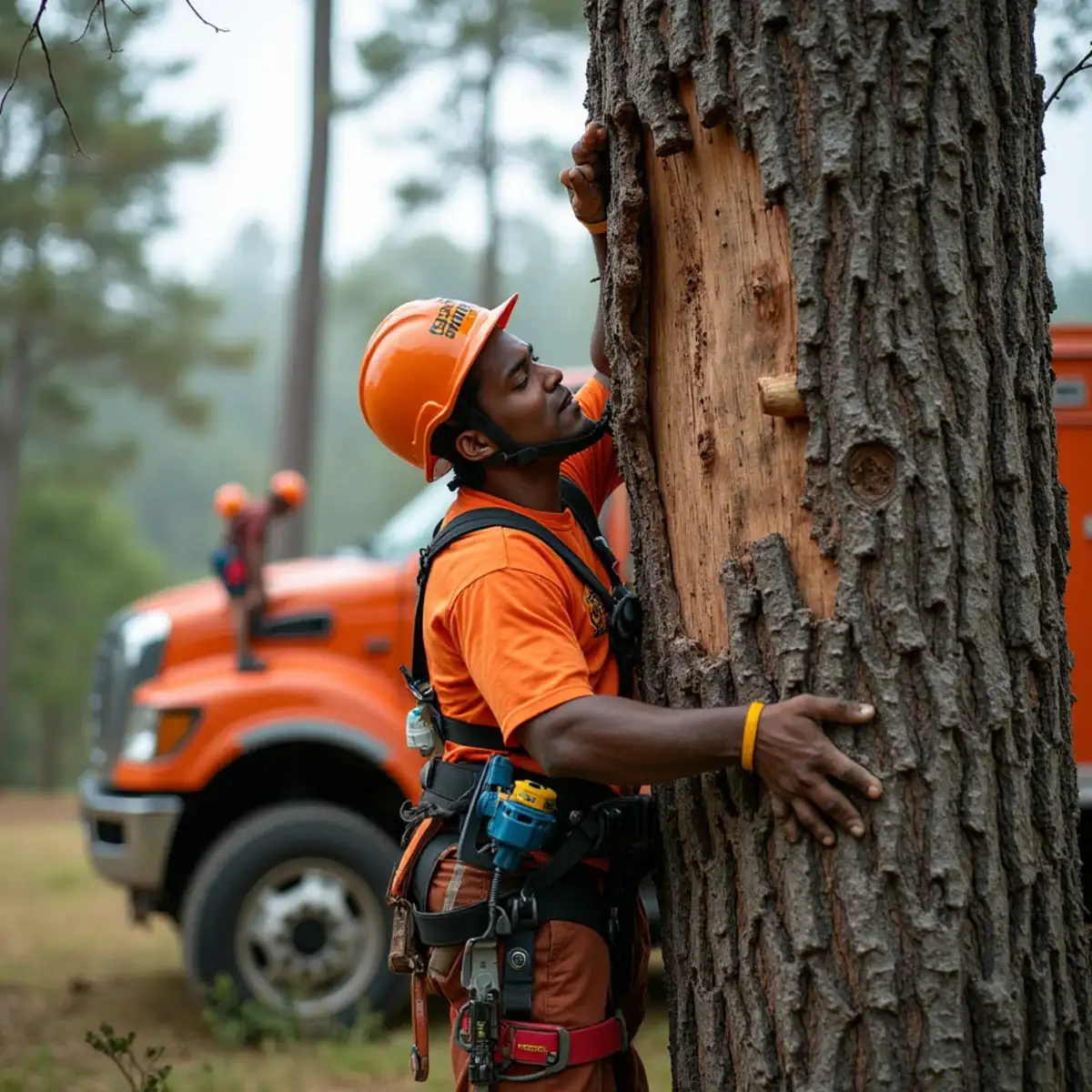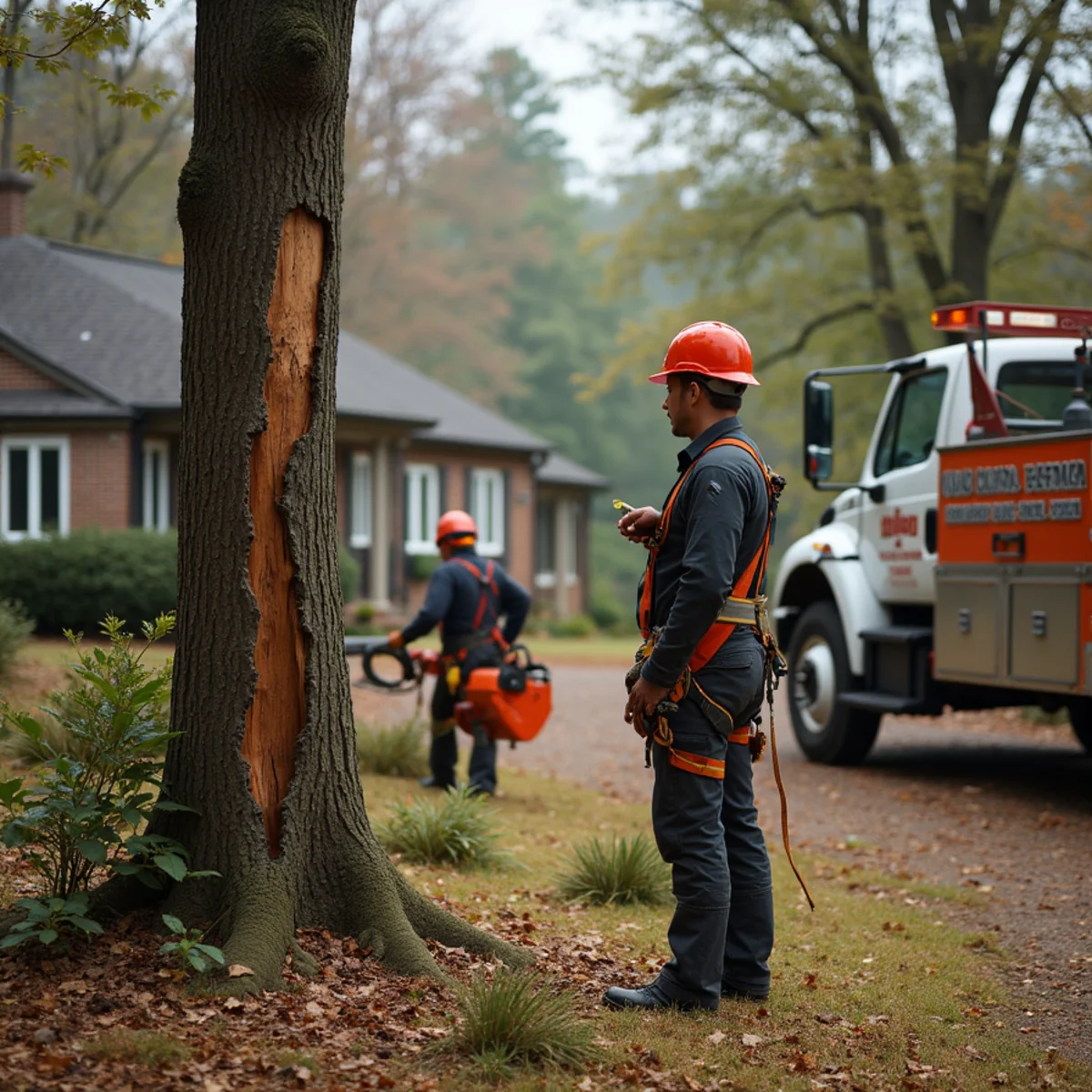
Most of the trees homeowners call us about in a panic are fine. A little deadwood, a lean they only just noticed, a mushroom at the base — individually, none of those is a death sentence. But some trees really are past the point of safe management, and the difference matters: a hazardous tree near a house, drive, or power line is a liability that only grows. Here are the seven signs we actually weigh when we look at a tree around Westminster and the Upstate, and what each one does and doesn't mean.
1. A lean that's new, or soil heaving at the base
A tree that has grown at an angle its whole life is usually fine — it has built reaction wood to hold that posture. The lean that matters is a new one, especially paired with soil cracking or lifting on the opposite side of the base. That's the root plate starting to let go, and it often shows days before the tree comes over. If you can see a mound or crack heaving at the roots, keep people away from the fall zone and call for a look right away.
2. A crack or split at a major fork
A seam opening where two big leaders meet is one of the most common failure points we see, especially on fast-grown hardwoods and double-leader trees. Caught early, this is exactly the kind of defect that cabling and bracing can hold together — the tree doesn't necessarily have to go. Caught late, once the crack has run down into the trunk, the tree is usually past saving. Either way it's worth a professional read before the next ice load.
3. Fungal conks or a hollow, soft trunk
Mushrooms growing on the trunk or root flare — not in the surrounding mulch, but on the wood itself — are a sign that decay fungi are already inside, eating the structural wood. Add a trunk that sounds hollow when tapped or gives when pressed, and you have a tree whose strength you can no longer trust. Decay is the single factor most likely to turn a 'maybe' into a removal, because no amount of hardware helps wood that isn't there.
4. Large dead limbs or a dead top
Scattered small deadwood is normal and can be pruned out. What concerns us is big dead limbs over a target — a roof, a drive, a play area — or a dead top on an otherwise living tree, which usually signals root or trunk trouble feeding the whole canopy. Dead pine tops in particular tend to drop without warning. If more than roughly a third of the canopy is dead, the tree is often in decline past the point of worthwhile recovery.
5. Beetle or borer activity on pines
On the loblolly and shortleaf pines that fill Upstate yards, popcorn-sized pitch tubes, fine sawdust in the bark crevices, and a crown fading from green to yellow to red are the classic signs of bark beetles. Once a pine's crown is fading, it's rarely savable, and a beetle-killed pine becomes brittle and dangerous fast. If you spot it early you may be able to protect the trees around it — we cover the warning signs in detail in our guide to southern pine beetle signs.
6. Roots cut, paved over, or damaged by construction
Trees often die slowly from the ground up years after a driveway, addition, or trench severs their roots. If major roots were cut or the soil over the root zone was graded, compacted, or paved within the last few years, watch for thinning canopy and smaller-than-normal leaves. A tree can't rebuild a root system that's been removed, and one that's been undermined near a structure is worth assessing before it fails.
7. It's simply in the wrong place now
Not every removal is about a hazard. A healthy pine three feet from the foundation, a tree whose roots are buckling a septic field, a canopy that has swallowed the whole yard's sunlight — sometimes the right call is removing a perfectly sound tree because it has outgrown its spot. There's no defect to point to here; it's a judgment about what the property needs.
When the honest answer is 'keep it'
Plenty of trees that look alarming are fine with the right work. Deadwood can be pruned. A weak union can be cabled. An overgrown crown can be reduced — properly, not topped. A good tree service makes money either way and should tell you when a tree is worth keeping. That's the standard we hold ourselves to: we'd rather prune or cable a tree you love than remove it because it was easier to quote.
When to stop guessing and get a professional read
If you're seeing root heave, a trunk crack running into the stem, a hollow base, or a fading pine crown near anything you'd hate to lose, that's the point to have it looked at rather than watched. A hazardous-tree assessment is free, and it ends the guessing — we tell you honestly whether you're looking at pruning, cabling, or removal. Homeowners across Westminster, Seneca, and Clemson call us for exactly that read.
Need help from a real Upstate tree crew?
Free estimates, 24/7 emergency response, fully insured. Call Rig Line Tree Service today.
Frequently asked
No. A tree that has leaned the same way for years has grown wood to support that posture and is usually stable. The dangerous lean is a new one, especially with soil cracking or heaving at the base — that's the root plate failing, and it needs attention right away.
Mushrooms on the trunk or root flare (not just in the surrounding soil) point to internal decay, which weakens structural wood. It doesn't automatically mean removal, but it's a strong reason to have the tree assessed, because decay is the factor most likely to make a tree unsafe to keep.
A fully dead tree can't be brought back, and it only gets more brittle and hazardous over time. A tree with scattered deadwood but a living canopy can often be pruned and kept. The dividing line is how much of the crown is still alive and whether the trunk and roots are sound.
If you see root heave, a trunk crack, a hollow base, or a dead or fading tree over a house, drive, or line, don't wait for the next storm to decide for you. Keep people out of the fall zone and get it assessed — these situations get more dangerous, not less, with time.