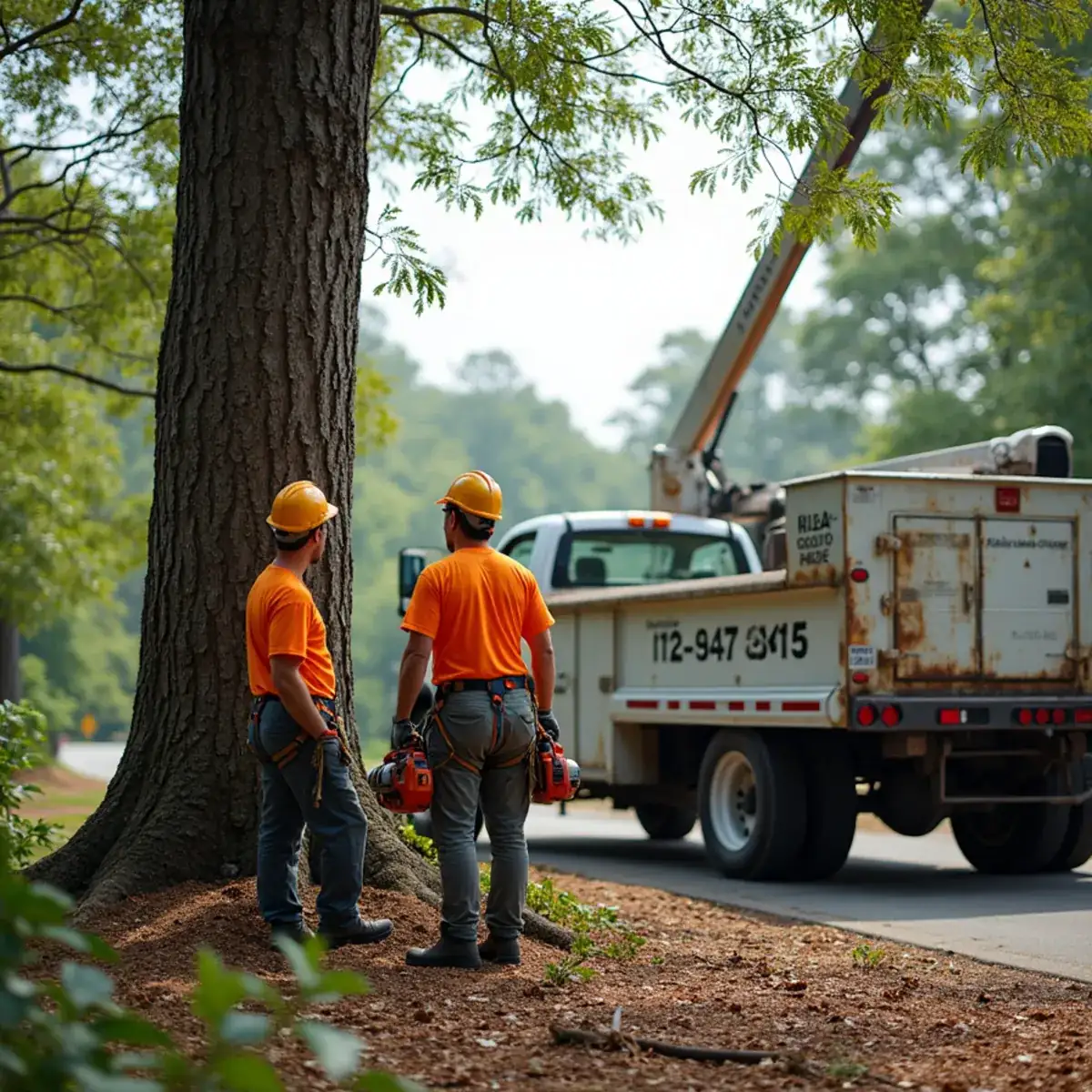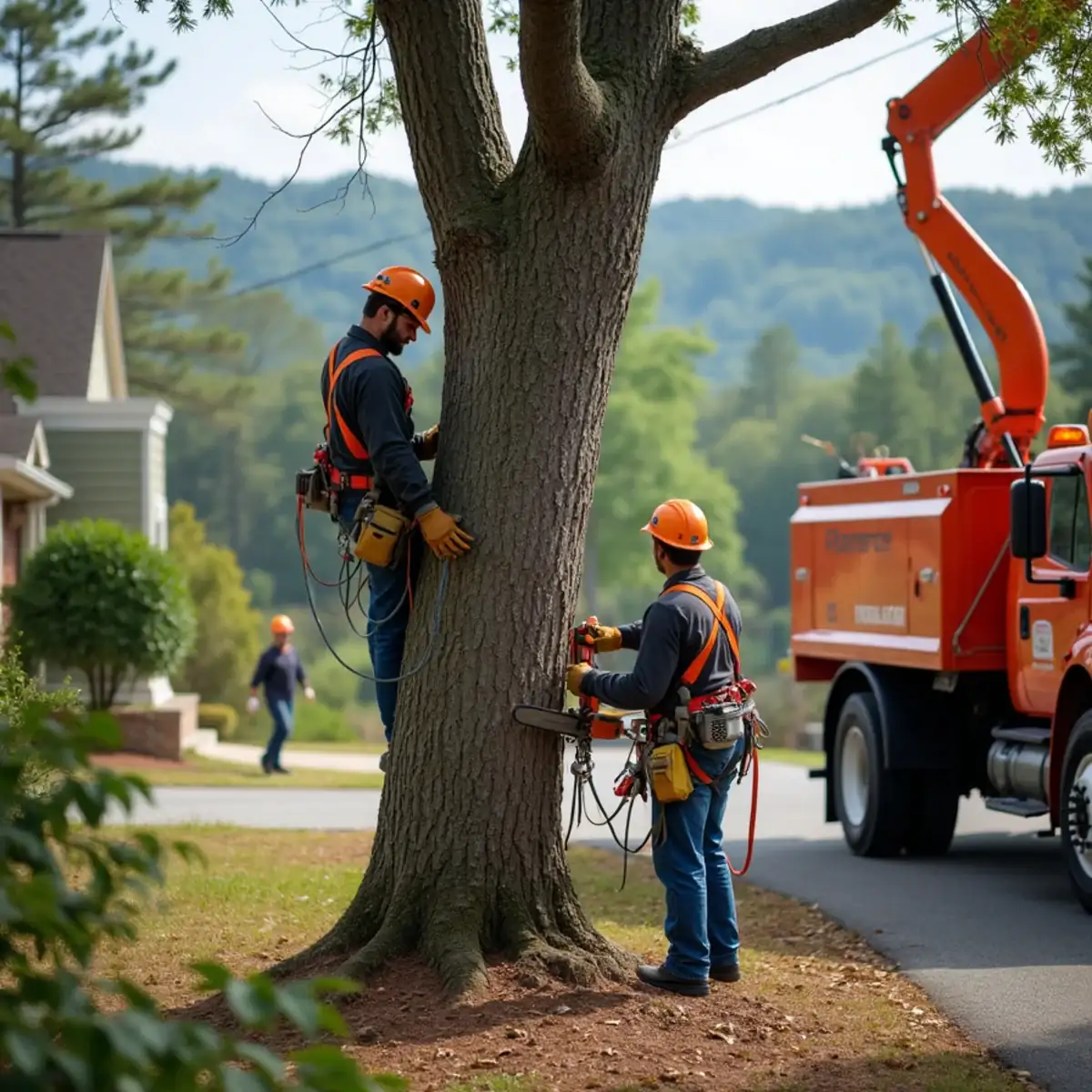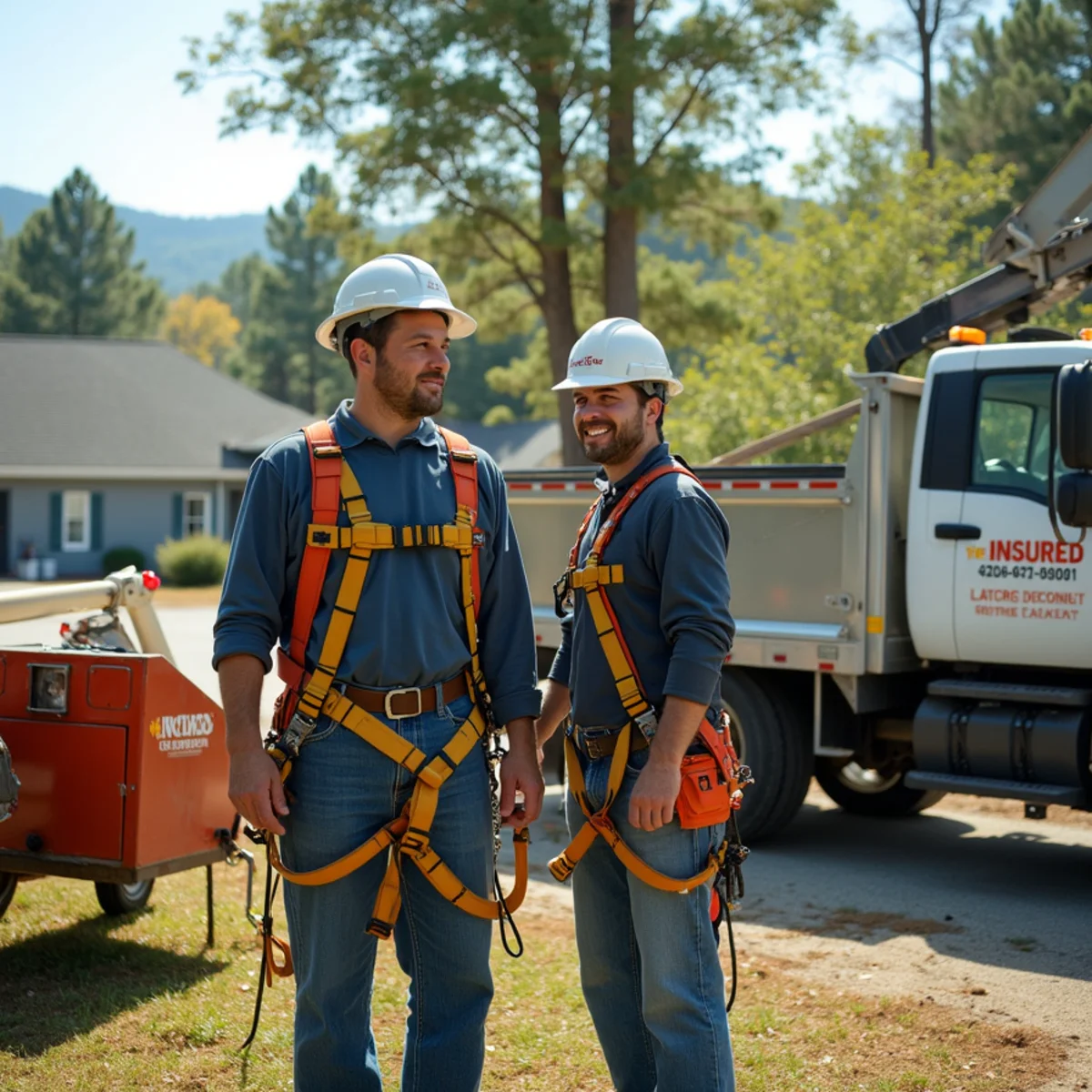
Most home services, the worst case of hiring badly is a sloppy result. Tree work is different: it's heavy, high, and dangerous, and the wrong company can turn a quote into a crushed roof, a severed line, or — if they're uninsured — a hospital bill that lands on your homeowner's policy because the worker was hurt on your property. The good news is that the warning signs are easy to spot once you know them. Here's how to vet a tree service in the Upstate before you let anyone climb.
The one thing to verify first: insurance
Before anything else, ask for proof of both general liability and workers' compensation insurance — and ask for the certificate, not just a verbal 'yes, we're covered.' This is the single most important check, because of how liability works. If an uninsured worker is injured taking down your tree, you can be the one held responsible. A legitimate company carries both coverages and hands you a certificate without hesitation. We provide ours before we start, every time. If a company gets cagey when you ask, stop there.
Get a written scope, not a number on a napkin
A real estimate tells you exactly what you're buying: which trees, what work, whether the stump and haul-away are included, and a firm price. A vague verbal number is how 'that'll be about four hundred' becomes 'well, the stump and cleanup are extra' once the tree is on the ground and you have no leverage. Insist on a written scope up front — it protects both sides, and any company worth hiring works that way as a matter of course.
The 6 red flags
- Can't or won't produce current liability AND workers' comp certificates
- Demands a large cash deposit up front, or full payment before any work
- Shows up uninvited after a storm pressuring you to sign on the spot
- Quotes a price without looking at the tree, or only over the phone
- No written scope — just a round number and a handshake
- Proposes 'topping' your trees to control their size (a practice that damages trees, which we explain in crown reduction vs. topping)
Storm-chasers: the Upstate's seasonal hazard
After every major storm, out-of-area crews roll through the foothills knocking on doors, offering cheap, fast cleanup and asking for cash. Some are fine. Many are uninsured, unaccountable, and gone the next county over by the time a problem surfaces. The pressure to sign now, while a tree's on your roof, is exactly the condition that makes bad decisions. A real emergency service — like our 24/7 emergency response — answers the phone, gives you a scope, and documents the work for your insurer. It doesn't ambush you in the driveway.
Good signs to look for
- Local presence and a real service area you can confirm
- Climbers and riggers by trade — able to explain how they'll take a tree down, not just that they will
- Honest about when a tree can be saved with pruning or cabling instead of removed
- Clear, itemized written estimates and a tidy, documented finish
- Willing to talk through permits, HOA rules, and property lines before cutting
Why we hold ourselves to this
Rig Line was built on rope work and reputation across the Upstate since 2021 — which only holds up if every job is done safely, insured, and finished clean. That's why we carry full coverage and provide the certificate, quote every job as a written scope, and tell you honestly when a tree is worth keeping. You can read what that looks like on our about page and in our customer reviews, and when you're ready, a free written estimate is the no-pressure way to see the difference.
Need help from a real Upstate tree crew?
Free estimates, 24/7 emergency response, fully insured. Call Rig Line Tree Service today.
Frequently asked
Proof of insurance — both general liability and workers' compensation — as an actual certificate, not a verbal assurance. If an uninsured worker is hurt on your property, you can end up liable, so this check matters more than price. A legitimate company provides it before starting.
Be cautious. Legitimate companies answer the phone and give you a written scope; many door-knocking storm-chasers are uninsured, pressure you to pay cash on the spot, and are gone when a problem surfaces. Never sign under pressure with a tree on your roof — call a service you can verify.
Not in tree work. A lowball price often means no insurance, no written scope, hidden 'extras' like stump and haul-away, or shortcuts on safety. Compare what's actually included and whether the company is insured — the real cost of an uninsured accident dwarfs any quote difference.
Quoting without looking at the tree, giving only a round verbal number with no written scope, or demanding a large cash deposit up front. A proper estimate is based on seeing the tree and spells out exactly what's included for a firm price.