"What's it going to cost?" is the first question every homeowner asks, and it's a fair one. But any tree company that quotes you a firm price over the phone without seeing the tree is guessing. Removal cost is driven by real, visible factors — here's what they are, so you can understand your quote instead of just reacting to it.
Size is the biggest single factor
A 25-foot dogwood and an 80-foot pine are completely different jobs. Height, trunk diameter, and canopy spread determine how much wood there is, how long the work takes, and how much rigging it requires. Big hardwoods weigh far more per foot than pines, too, which affects the equipment needed.
Access and proximity change everything
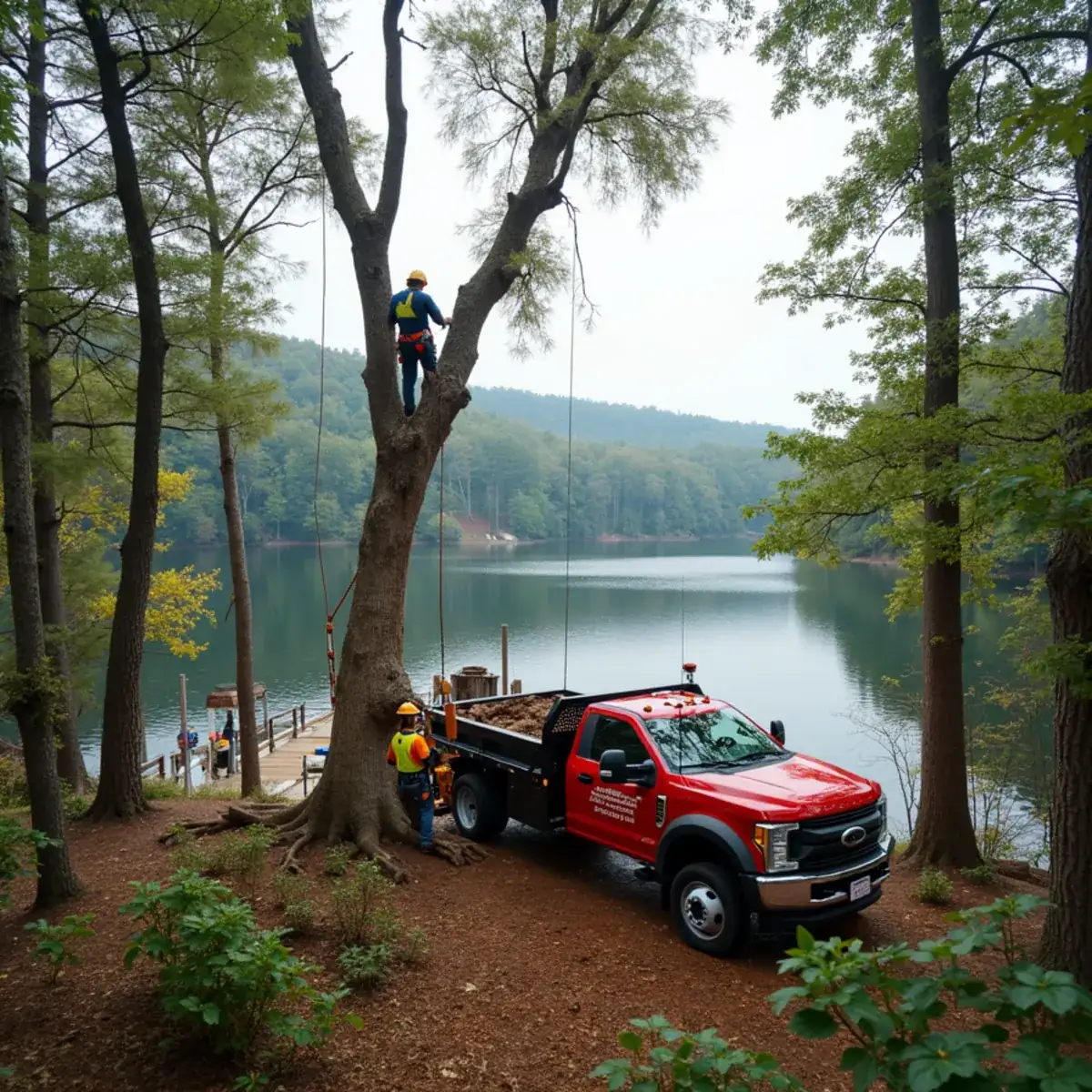
The same tree costs more to remove over a house than in an open field. Proximity to your home, a dock, a fence, or a power line means we can't simply fell it — we have to dismantle and rig it down piece by piece. Steep lots and lake banks common across the Upstate add difficulty, and no-truck-access sites mean climb-only work. This is why contract climbing and rigging jobs price differently than a straightforward tree removal.
- Tree height, diameter, and species (hardwood vs. pine)
- Distance to homes, docks, fences, and utility lines
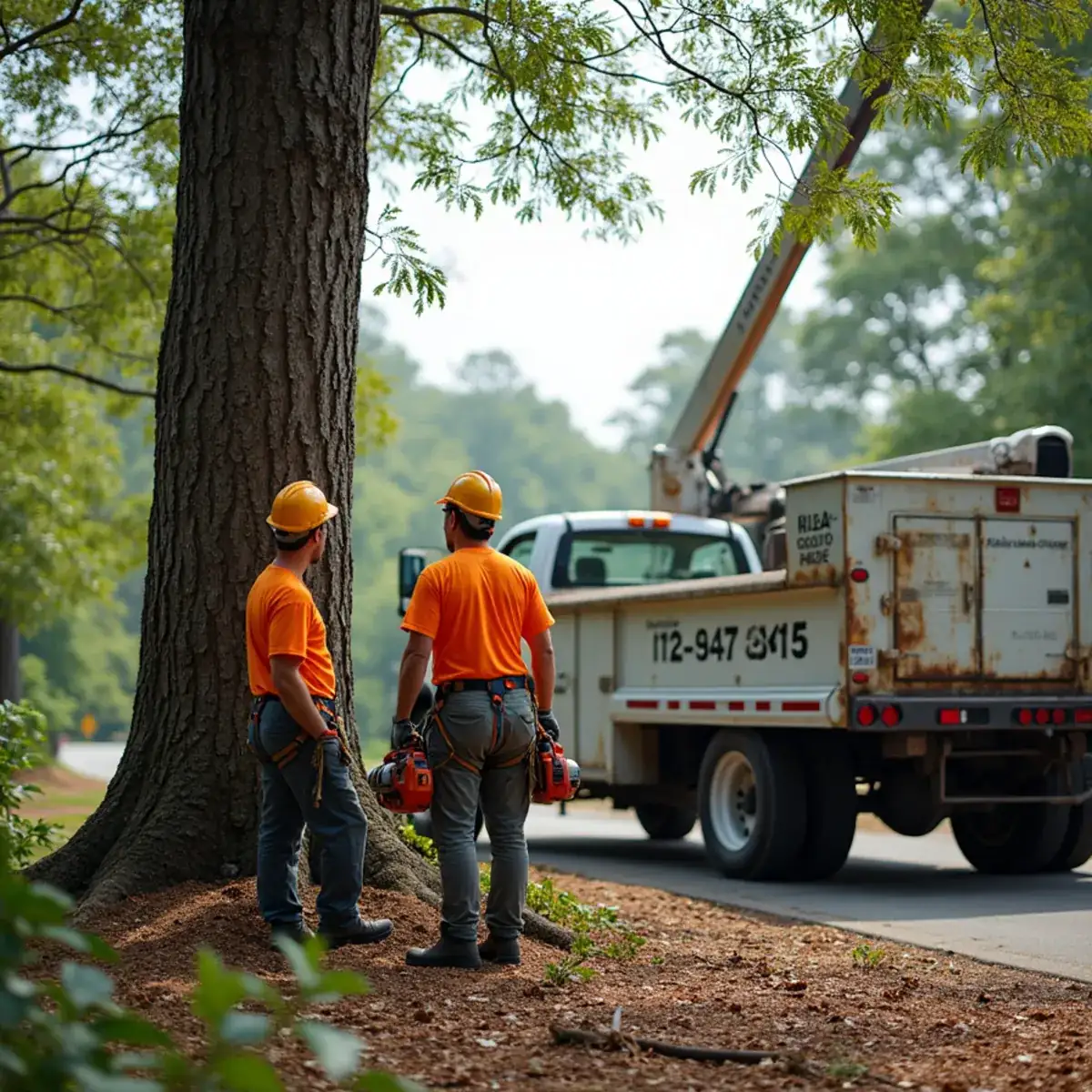
- Whether climbing, rigging, or a crane is required
- Site access for chippers and trucks
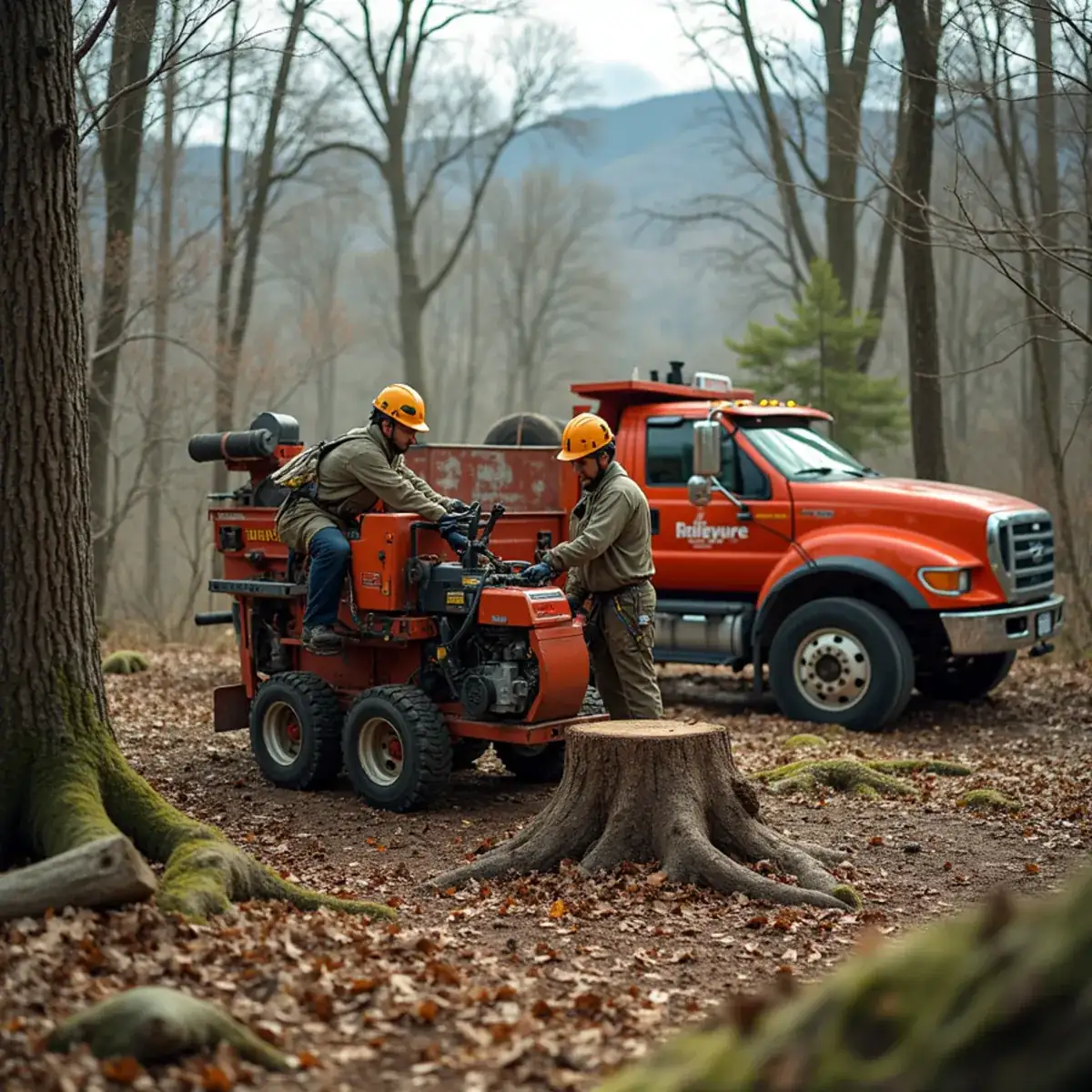
- Wood haul-away and optional stump grinding
- Emergency vs. scheduled work
Add-ons worth knowing about
Two things are quoted separately for good reason. Hauling the wood off costs more than leaving you the rounds for firewood. And grinding the stump is its own job — see our stump grinding service — priced by diameter and how many you have. Ask what's included so you're comparing quotes fairly.
What makes an Upstate tree cheaper or costlier than average
Two removals of the same-size tree can differ by a lot, and it usually comes down to a handful of swing factors. Understanding them helps you see why a quote lands where it does — and sometimes how to bring it down:
- Open drop zone vs. tight target — a tree we can fell into a clear yard is far quicker than one roped down over a roof, dock, or pool
- Truck access — if the chipper and truck can reach the tree, cleanup is fast; a long hand-carry or steep bank adds labor
- Species and soundness — dense hardwood weighs more per foot than pine, and dead or hollow wood demands slower, safer methods
- Utility involvement — lines near the tree mean extra care and sometimes utility coordination
- Stacking work — grinding the stump or removing several trees on one visit spreads the trip cost and usually lowers the per-tree price
Beware the quote that's too good
Storms bring out-of-town crews and door-knockers offering prices that seem too good to pass up, and often they are. The classic pattern is a low headline number that quietly excludes haul-away, stump grinding, or full cleanup, followed by add-ons once the work is underway — or worse, an uninsured crew whose mistake over your house becomes your problem. The single best protection is a written scope from an insured, local company that lists exactly what's included. A slightly higher all-in price from a crew you can hold accountable almost always beats a cheap verbal number with a chainsaw attached to it.
Where the money actually goes on a removal
It helps to understand that you're not really paying for a tree — you're paying for labor, risk, and disposal. Knowing how a job breaks down tells you why two quotes differ and where any savings realistically come from:
- Setup and rigging time — the skilled hours a climber spends establishing anchors and lowering systems, which grows with proximity to targets
- Risk premium — work over a house, pool, or power line costs more because a mistake costs more, and the crew's insurance reflects that
- Crane time, when used — a real line item, but often offsetting climbing hours and reducing overall risk on big trees
- Debris handling — chipping brush and hauling wood is labor and disposal; leaving you the rounds for firewood saves some of it
- Stump grinding — priced separately by diameter and count, cheapest when done on the same visit
- Cleanup — raking, blowing, and leaving the site right, which the cheapest quotes quietly skip
Why written scopes protect you
The lowest verbal quote often isn't the cheapest job once you learn what it leaves out. We give every Westminster and Clemson area customer a free written scope that spells out exactly what will be done, what's included, and the firm price. That's how you avoid the change-order surprises that turn a bargain into an overrun — and it's the document you can compare fairly against any other bid.
Need help from a real Upstate tree crew?
Free estimates, 24/7 emergency response, fully insured. Call Rig Line Tree Service today.
Frequently asked
Because removal cost depends on things we have to see — the tree's lean, what's below it, and how we'll access it. A quick on-site look lets us give you a firm written price instead of a guess.
Yes. We provide free, no-obligation written estimates for tree work across the Upstate.
Usually, yes. A big part of any job is mobilizing the crew and equipment to your property, so removing multiple trees — or pairing a removal with stump grinding — on a single visit spreads that cost and typically lowers the per-tree price.
For non-urgent work, comparing a few written scopes is smart — just make sure you're comparing like for like. A cut-only quote isn't comparable to an all-inclusive one with haul-away, stump grinding, and cleanup. For an active hazard, prioritize a qualified, insured crew over shopping around.
Sometimes — generally when a tree has damaged a covered structure like your home, garage, or fence. A tree removed purely for preventive or aesthetic reasons is an out-of-pocket expense. Our [insurance claim service](/insurance-claim-tree-removal/) covers how that works.