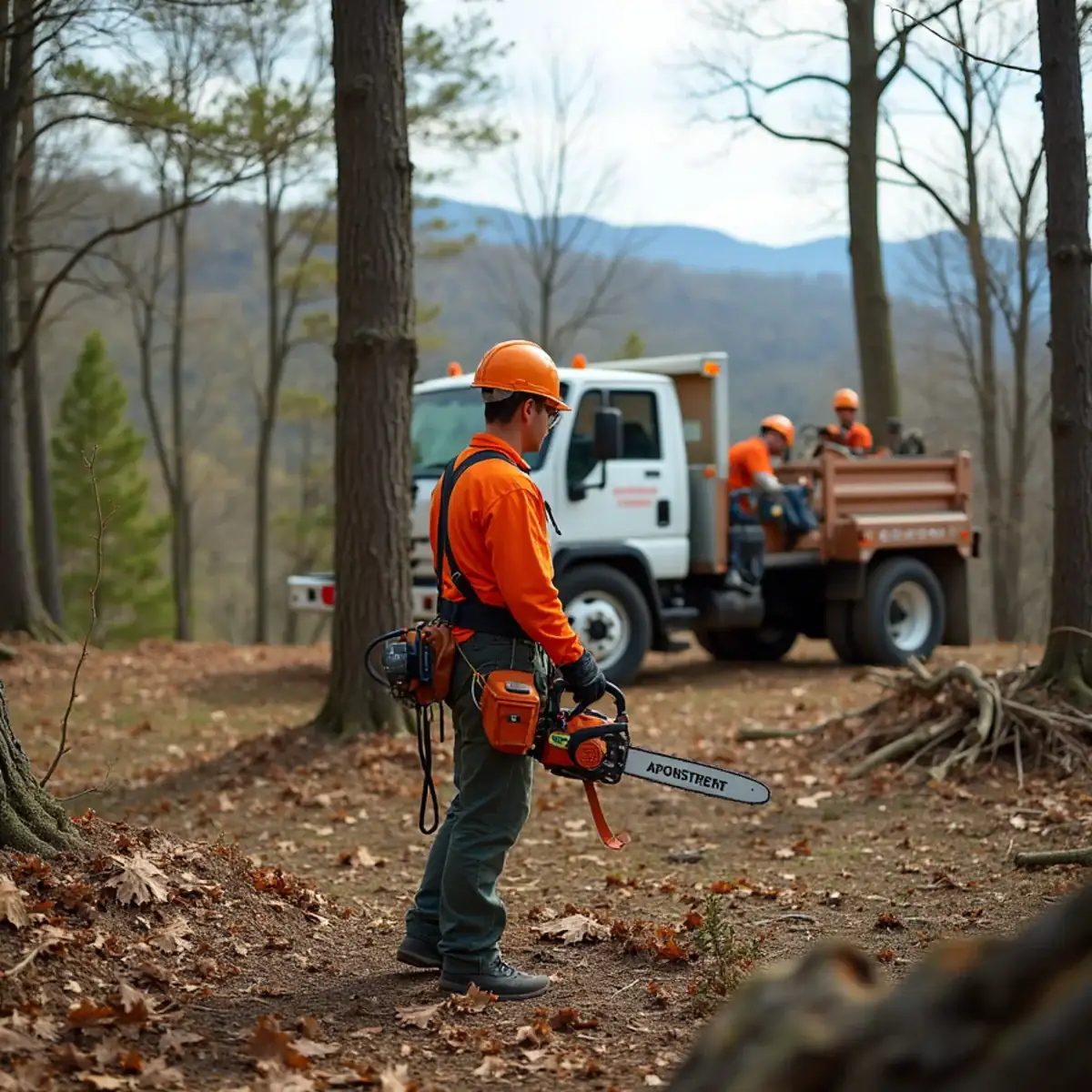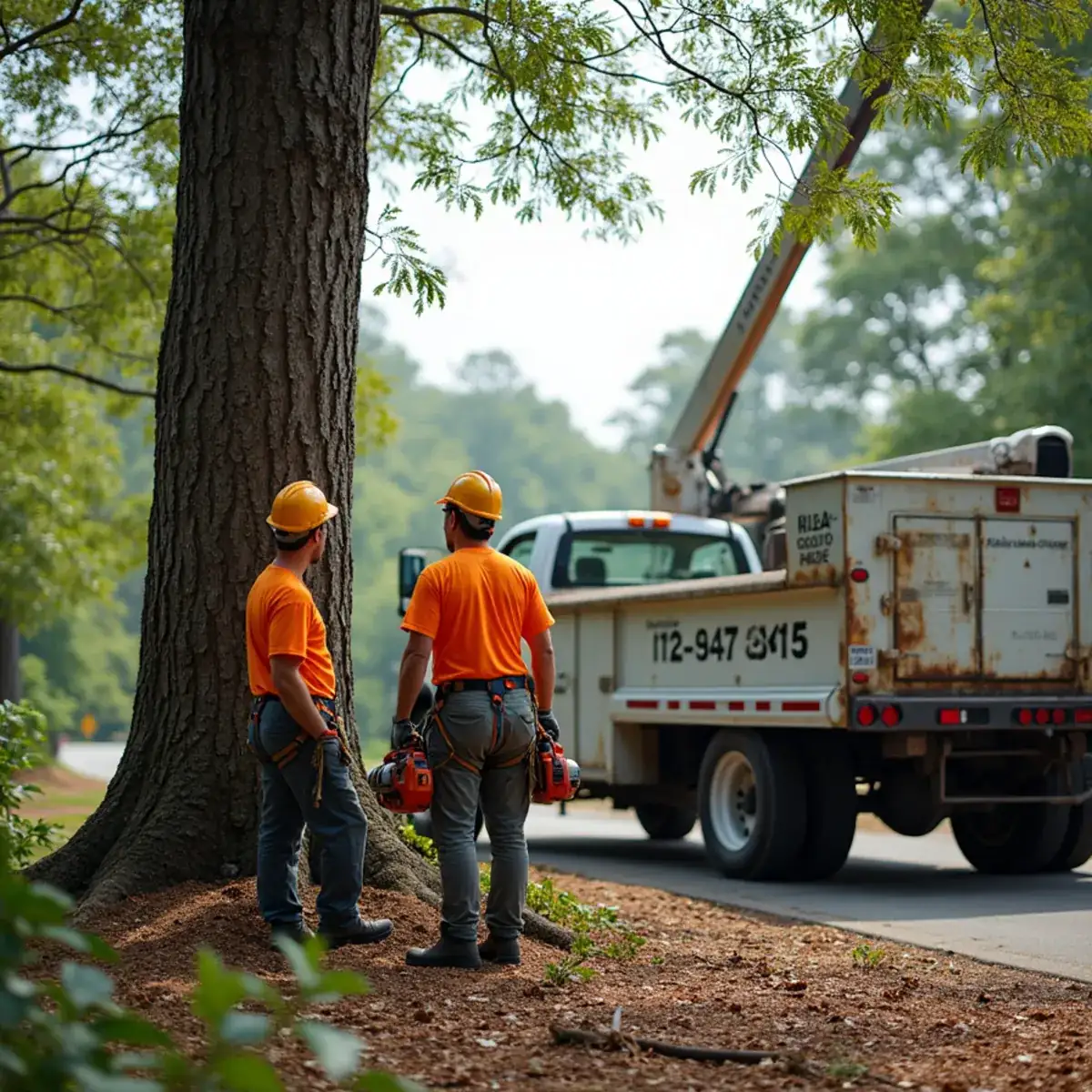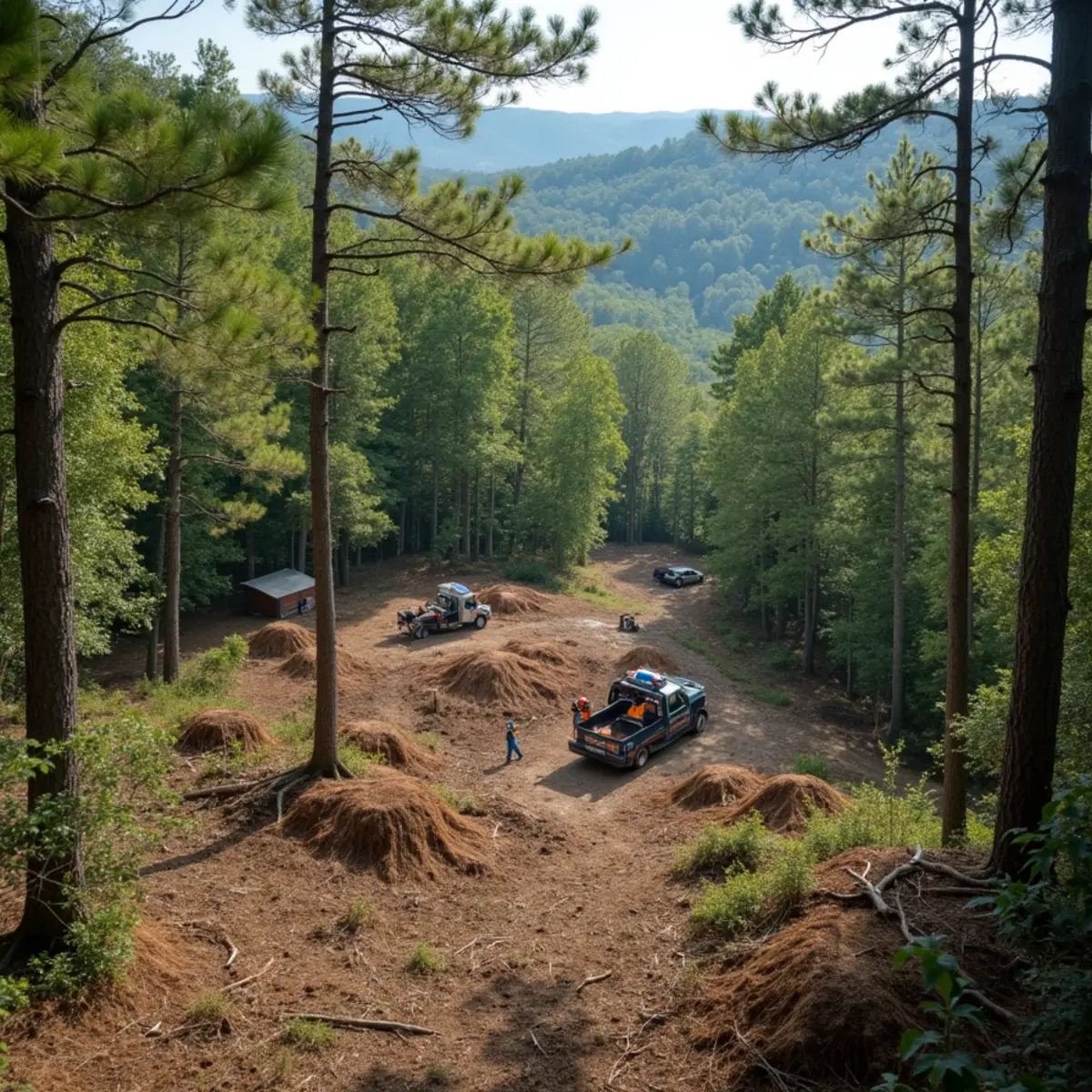
“How much per acre?” is the first question every landowner asks, and it's the one that can't be answered honestly online. Clearing an open, grassy acre with a few scattered pines is a fraction of the cost of clearing an acre of dense foothill hardwoods on a slope. The per-acre figure only means something once someone has seen the ground. Here's what actually drives the number, so you can read any Upstate land-clearing quote with clear eyes.
1. Density: how much is actually on it
The single biggest factor is how much vegetation has to come out. An overgrown pasture with light brush and a few trees clears fast. A parcel that's been growing up for twenty years into a tangle of mature hardwoods, pines, understory, and vines is a different job entirely — more material to cut, process, and haul, and more time on every acre. Two 'one-acre' quotes can differ several-fold on density alone.
2. What you want left behind
'Clearing' means very different things to different landowners, and the scope drives the price:
- Selective clearing — keeping the best hardwoods and specimen trees, removing the rest — takes more care and judgment than a blanket cut
- Full clearing to bare, buildable ground is more work than opening up a wooded lot for light and access
- Grinding/mulching the material in place (leaving a chip layer) versus hauling everything off changes the cost meaningfully
- Stump removal or grinding versus cutting flush adds a step
3. Terrain and slope
This is where the Upstate earns its own line item. Equipment works slower and more carefully on the grades common across the Blue Ridge foothills, and steep or benched ground can rule out some machines entirely. Wet bottomland, rock, and tight access between existing structures or along a shoreline all add time. Flat, open, easy-access ground is the cheapest case; a sloped, wooded foothill tract is not.
4. Debris: the hidden half of the job
Cutting the trees is only half of land clearing — the other half is dealing with what's now on the ground, and it's often underestimated. Options range from on-site mulching (cheapest, leaves a chip layer), to piling and burning where permitted, to chipping and hauling everything off (cleanest, most expensive). Big stems may be worth something as timber on a larger tract, which can offset cost. How the debris is handled can swing the total as much as the clearing itself.
5. Access and distance
Equipment and trucks have to reach the tract, and haul-off has to go somewhere. A roadside parcel with a wide entrance is simple; a back lot reached by a narrow drive, or a site where material has to be hauled a long way to a disposal point, costs more. On smaller jobs, getting the machines there is a real share of the price — which is why clearing is usually better value by the larger block than piecemeal.
Why we clear selectively when it makes sense
On foothill and lakefront tracts, the cheapest-looking bid — scrape it all to dirt — is often not what the landowner actually wants once they see the result. Keeping the healthy hardwoods that give a lot its shade, privacy, and value usually makes for a better property and can cost less than a full scrape, because there's less to remove and haul. We talk through what's worth keeping before any machine starts. You can see how we approach it on wooded foothill ground in our guide to mountain cabin lot clearing in Oconee County.
Getting a real number for your tract
Because every one of these factors is site-specific, the only accurate land-clearing price comes from walking the ground. Our lot and land clearing estimates are free and come as a written scope, so you know exactly what's included — acreage, density, what's kept, how the debris is handled, and access — before any work begins. Landowners across Westminster, Oconee County, and the foothills get a firm number this way.
Need help from a real Upstate tree crew?
Free estimates, 24/7 emergency response, fully insured. Call Rig Line Tree Service today.
Frequently asked
Because an acre of open pasture and an acre of dense foothill hardwoods on a slope are completely different jobs — density, terrain, what you keep, and how the debris is handled can swing the price several-fold. A per-acre figure only means something once someone has walked the specific ground.
Often the debris, not the cutting. Hauling everything off is the cleanest and most expensive option; mulching the material in place is the cheapest. Terrain and slope also add real cost in the Upstate, since equipment works slower and more carefully on foothill grades.
It often is, and it usually makes for a better property. Keeping the healthy hardwoods that give a lot shade, privacy, and value means less to remove and haul than scraping to bare dirt — and you keep what makes the land worth owning. We talk through what's worth keeping before we start.
Yes. Getting equipment to the site is a fixed cost that's spread across the job, so larger blocks are usually better value per acre than small or piecemeal clearing. Access and haul distance matter too.