You bought the mountain lot for the trees and the setting — so the last thing you want is a bulldozed moonscape where a cabin will eventually sit. Selective clearing gets you a buildable site while keeping what made the property worth buying. Here's how to think about it.
Clear for the building, keep the rest
Most cabin lots only need clearing where the structure, driveway, and septic will actually go. The mature hardwoods that frame the view and shade the site are assets, not obstacles. We walk the lot with you and mark keeper trees before anything comes down — the opposite of clearing everything and hoping.
Why disturbance is the enemy on a slope
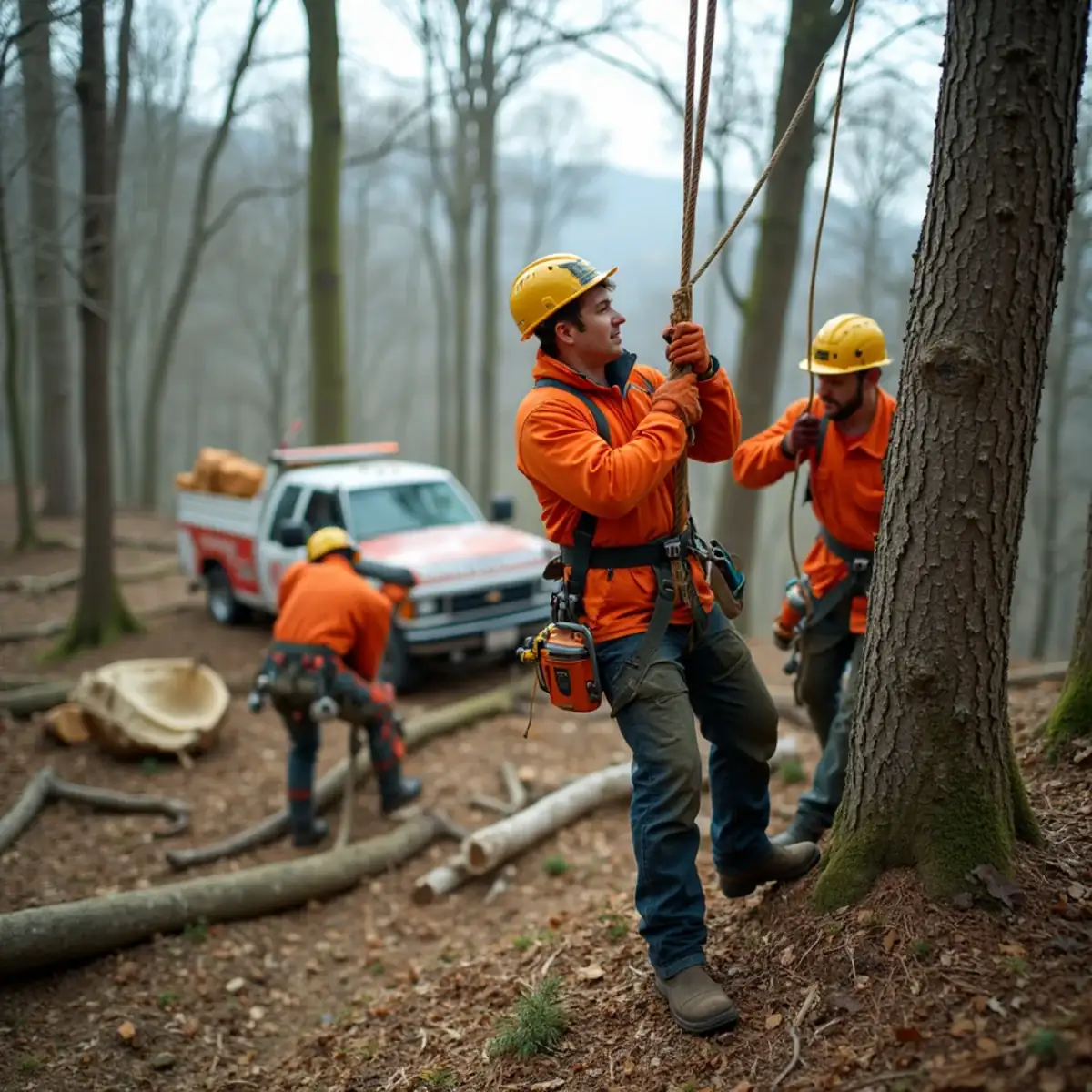
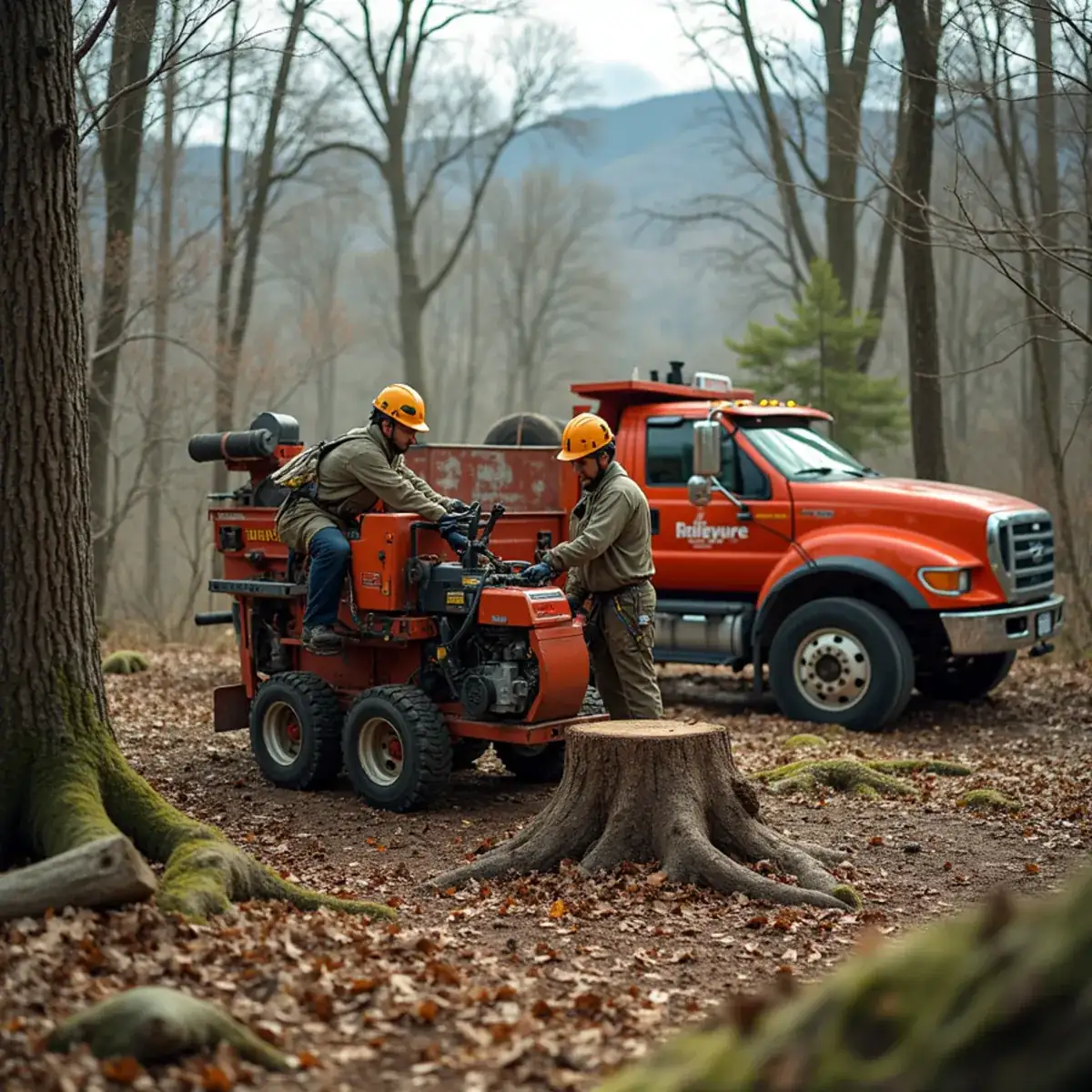
On steep Oconee ground, every square foot you disturb is a square foot that can erode. Dragging logs and ripping stumps across a wet slope invites washouts. Our lot and land clearing approach keeps ground disturbance tight, uses steep-slope rigging to bring big trees down in control, and grinds stumps in place rather than tearing them out.
- Building-pad and driveway clearing only where needed
- Keeper trees marked and protected before work starts
- Big trees rigged down, not crashed across the slope
- Stumps ground in place to limit soil disturbance
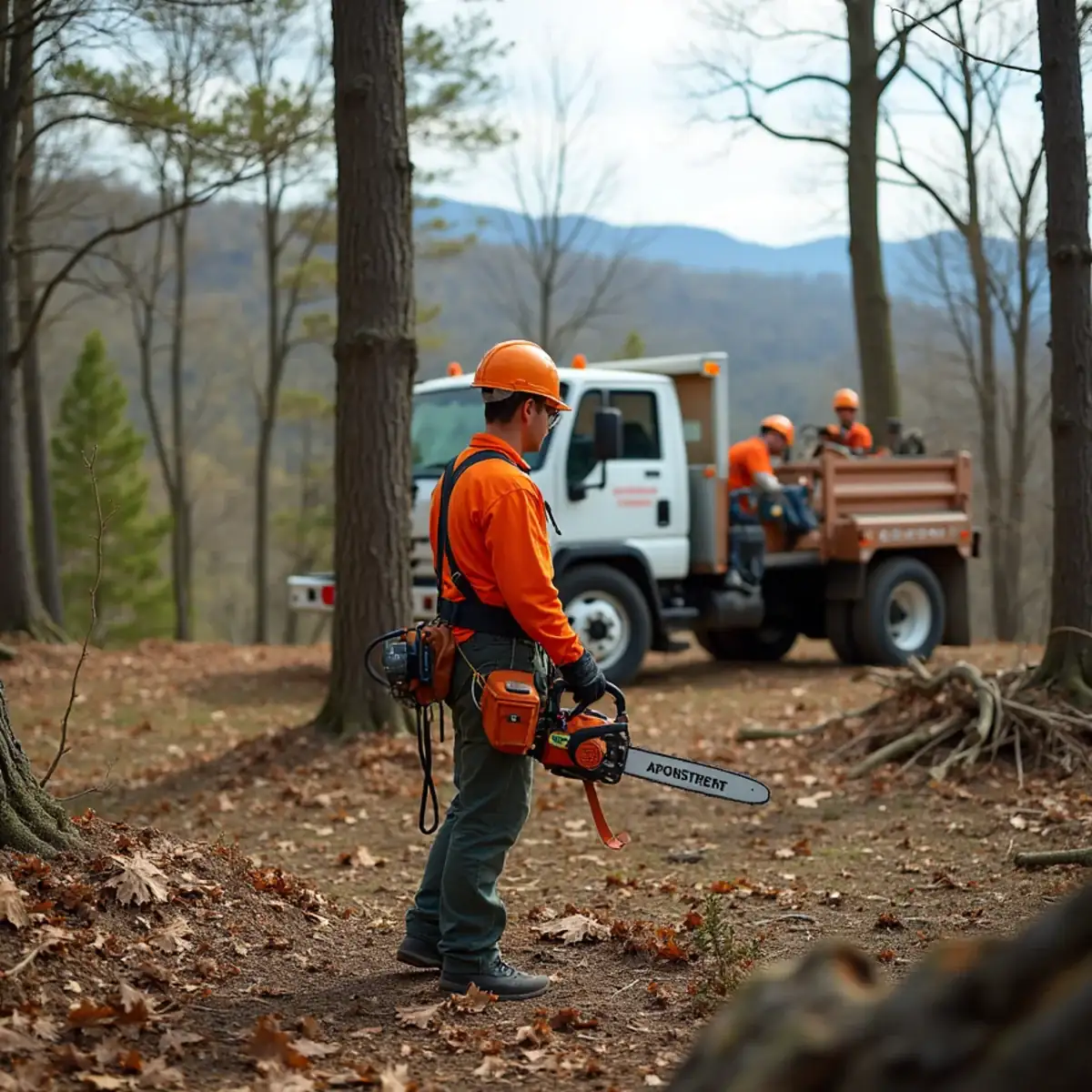
- Debris chipped, hauled, or piled per local burn rules
Managing the debris
What comes off the lot has to go somewhere. We chip brush, haul wood, or pile for burn where it's permitted, so you're not left with a mess to deal with before construction. Stumps in the footprint can be ground flush as part of the same job.
A smarter clearing sequence for a mountain lot
The order you clear a mountain lot in matters as much as what you clear. Rushing straight to a bulldozer is how people lose the trees and the topsoil they'll wish they'd kept. The sequence we follow:
- Walk and flag first — mark keeper specimens, the building footprint, the drive, and the septic area before anything comes down
- Take the hazards and target trees by rope or crane, protecting the keepers around them
- Clear underbrush and small timber selectively, leaving stabilizing vegetation on the steeper pitches
- Grind stumps only in the footprint, leaving root systems intact where they're holding slope
- Manage debris as you go — chip, haul, or permitted burn — rather than piling slash to deal with later
Protecting the trees you're keeping
The specimen trees that survive clearing are worth protecting during the work, not just marking on a walk-through. The biggest killers of 'kept' trees show up a year or two after construction: soil compaction from equipment driving over the root zone, fill dirt piled against trunks or over roots, and torn roots from trenching a driveway or utility line too close. We keep machinery off marked root zones, avoid changing grade around keeper trees, and route access to spare them. A little discipline here is the difference between a lot framed by mature canopy and one where the 'saved' oaks quietly decline after you've moved in.
Before you clear: septic, setbacks, and access
On a mountain lot, the clearing plan and the building plan are the same conversation — clear the wrong area and you can box in your own septic field or driveway. Sort these out before the first tree comes down:
- Septic and drainfield location — these need open, root-free ground and a specific soil area, so mark them before clearing so keeper trees don't end up over the field
- Driveway grade and turnaround — a steep mountain drive dictates where equipment (and later, a fire truck) can actually get in
- Building setbacks and any HOA or shoreline-buffer limits that restrict what you can remove near lines or water
- Erosion control — steep, freshly cleared red-clay ground needs a plan for silt fencing and re-vegetation, sometimes required by local land-disturbance rules
- Which specimen trees to protect during construction, not just during clearing — roots and trunks need shielding from equipment and fill
- Burn permits and debris disposal, which are seasonal and regulated by the SC Forestry Commission
Built for the terrain around Salem and the highlands
The steep, wooded lots around Salem and the Jocassee highlands are exactly where a careless clear does the most harm. Selective, low-disturbance clearing costs a little more thought up front and saves you erosion headaches, retaining-wall bills, and a lost view later.
Need help from a real Upstate tree crew?
Free estimates, 24/7 emergency response, fully insured. Call Rig Line Tree Service today.
Frequently asked
Whatever you want, but for mountain cabin lots we almost always recommend selective clearing — opening the building footprint, drive, and septic area while keeping the specimen trees and slope-stabilizing vegetation that give the property its value.
It can if a slope is stripped and the soil surface torn up. We minimize ground disturbance, leave stabilizing roots on the steeper pitches, and manage debris so bare channels don't form — the practices that keep a graded lot from washing after the first big rain.
Yes, and we protect them during the work, not just around it — keeping equipment off their root zones, avoiding fill against the trunk, and routing access to spare them. Flag your favorites on the walk-through and we'll plan the clear around them.
We chip brush into mulch, haul off merchantable wood, or pile for a permitted controlled burn — your choice and the site's rules decide the mix. Stumps in the footprint get ground flush as part of the same job, so you're left with buildable ground.
For most mountain and cabin lots, only what the house, driveway, and septic truly need — plus a comfortable defensible margin. Over-clearing trades away privacy, shade, slope stability, and the wooded setting you bought the land for, none of which you can put back quickly. We'll help you find the line that gives you a buildable site and keeps the property's character.
It depends on the scope and location — a homesite clear on private land is treated differently than work in a shoreline buffer or a development subject to land-disturbance rules. We help you sort out what applies before we start so a clearing project doesn't run into a compliance problem partway through.