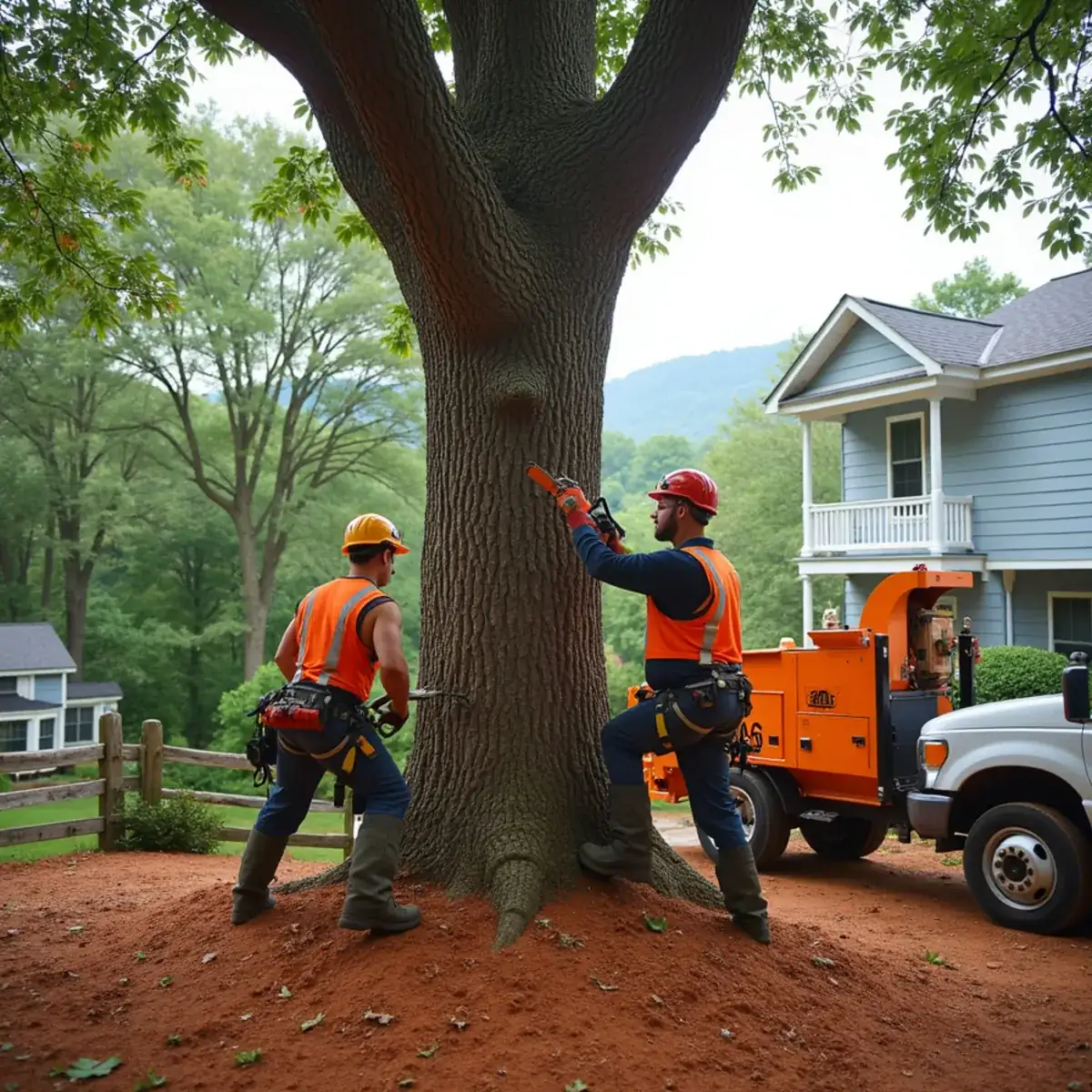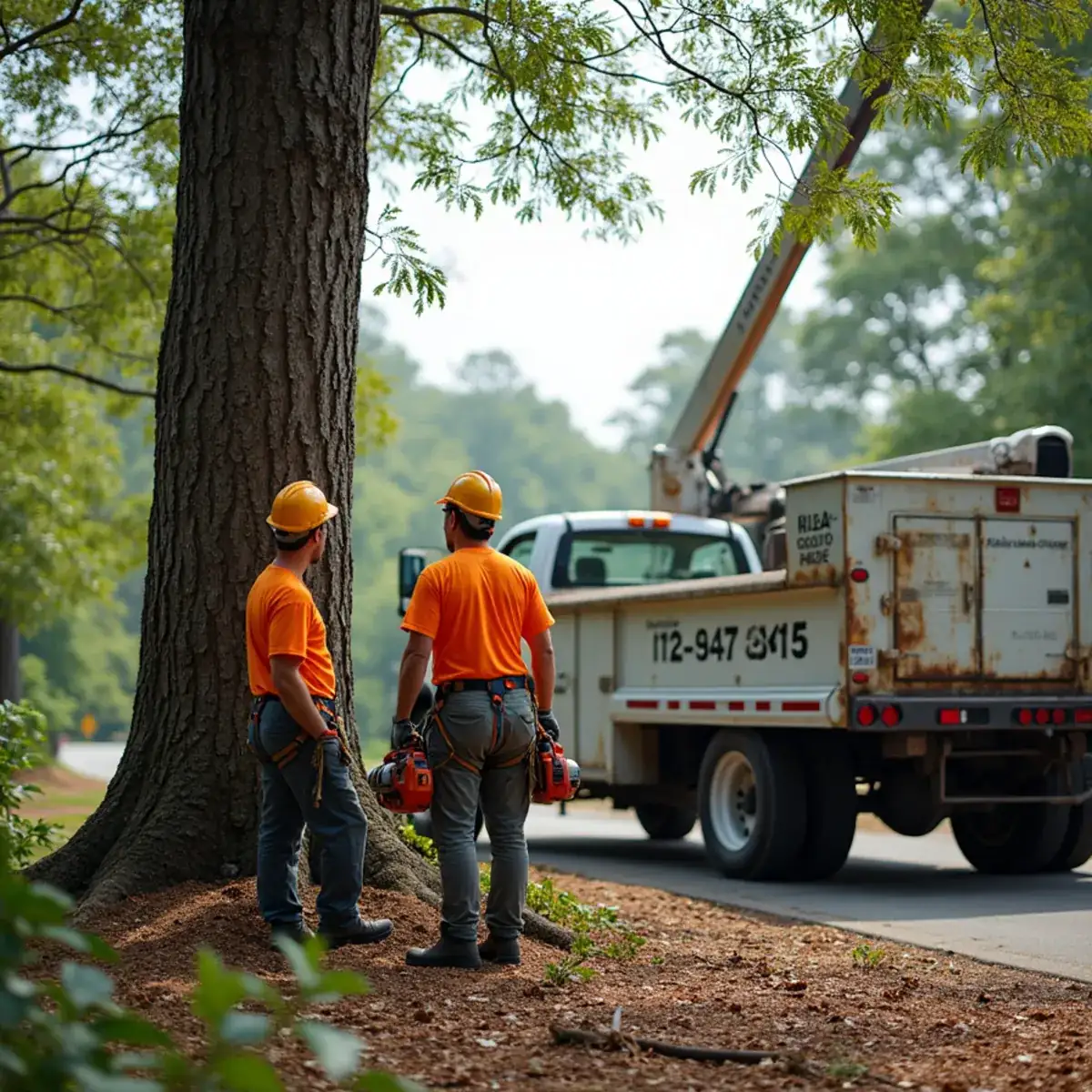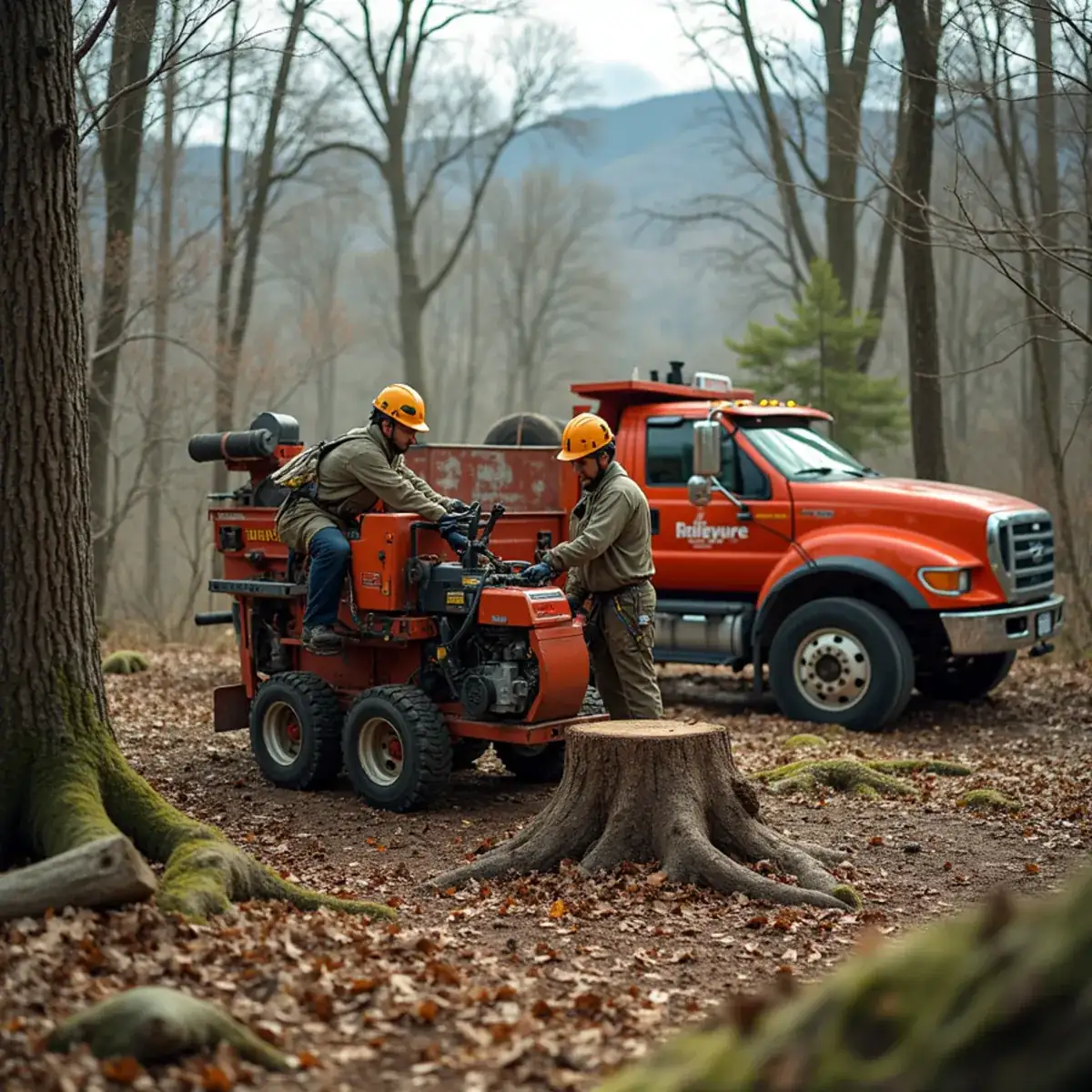
Oconee County dirt is full of rock, red clay, and old roots, and a surprising amount of it sits on a slope. All three make stump removal harder than the flat-yard version most people picture. Here's what foothills homeowners should know before booking a grind.
Why grinding beats digging out here
Excavating a stump on rocky ground is slow, destructive, and often impossible without heavy machinery that can't get to the spot anyway. Grinding chews the stump and surface roots into mulch in place, with far less disturbance to the surrounding soil and slope. On erodible foothill ground, keeping that soil undisturbed matters — it's part of not trading a stump for an erosion problem.
What rock does to the job
Buried stone is the wild card. A grinder's teeth are made for wood, not granite, so hidden rock around the root plate slows the work and means we sometimes grind around and between stones rather than straight through. It's why an on-site look matters for pricing — we can see the ground, not just the stump.
- Compact grinders for gated, sloped, and backyard access
- Grinding around buried rock rather than forcing through it
- Surface-root grinding to stop sprouting and tripping hazards
- Minimal soil disturbance to protect the slope
- Grindings used as backfill or hauled, your choice
Slope access and machine choice
The right machine depends on the grade and the gate. We run compact grinders that fit through standard fence openings and handle moderate slopes, and we pair stump work with the parent tree removal whenever it's part of the same project. For steep sites, we plan access the same careful way we do for steep-slope and mountain rigging.
Erosion: the reason grinding beats digging on a slope
On a foothill grade, the choice between grinding and excavating a stump isn't just about convenience — it's about whether your slope stays put. Digging a stump out tears open a wide crater and severs the surrounding root mat that's holding the soil against gravity and rain. On the erodible red-clay-and-rock soils around Walhalla and the Blue Ridge foothills, that opened ground is exactly where a heavy summer downpour starts a wash. Grinding leaves the deeper roots in place to decay slowly and hold the bank while new grass or groundcover establishes over the top. For any stump on a slope near a driveway, foundation, or downhill structure, that undisturbed root network is worth keeping.
What to have ready before we arrive
A little prep helps a rocky-slope grind go faster and cheaper. A few things worth doing:
- Flag or tell us about irrigation lines, invisible-fence wire, septic components, and low-voltage lighting near the stump
- Clear loose furniture, pots, and vehicles from the access path to the stump
- Let us know if you plan to replant in the exact spot, so we grind deeper and haul the chips
- Point out the gate width if the stump is in a fenced backyard, so we bring the right compact machine
- Mention any recent fill or buried debris around the base — old rock and concrete slow the wheel
After the grind: settling, mulch, and replanting
The grind itself takes minutes; what you do with the spot afterward decides how the area looks in a year. A few things worth knowing once the wheel stops:
- The mound of grindings will settle and shrink noticeably over a few weeks as air works out and the material compacts — plan to top it off
- Fresh grindings are wood, not soil: they tie up nitrogen as they break down, so they're fine as mulch but a poor bed for new grass or plants
- To sod or seed the spot, rake out the chips and backfill with clean topsoil, then let it settle before you plant
- To set a new tree in the same footprint, have us grind deeper and wider and haul the chips so the root ball sits in real ground
- Leftover chips make excellent free mulch for beds elsewhere on the property — just keep them off tree trunks
- On a slope, don't leave a loose mound proud of the grade where the first hard rain can wash it downhill
Leaving you a usable spot
The goal on any grind — flat yard or rocky slope — is a level, plantable spot six to twelve inches below grade, ready to seed, sod, or bed. Homeowners around Walhalla and the foothills get the same clean finish regardless of how rocky the ground fought back.
Need help from a real Upstate tree crew?
Free estimates, 24/7 emergency response, fully insured. Call Rig Line Tree Service today.
Frequently asked
Yes. We match the machine to the grade and access — compact grinders for tight, sloped backyards and larger units for open ground — and grind in place rather than excavating, which keeps the slope's stabilizing roots intact.
Rock is the wild card in foothill soil. The grinder's teeth are built for wood, so we work around and between buried stone rather than forcing through it, which is why an on-site look matters for an accurate price.
No — the opposite of digging it out. Grinding leaves the deeper root mat in place to hold the soil while new growth establishes, which is far safer for a slope than excavating an open crater.
Deeper than a standard grind, and we'll haul off the chips and backfill with clean soil so the new root ball sits in real ground rather than decomposing wood. Just tell us your plan up front.
It depends mostly on the stump's diameter, how many you have, the access to the spot, and how much buried rock the wheel has to work around. Because rock and slope vary so much here, we give a firm price after a quick look rather than a phone guess — and stacking several stumps or pairing with a removal lowers the per-stump cost.