Anyone can drop a tree on flat ground. On a Blue Ridge slope, dropping it is often the worst thing you can do — to the tree, to what's downhill, and to the hillside itself. Controlled rope lowering is the safer discipline, and it's about far more than not hitting the house below.
What gravity does on a grade
A tree felled downhill doesn't just fall — it runs. The trunk can slide, roll, and pick up speed toward whatever is below, and the sudden impact tears up the soil where it lands. On the steep, often-saturated ground above Mountain Rest and Salem, that impact and the ripped-out root systems it can cause are exactly the kind of disturbance that triggers erosion and, in the worst cases, small slope failures.
How controlled lowering changes the outcome
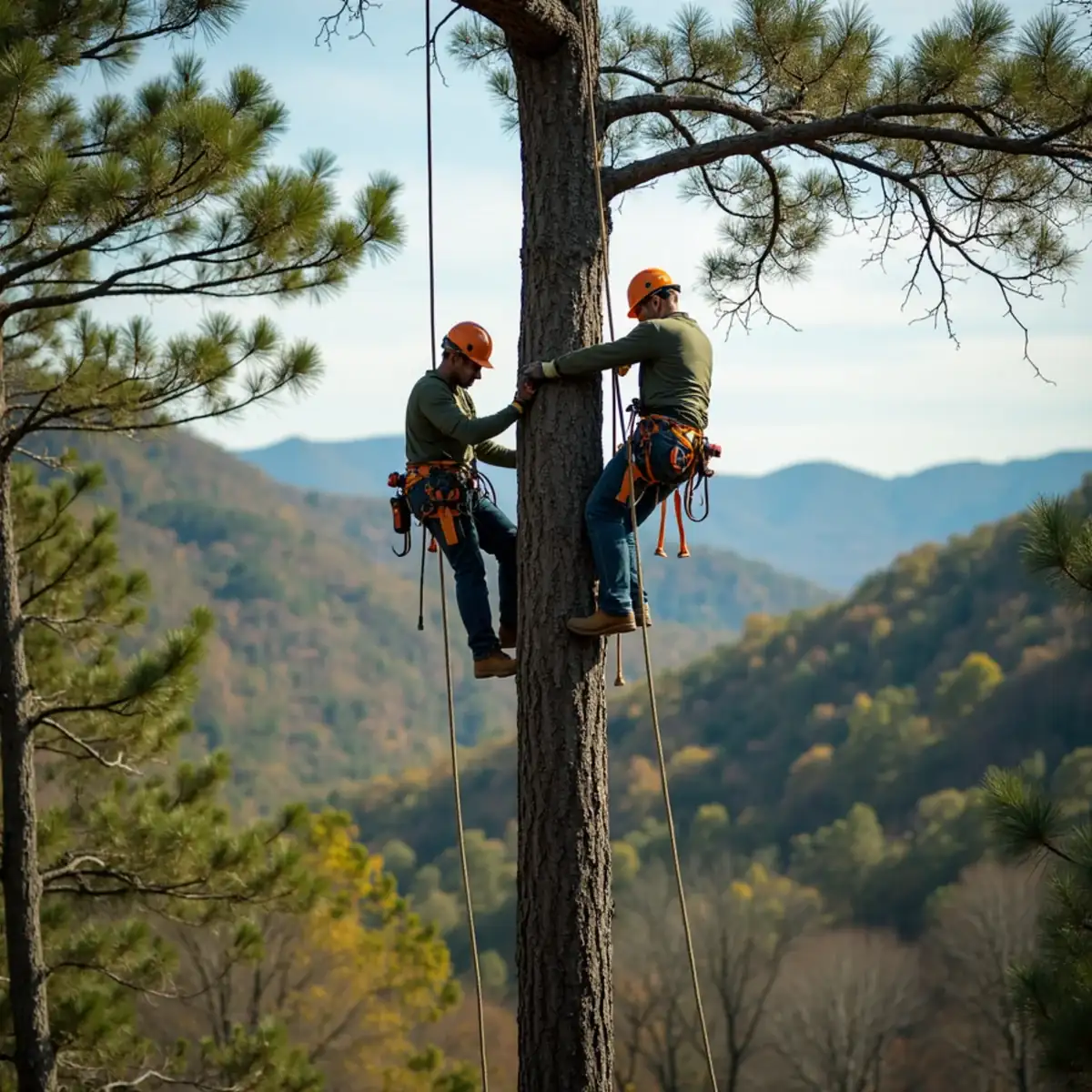
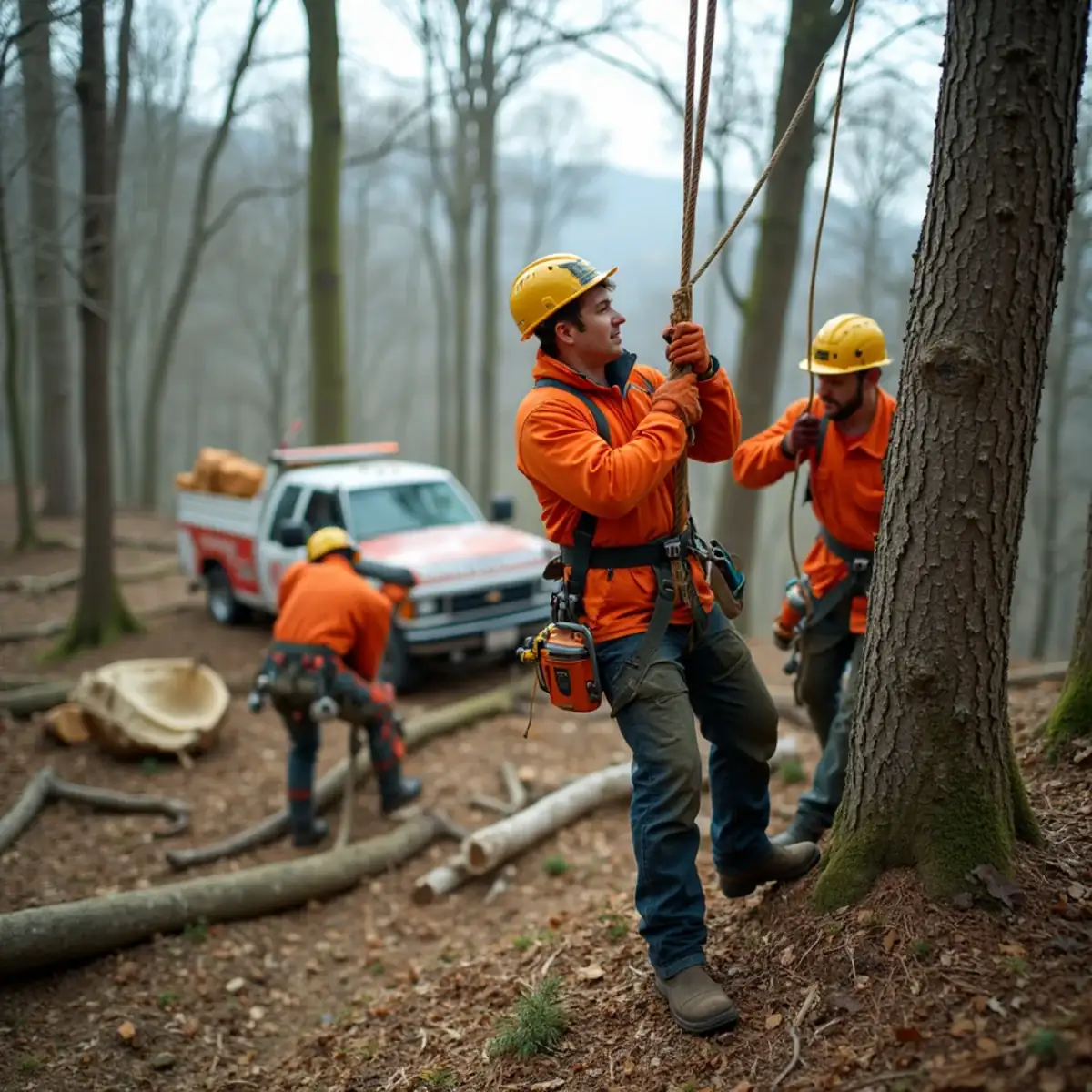
Instead of felling, our climbers dismantle the tree in sections and lower each piece under control with rigging. Nothing crashes down the grade. The load is caught, eased down, and stacked — which protects both the targets below and the slope's surface. This is the heart of steep-slope and mountain rigging, and it leans on the same rope skill as our contract climbing work.
- Sections lowered, never dropped, on the grade
- Crew and loads anchored so nothing runs downhill
- Stabilizing roots preserved where possible
- Minimal ground disturbance to limit erosion
- Debris removed without scarring the slope
Protecting the roots that hold the hill
Tree roots are part of what holds a steep slope together. When a hazardous tree has to go, we work to leave the stabilizing root network as intact as possible and grind the stump rather than rip it, so the soil structure stays sound. Where a slope needs it, we'll advise on replanting to keep it anchored.
The controlled-lowering sequence, step by step
Controlled rope lowering on a grade follows a deliberate order, and every step exists to keep wood from ever moving freely downhill:
- Anchor the crew and the system uphill of the work, so nothing depends on footing on the slope itself
- Set a rigging point above the section to be cut and run the rope to a friction lowering device on the ground
- Take the load onto the device before the final cut, so the piece is already supported when it comes free
- Ease each section down the fall line to a defined landing spot rather than letting it drop or roll
- Process and move wood off the slope on a planned path, minimizing drag scars and soil disturbance
What careless slope removal leaves behind
It's worth being blunt about the alternative, because the damage often shows up weeks after the crew leaves. Felling downhill and dragging logs out gouges the soil surface into bare channels; those channels become the path for the next heavy rain, and on the steep red-clay ground of the Blue Ridge foothills a few storms can turn a drag scar into a gully. Rip a large root plate out of a saturated bank and you can trigger a slump that undermines whatever sits above it — a driveway, a retaining wall, sometimes a corner of the house. Controlled removal costs a little more time up front precisely to avoid handing you an erosion-repair bill later.
The rigging gear behind controlled lowering
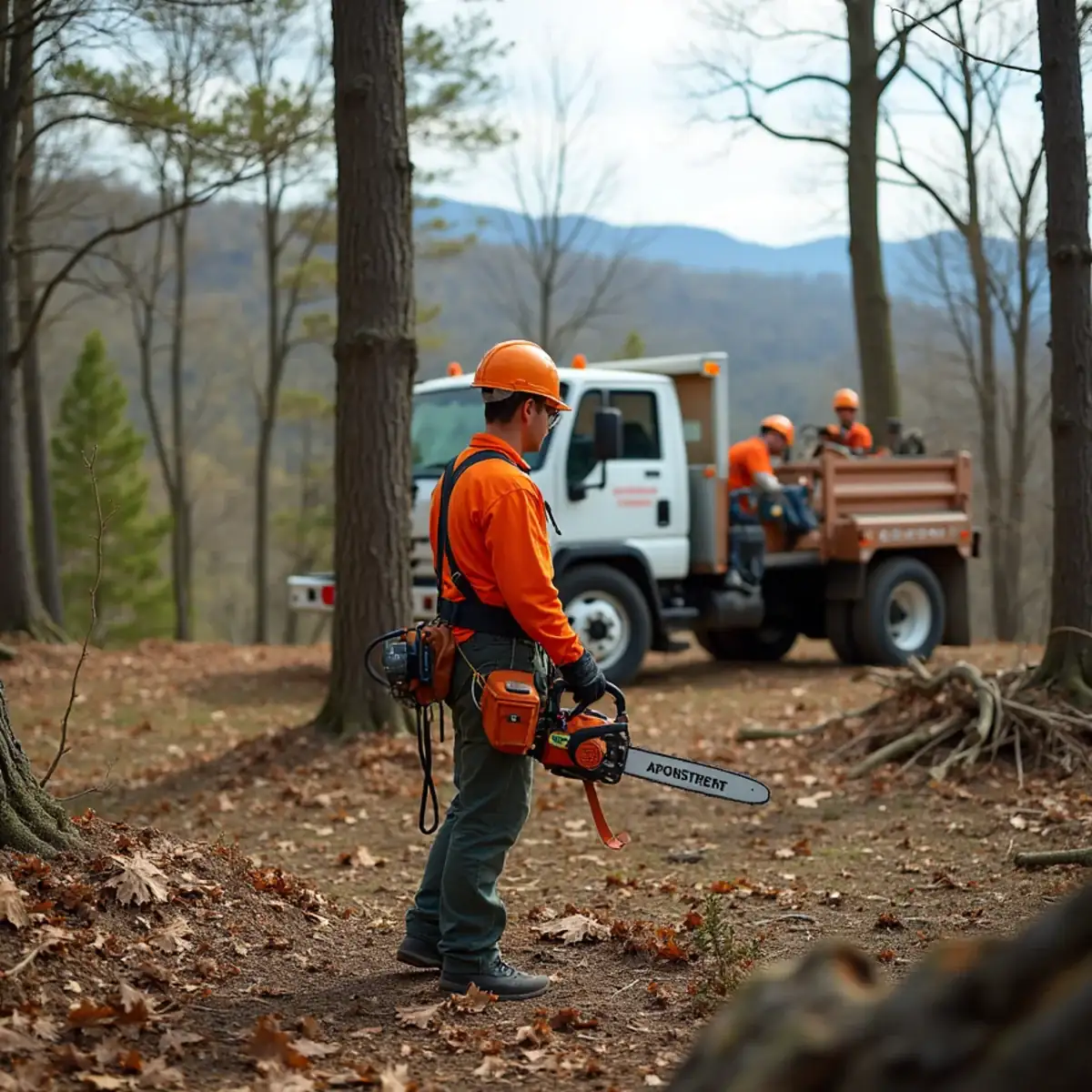
Controlled lowering on a slope isn't muscle — it's a system, and each piece has a job. Understanding the kit helps explain why the method is safe and why it takes a trained crew rather than a rope over a branch:
- A lowering (friction) device at the base — a bollard or portable winch that lets the ground crew brake a heavy piece smoothly instead of taking the full shock
- Rated rigging rope and slings sized to the loads, not hardware-store line that can fail without warning
- Blocks and pulleys that redirect the load to a stable anchor, so wood travels a planned path rather than swinging downhill
- Independent anchor points for the load and for the climber's life-support system — the two are never sharing a single point
- Communication and a clear ground plan so the cutter and the brake operator move as one
- The judgment to calculate each piece's weight and momentum before the cut — the part no gear replaces
Terrain we're built for
The high country around Mountain Rest and the wider foothills is steep, rocky, and unforgiving of shortcuts. Controlled rigging is slower than a straight fell, but on this ground it's the only responsible way to work — and it's how we protect both your property and the mountainside it sits on. If a crew has looked at your slope and walked away, that's the job we want.
Need help from a real Upstate tree crew?
Free estimates, 24/7 emergency response, fully insured. Call Rig Line Tree Service today.
Frequently asked
Because on a slope a felled tree slides, rolls, and gathers speed toward whatever is below, and steep ground sharply raises the risk of a dangerous 'barber chair' trunk split. Where anything valuable is downhill, controlled rope-lowering is the only safe method.
Careless removal can. Gouging the soil surface and ripping out root plates on a saturated bank invites erosion channels and, at worst, a slump that undermines a driveway, wall, or foundation above. Preserving the root mat and minimizing disturbance is how we prevent it.
Often no. Rope-access removal only needs the tree, so we routinely work slopes no truck or skidder can reach. Where a crane or winch helps and can be positioned safely, we'll plan for it.
Usually yes — re-establishing groundcover or replacement trees helps hold the slope long-term. We'll advise on what to plant and where, so the bank stays anchored once the removed tree's roots finish decaying.
Yes, and deliberately so. Lowering each section under control takes longer than a straight fell, but on a grade with anything valuable below, that extra time is what prevents runaway logs, torn-up soil, and the erosion repairs a fast, careless drop can trigger. On steep ground, controlled is the only responsible speed.