Upstate red clay is beautiful in a road cut and troublesome under a house. It swells when wet and shrinks when dry, and a large tree planted too close can amplify that movement by pulling moisture from the soil beneath a foundation. Here's how to think about tree-to-foundation spacing — and what to do about a tree that's already too close.
How trees affect clay soils
The concern isn't usually roots physically cracking a wall — that's rarer than people think. It's moisture. A big tree's roots draw large volumes of water from the soil, and in shrink-swell clay that localized drying can cause the ground under one part of a foundation to settle differently than the rest. Over years, that differential movement is what shows up as cracks.
A reasonable rule of thumb
A common guideline is to keep large-maturing shade trees at least as far from the house as their expected mature height, with smaller ornamentals allowed closer. It's a guideline, not a law — soil, species, and drainage all matter — but it keeps most homeowners out of trouble when planting new trees.
- Large shade trees: roughly their mature height from the house
- Medium trees: 15–20 feet is a common minimum
- Small ornamentals: can go closer, within reason
- Account for water-hungry species and poor drainage
- Consider the crown and roots, not just the trunk
What about a tree that's already too close?
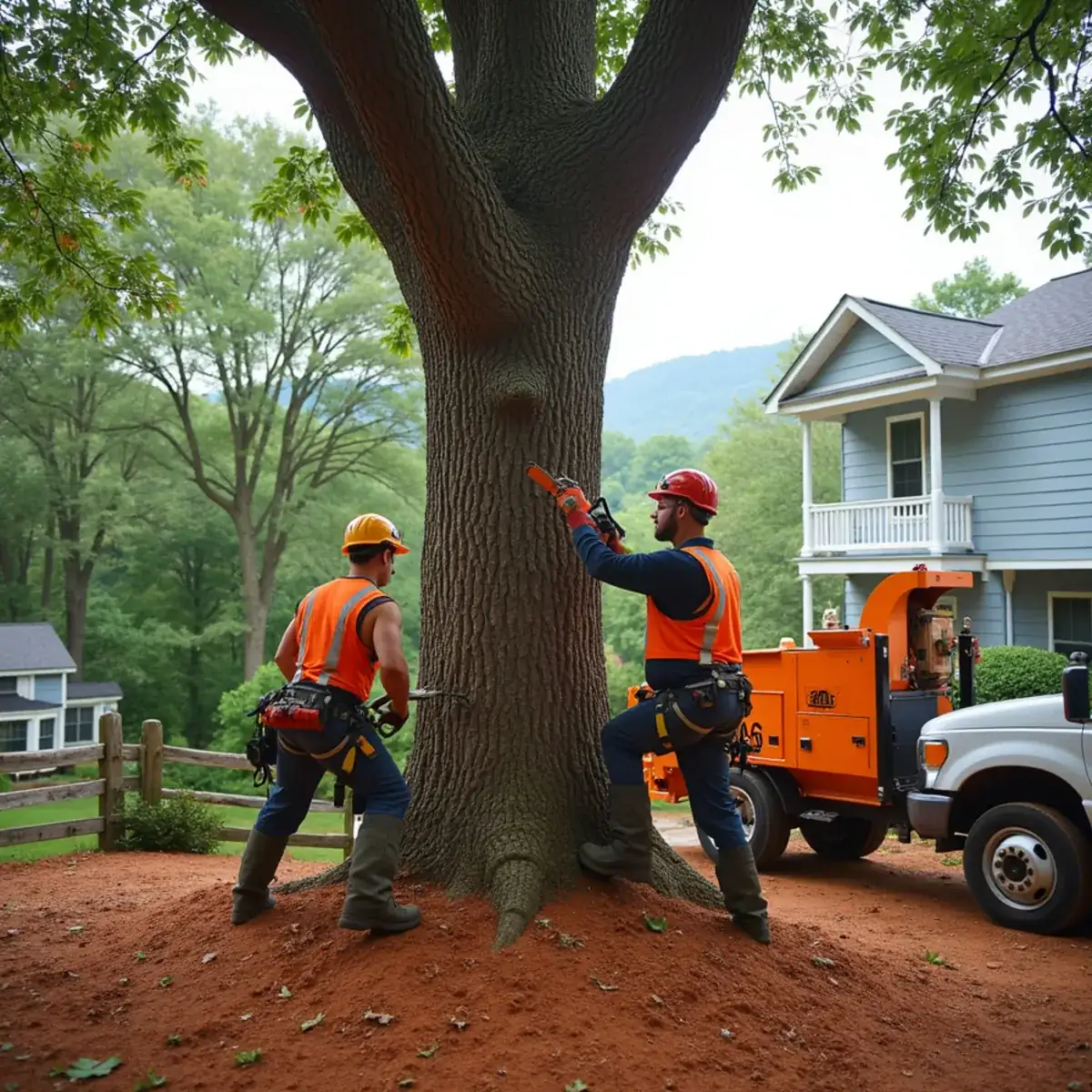
Don't panic and don't reflexively cut. Many mature trees coexist with foundations for decades. If you're seeing new foundation cracks near a large tree, get the tree evaluated with a hazardous tree assessment and consult a foundation professional — the fix might be managing moisture and roots, or it might be removal if the tree is also a hazard.
Safe planting distances, by tree size
The simplest way to avoid foundation trouble is to plant at a sensible distance in the first place. These are rules of thumb, not laws — soil, drainage, and species all matter — but they keep most Upstate homeowners out of trouble:
- Large shade trees (oaks, large maples, sweetgum) — roughly their mature height from the house, often 30–50+ feet
- Medium trees — a minimum of about 15–20 feet from the foundation
- Small ornamentals (dogwood, redbud, crape myrtle) — can go closer, within reason, 8–10 feet
- Water-hungry or fast-growing species — give extra room, especially on shrink-swell clay
- Anything near a septic field, drain line, or retaining wall — err well on the generous side
Red clay is the real variable
The reason these distances matter more here than in sandier parts of the country is the Upstate's red clay. Clay soils shrink as they dry and swell as they rewet, and a big tree accelerates the drying side of that cycle by pulling large volumes of moisture out of the ground during summer. When one part of a foundation sits over soil that's drying and shrinking while the rest stays stable, the differential movement is what shows up over years as stair-step cracks in brick or drywall. It's rarely roots physically shoving a wall — it's moisture. That distinction matters, because the fix is often about managing water and root competition, not just cutting the tree down.
Is it the tree, or just ordinary settling?
Not every foundation crack near a big tree is the tree's fault — houses settle on their own, and clay moves with the weather regardless of what's growing nearby. Before you blame (or remove) a tree, look for the pattern that actually points to tree-driven moisture movement:
- Timing: tree-related movement tends to be seasonal, worsening in late summer drought when the tree pulls the most water, and easing in wet months
- Location: cracks and movement concentrated on the side of the house nearest a large tree, rather than uniformly around it
- Soil clues: gaps opening between soil and foundation, or a visibly drier, harder soil zone under the tree's reach
- Scale of the tree: a large, water-hungry species close to the house is a far more likely culprit than a small ornamental
- Vs. normal settling: fine, stable hairline cracks that don't change with the seasons are usually ordinary settling, not a tree
- When in doubt, get both a tree assessment and a foundation professional's opinion — the fix depends on which is really driving it
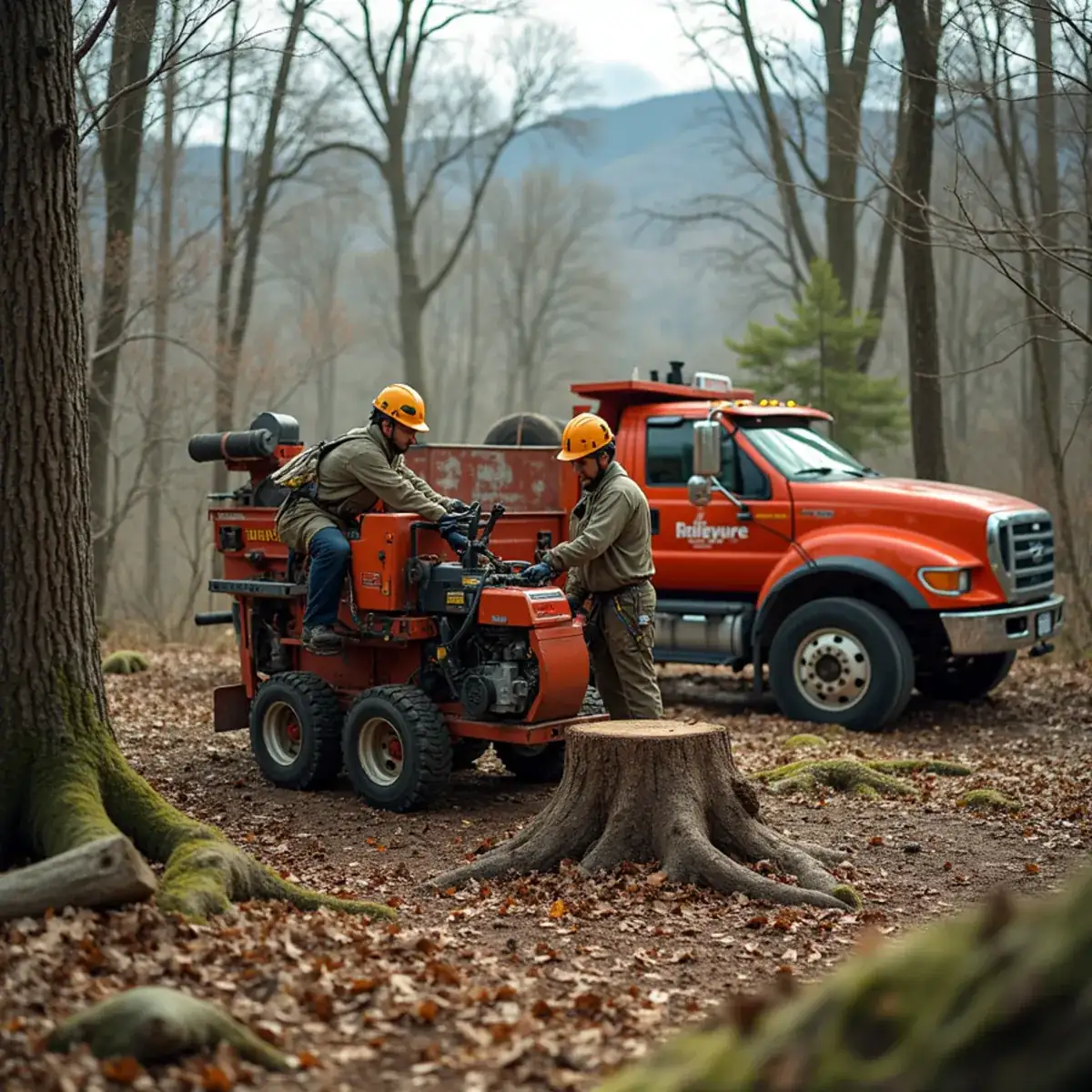
If it does come out, grind the stump
When a too-close tree is removed, finishing with stump grinding lets you reclaim the spot and replant at a safer distance. Homeowners around Anderson and the clay-soil Upstate deal with this often — a little planning at planting time avoids a lot of worry later.
Need help from a real Upstate tree crew?
Free estimates, 24/7 emergency response, fully insured. Call Rig Line Tree Service today.
Frequently asked
As a rule of thumb, keep large shade trees about their mature height from the foundation, medium trees at least 15–20 feet, and small ornamentals 8–10 feet. On the Upstate's shrink-swell red clay, err on the generous side, especially with water-hungry species.
Directly cracking a sound wall is rarer than people think. The bigger issue on red clay is moisture: a large tree dries and shrinks the soil under part of the foundation, and that differential movement causes cracks over time. It's usually a water story, not a roots-as-battering-ram story.
Not reflexively. Many mature trees coexist with foundations for decades. If you're seeing new cracks, have the tree assessed and consult a foundation professional — the answer might be managing moisture and roots, or removal if the tree is also a hazard or clearly the cause.
Not on its own — removal can stop further moisture-driven movement, but existing cracks are a separate repair handled by a foundation specialist. And removing a large tree that's been drying clay for years can itself cause some soil rebound, so it's worth coordinating the two.
Yes, once the stump is ground out — but it's the perfect chance to reset the distance. If the old tree was too close, plant the replacement farther from the house, and choose a species sized to the spot so you're not repeating the problem.