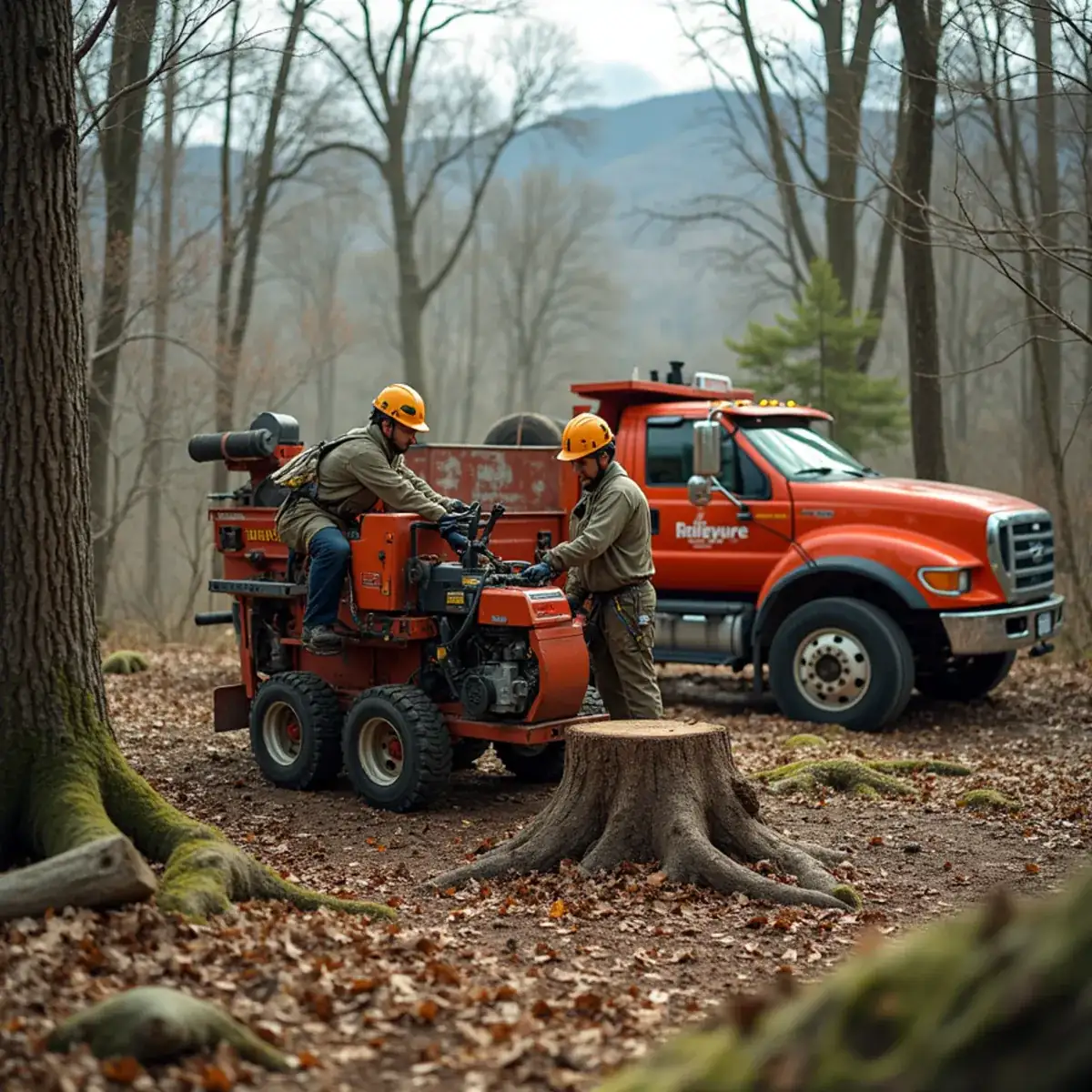
Once a tree is down, the stump is the last decision — and most people don't realize there are two very different ways to deal with it. Grinding and full removal both make the stump disappear from view, but they leave the ground, your wallet, and your replanting options in different places. Here's the honest comparison so you pick the right one the first time.
What stump grinding actually is
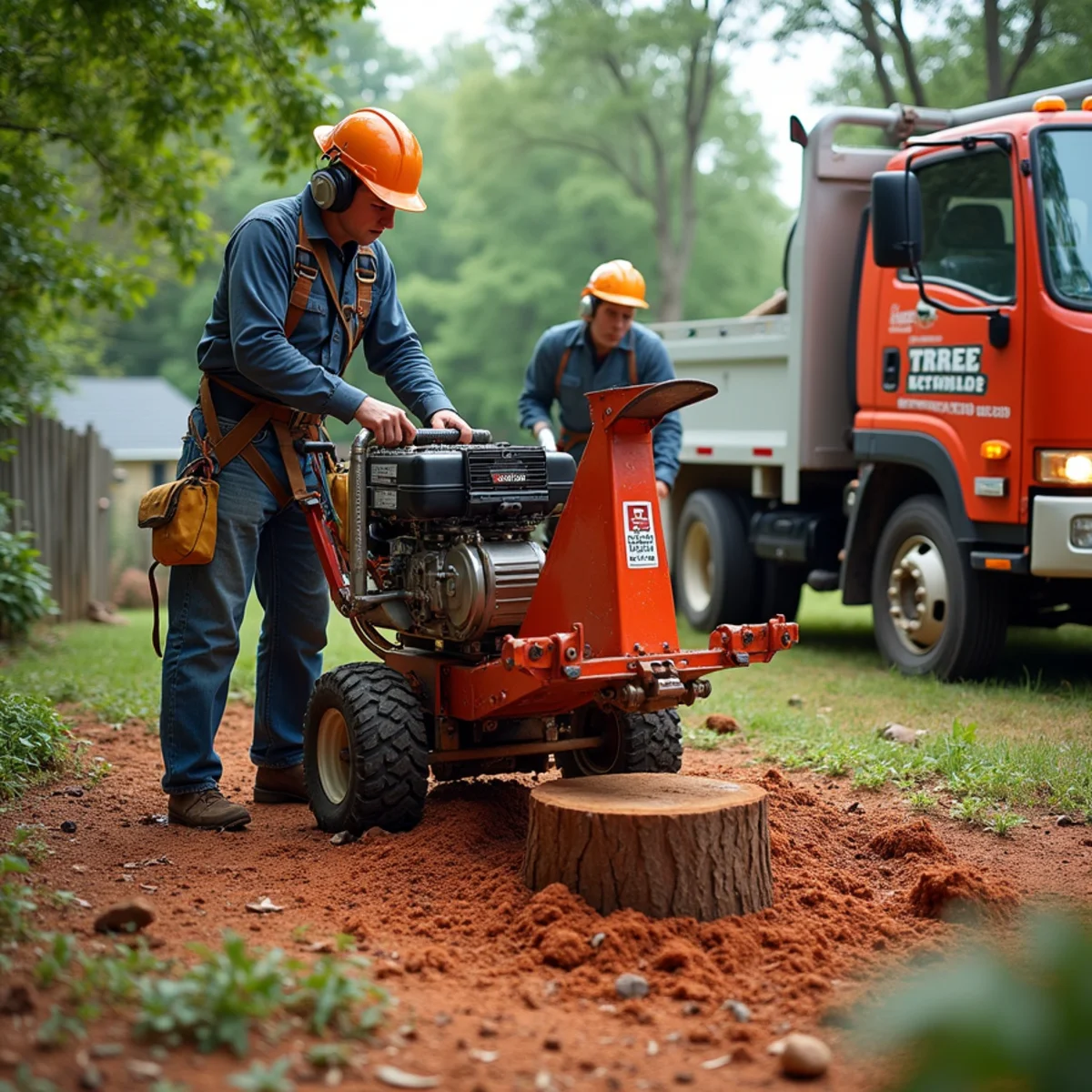
Grinding uses a machine with a rotating cutting wheel to chew the stump down into wood chips, typically to four to eight inches below grade — deeper if you ask. The visible stump is gone, the chips can be raked into the hole or hauled off, and you're left with a bed of soil and ground wood you can turf over or plant on top of. What stays behind is the root system, which is left in the ground to decay naturally over the following years.
What full stump removal is
Full removal pulls the stump and the major roots out of the ground entirely, usually with an excavator or by digging the root ball free. It leaves a large hole and a much bigger disturbance — but it also leaves no significant root mass behind. It's the more invasive, more expensive, more labor-intensive option, and it's only worth it in specific situations.
When grinding is the right call (most of the time)
For the large majority of yards, grinding is the better value and the smaller headache. Choose grinding when you want to:
- Reclaim the look of the yard without tearing it up
- Mow cleanly over where the stump was
- Lay sod, seed grass, or plant a small bed over the spot
- Keep the cost and the cleanup down
- Deal with a stump near a drive, walk, or foundation without excavation risk
When full removal makes sense
Full removal earns its extra cost in a narrower set of cases — mostly when the roots themselves are the problem or the ground has to be clear:
- You're putting in a structure, pool, addition, or driveway where the stump sits
- You plan to replant a new tree in the exact same spot (roots in the way)
- The roots are actively damaging hardscape and need to come out, not just decay
- You want the ground fully clear of wood for regrading
The regrowth question
One worry we hear a lot: will the tree grow back? For most hardwoods and pines, grinding the stump well below grade removes the growing points and the tree won't return. A few aggressive species can send up suckers from roots left in the ground — but that's a surface nuisance you can mow or treat, not the tree regrowing. If you're dealing with a known sucker-prone species, we'll flag it when we quote.
What we usually recommend in the Upstate
On typical Oconee County lots — red-clay soil, a stump in the lawn or a bed, no construction planned — grinding is almost always the right answer: it's cheaper, faster, and far gentler on the yard, and the leftover roots decay on their own. We reserve full removal for the cases that truly need a clear hole. Either way, we handle the stump as part of the same job when we take a tree down. You can see how we approach the trickier cases in our guide to stump grinding on rocky foothill slopes, and get a firm recommendation for your spot when we come out for a stump grinding quote.
Need help from a real Upstate tree crew?
Free estimates, 24/7 emergency response, fully insured. Call Rig Line Tree Service today.
Frequently asked
Grinding is almost always cheaper. It uses one machine and leaves the roots in the ground to decay, so there's far less labor and disturbance than excavating the entire root ball. Full removal costs more because it's heavier, slower work that leaves a large hole to backfill.
For most yards, no. The roots left behind simply decay in the soil over the following years. The main exception is if you want to plant a new tree in the exact same spot — then those roots can be in the way, and full removal may be the better choice.
Yes. After grinding we can rake the wood chips out or mix soil in, and you can seed, sod, or plant a bed over the spot. For planting a new tree in the same hole, tell us up front so we can grind deeper or discuss full removal.
For most species, grinding well below grade removes the growing points and the tree won't return. A few species can sucker from leftover roots, which is a surface nuisance you can mow or treat rather than the tree regrowing. We'll flag it if yours is sucker-prone.